Amid supply chain disruptions and extreme weather, there is an urgent need to strengthen the resilience of food systems and enhance food self-sufficiency.
In recent months, global food prices have continued to surge, breaking previous records. A report recently released by the Food and Agriculture Organisation of the United Nations (FAO) shows that the global food price index averaged 136 points in September, up 1.5% from August and 5.8% year on year, reaching its highest level since late 2022. Wheat prices rose to their highest level in three years, while sugar prices also hit a record high in the past 18 months.
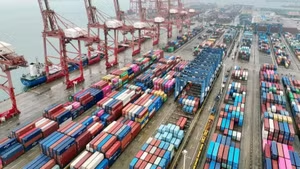
The sharp rise in food prices is the result of a combination of factors. First and foremost is supply chain disruption caused by conflicts. The Strait of Hormuz is a strategic waterway through which large volumes of energy and fertiliser are transported globally. As such, when cargo transportation through the Strait of Hormuz is blocked due to tensions in the Middle East, major supply bottlenecks emerge almost immediately, pushing up prices of energy and fertilisers.
As international trade arteries are disrupted, the entire agricultural production chain is directly affected, from operating machinery and planting to transporting agricultural products, thereby disrupting production cycles and causing food prices to keep rising.
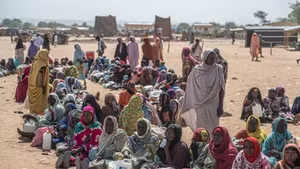
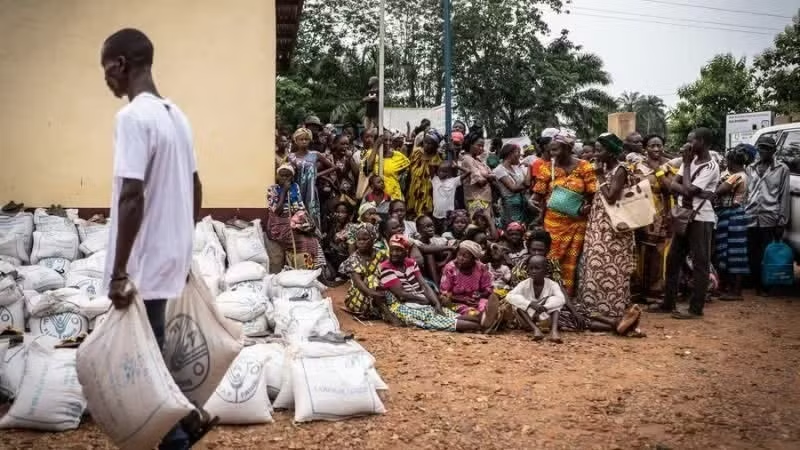
The United Nations has warned that armed conflicts are destroying food systems and worsening hunger. Import-dependent countries, those with limited domestic production capacity, and poorer nations are among the hardest hit. At least 266 million people in 47 countries and territories are facing severe food insecurity. The vicious cycle of violence and poverty is therefore proving difficult to break.
Extreme weather is also destabilising global food systems, directly affecting agricultural production, food supplies, and people’s livelihoods. El Nino is currently posing a major threat to the food security of millions of already vulnerable people.
The United Nations has warned that severe flooding, drought and increasingly extreme El Nino-related temperatures could push at least another 49 million people worldwide into severe food insecurity by the end of 2027. Central America and southern Africa are expected to be among the worst-affected regions.
The world has only four years left to achieve the Sustainable Development Goals (SDGs), including SDG 2, which calls for an end to hunger by 2030. However, armed conflicts and climate change are hampering efforts to build sustainable food systems and threatening to reverse the gains made in hunger eradication over many years. According to the FAO, without decisive action, more than 500 million people worldwide will still face hunger by 2030.
Recent developments have highlighted the vulnerability of global food systems to supply and weather shocks. This situation underscores the need for comprehensive efforts to address the global food security challenge.
The task today is not only to ensure adequate supplies of fertiliser and energy for agricultural production during growing seasons but also to build a trading system and supply chains that are more resilient to disruptions.
To ease immediate pressure, experts have called on the international community to quickly reopen maritime transport routes and stabilise fertiliser and fuel prices.
In the longer term, however, countries need to maintain strategic food reserves and promote multilateral cooperation in order to be ready to stabilise markets when unexpected shocks occur.
At the same time, they should invest in domestic production capacity, including the development of early warning systems, smart agriculture, and crop varieties resilient to harsh climatic conditions.