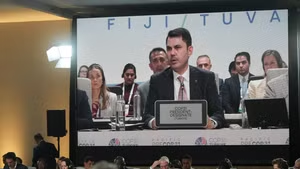
In his address to the 77th session of the Executive Committee of the United Nations High Commissioner for Refugees (UNHCR), recently held in Geneva, Switzerland, UNHCR chief Barham Salih painted a bleak picture of the global refugee situation. He highlighted that successive conflicts and crises in recent years have forced around 117 million people worldwide to flee their homes and seek refuge in foreign lands. Most of these people come from countries that are or have been hotspots of insecurity and poverty, including Sudan, Yemen, Syria, and Afghanistan.
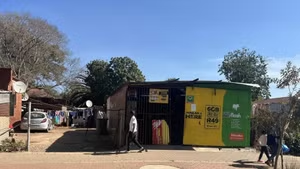
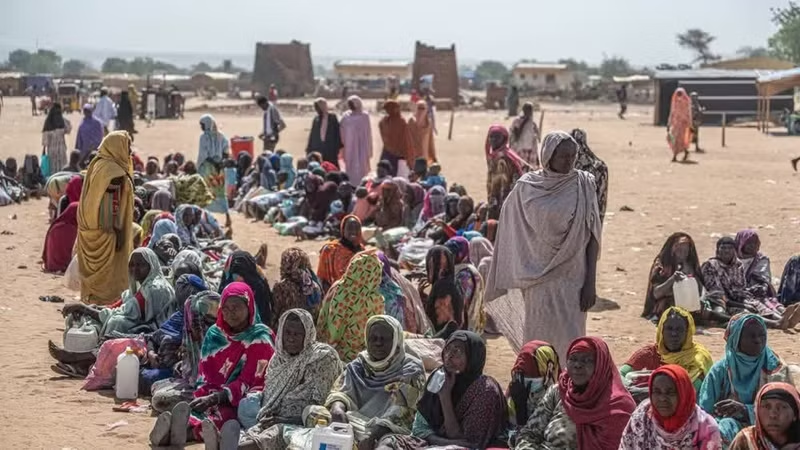
Whatever the reasons for fleeing their homelands, refugees share a common thread: poverty and impermanence. Because arriving in a new land does not mean that refugees will have a better life. Waiting for them are often temporary tents in refugee camps with constant worries about food, lack of essential services, unstable jobs, and the ever-present risk of insecurity. According to UNHCR chief Barham Salih, from Sudan to the Sahel, from Yemen to the Horn of Africa, behind the image of every refugee is a heartbreaking story of difficult life and uncertain future.
Against this backdrop, support from the international community has become a lifeline for refugees struggling to overcome adversity. Over the past decade, UNHCR has helped nearly one million refugees rebuild their lives in other countries. Since the beginning of 2026 alone, as successive conflicts have driven up the number of displaced people, UNHCR has responded to 22 emergencies in 18 countries. Millions of refugees in low- and middle-income countries depend on aid to meet their basic needs.
However, funding shortfalls are directly undermining efforts to protect refugees. So far, UNHCR has received only 3 billion USD, equivalent to around 35% of the 8.5 billion USD required for its 2026 budget. The main reason for this is that the world's leading donor countries have repeatedly made deep cuts to their international humanitarian aid budgets. Against this backdrop, since 2024, UNHCR has been forced to cut thousands of jobs, close representative offices, and even suspend operations in numerous countries, despite growing humanitarian needs.
When funding falls below the level required, the consequences are felt directly by people who depend on humanitarian assistance. Aid shortages leave many women and girls at greater risk of violence and exploitation, deprive children of educational opportunities, and make it harder for people with disabilities to access essential services.
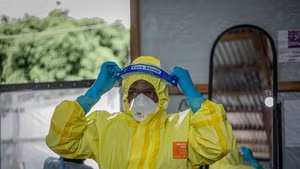
Experts warn that when funding falls below a critical threshold, essential relief operations can grind to a halt or even collapse entirely, leaving millions of vulnerable people in humanitarian hotspots in increasingly precarious circumstances. In practice, limited financial resources have put child protection programmes in the Republic of Chad at risk of suspension, while Ethiopia has had to temporarily halt refugee registration for tens of thousands of people arriving from South Sudan and Eritrea.
The current wave of refugees is a consequence of the multidimensional crisis that the world is facing — involving conflict, economic hardship, and poverty.
As the number of displaced people worldwide continues to rise, an urgent question arises: how can this crisis be resolved at its roots? Clearly, maintaining relief operations is essential to help refugees overcome immediate hardships. However, this is only a temporary solution. The success of humanitarian assistance cannot be measured solely by the number of people receiving food, medicines, and essential supplies to survive from day to day.
True success must also mean giving refugees the opportunity to become self-reliant and build better lives through their own efforts. UNHCR aims to help around eight million refugees break free from dependence on aid by 2035 and regain their self-reliance, enabling them to work, study, and provide for themselves and their families.
The current wave of refugees is a consequence of the multidimensional crisis that the world is facing — involving conflict, economic hardship, and poverty. The United Nations has called on the international community to de-escalate conflicts, promote peace negotiations, end violence, and restore stability to people's lives in order to address the root causes forcing so many people to flee their homes.