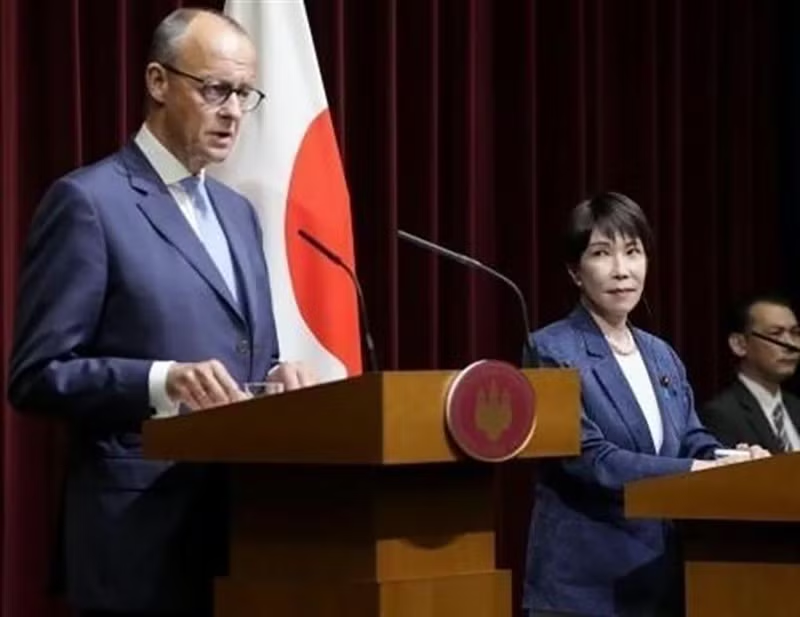
The talks between the German and Japanese leaders, held recently in Tokyo during Chancellor Friedrich Merz's first visit to Japan since taking office in May 2025, marked an important step forward in deepening ties between two of the world's leading industrial economies. With priorities ranging from critical minerals and artificial intelligence (AI) to energy technologies and the defence industry, Japan and Germany are pursuing collaborative goals that extend beyond the traditional framework of trade and investment.
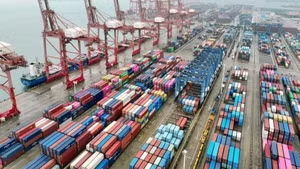
Against the backdrop of mounting pressures on global supply chains, Tokyo and Berlin's efforts to combine their technological capabilities, industrial resources, and security interests represent more than a rapprochement between two economic partners. They also reflect a shared determination to bolster the strategic autonomy of both nations deeply integrated into international trade.
Both Japan and Germany have highly developed manufacturing industries, strong research capabilities, and companies that command leading positions in high-tech sectors. Closer cooperation will enable the two countries to take a more proactive approach to securing the raw materials, energy, and technologies needed for production, while enhancing their resilience to disruptions in global supply chains. Japan remains heavily dependent on imported resources, making secure supplies of critical minerals particularly vital for its electronics, automotive, energy, and defence industries.
Germany, meanwhile, requires stable supplies of raw materials to maintain its competitive position in mechanical engineering, automotive manufacturing, chemicals, and energy technologies. Cooperation between the two countries can help diversify supply sources and reduce the risk of material shortages in key industries. Critical minerals, particularly rare earths, are among the areas of greatest direct strategic importance to both Japan and Germany. The two governments' agreement to strengthen critical mineral supply chains demonstrates their shared recognition that securing access to essential production inputs is closely linked to economic security.
In the technology sector, Japan and Germany have agreed to establish a High-Level Dialogue on AI and promote public-private cooperation in areas such as nuclear fusion and hydrogen. Combining Japan's strengths in robotics and automation with Germany's expertise in manufacturing and precision engineering could help boost productivity, advance industrial technologies, and enhance competitiveness. The two countries are also paying particular attention to advancing defence industrial cooperation and exploring opportunities for closer coordination between their respective armed forces.
Stronger Japan–Germany defence industrial cooperation is seen as an avenue to develop both countries' technological and manufacturing capabilities. It would allow Japan to expand its network of technology partners, while giving Germany further scope to establish links with the industrial ecosystem in the Indo-Pacific. The high-level Japan–Germany talks took place as part of Chancellor Merz's Asian tour, which included stops in Singapore, Japan, and the Republic of Korea. Throughout his visit, the German Chancellor emphasised the importance of strengthening trade, technology, and security coordination between the economies of the two continents.
Closer bilateral ties between Japan and Germany will not only help both economies safeguard their strategic interests but also strengthen connectivity between Asia and Europe, expanding economic and technological links across the two continents. As economic security becomes increasingly intertwined with national security, sectors such as critical minerals, semiconductors, AI, energy, and defence are emerging as vital bridges for cooperation between the two countries and their respective regions.