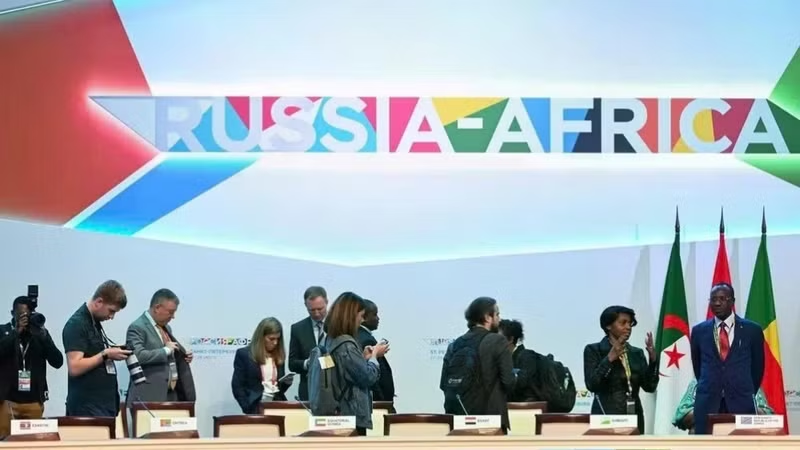
This year’s summit has attracted widespread international attention, not only because of Russia’s position on the international stage and Africa’s particular appeal but also because of its ambitious agenda.
According to the Kremlin, alongside the summit, Moscow is hosting the Russia-Africa Economic and Humanitarian Forum as well as a series of high-level talks and meetings between Russian President Vladimir Putin and African leaders. Experts believe the scale of the summit demonstrates the particular importance that Russia and Africa attach to their relations.
One factor bringing Russia and Africa closer together is the considerable convergence of their interests. Russia possesses a strong scientific and technological foundation in nuclear energy, heavy industry, mining, and fertiliser production, among other sectors, as well as strengths in engineering training.
Meanwhile, Africa is known for its abundant natural resources, clean energy development potential, a vast market, and a strategic geographical position connecting Europe, Asia, and the Americas. The continent is also home to vital maritime routes, including the Suez Canal, the Bab el-Mandeb Strait, and the Cape of Good Hope.
Russian technology and expertise could help Africa increase the added value of its products, strengthen food security, ensure energy supplies, and establish regional production and distribution centres.
Although Russia is not the only partner capable of providing Africa with experience, technology, and technical expertise, it has become a welcome investor on the continent by building a foundation for cooperation based on equality, mutual benefit, and non-interference in internal affairs.
President Vladimir Putin has previously emphasised that Russia and Africa are united by their shared efforts to build a fair multipolar world order based on equality and free from all forms of discrimination or imposition.
Moscow’s approach is consistent with Africa’s current development goals, particularly as the continent seeks to expand domestic processing rather than merely exporting raw materials. Russia is regarded as a reliable partner that can help Africa transform its resources into higher-value products, establish an industrial foundation, and develop science and technology.
For Russia, strengthening cooperation with Africa is consistent with its policy of expanding its network of partners and establishing new supply chains to ease pressure from Western efforts to isolate it. Africa offers a vast market with a large population and enormous demand for imported goods.
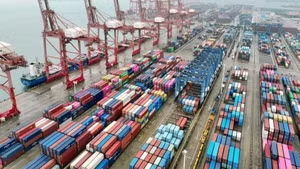
Cooperation in recent years has demonstrated the considerable potential of relations between the two sides. In 2025, trade between Russia and Africa exceeded 27 billion USD, approximately 1.5 times the 2023 level. Africa was also the destination for more than 18 million tonnes of grain and 1.5 million tonnes of inorganic fertilisers exported from Russia.
In addition, security cooperation with Africa enables Russia to strengthen its presence in a region that has become a focal point of strategic competition among major powers.
Against this backdrop, the third Russia-Africa Summit provides an opportunity for both sides to advance comprehensive cooperation in politics, economics, trade, investment, and science and technology. These areas reflect the convergence between Africa’s development needs and Moscow’s ambition to expand cooperation with the continent.
According to the Kremlin, the parties are expected to soon adopt a joint declaration, a declaration on cooperation in artificial intelligence, and an action plan for 2027–2029, as well as sign more than 30 cooperation documents.
However, analysts believe that success in Russia-Africa cooperation should not be measured by the number of agreements signed, but by the ability to translate commitments into effective investment and cooperation projects.
Africa is a promising and rapidly developing region, but its economies vary considerably in their institutions, size, structure, and even cultural and ethnic characteristics. Therefore, achieving deeper penetration of this market is a challenge that cannot be resolved overnight. Moreover, Moscow faces competition from numerous major powers that are showing growing interest in the African market.