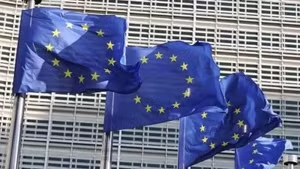
EU enlargement has become a major focus for the bloc's officials, as it is closely linked to the union's strategic interests and has emerged as an urgent geopolitical imperative amid an increasingly complex regional security landscape. This was highlighted by European Council President Antonio Costa in his address to the second EU Enlargement Summit, held in Brussels, Belgium, on November 3.
Costa described EU enlargement as the most successful geopolitical investment the bloc has ever made in peace, security, democracy, stability and prosperity. The strategic benefits of admitting new members are clear: strengthening the EU's position, expanding its influence and enhancing its security.
However, according to European media, the summit concluded with a renewed declaration of support for enlargement among EU leaders, but failed to establish a concrete timetable or a clear political direction for the next stage of the process.
An analysis published on Euronews.com noted that the summit demonstrated how the EU is now closer to enlargement than at any point in the past decade, while also exposing political obstacles that could derail the process.
Admitting new members also risks placing additional pressure on the EU budget because of disparities in economic development among member states. An increase in the number of economically weaker members could complicate regional assistance policies and turn the EU into a cumbersome and less efficient organisation.
Against this backdrop, the European Commission (EC) has recently proposed mechanisms to oversee financial matters, agricultural policies and compliance with the rule of law among new member states, with the aim of ensuring that the EU continues to function effectively following enlargement.
The largest enlargement in EU history took place more than two decades ago, when the bloc expanded from 15 to 25 members. In recent years, the union has not admitted any new members, as it has been grappling with challenges ranging from energy security to inflation.
Meanwhile, aspiring member states continue to face numerous domestic challenges and must undertake far-reaching economic, institutional and democratic reforms to meet the criteria for EU accession.
Emphasising that he has consistently regarded EU enlargement as a strategic priority, European Council President Antonio Costa said he was working closely with the leaders of candidate countries.
The EU is striving to resolve complex institutional and internal structural issues to pave the way for admitting new members. Enlargement would not only strengthen the bloc internally and extend its external influence but also serve as a test of its adaptability and attractiveness amid today's rapidly changing global landscape.