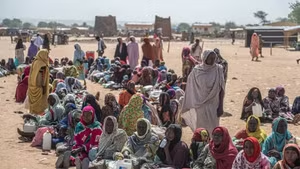
As the migration crisis in Ceuta, Spain, had just calmed down in the media, the Canary Islands found themselves facing a massive new wave of illegal migration. In mid-November 2026, the number of illegal migrants rescued on the dangerous journey across the Atlantic Ocean to the Canary Islands in a single day reached 1,488, breaking the record set six years ago. Meanwhile, according to authorities, illegal migration towards Sardinia has climbed to "unprecedented" levels. Favourable weather conditions are said to be one of the reasons for the sudden surge in sea crossings.
Nearly half a year after the EU’s Pact on Migration and Asylum officially entered into force in June 2026, migration-related issues have continued to emerge, posing a stern test for the bloc’s internal solidarity and unity. While the Pact was once hailed as a major reform of the migration management system, a significant gap remains between expectations and the reality of its implementation.
Countries on the "front line" such as Spain, Italy, and Greece continue to struggle with security and social welfare challenges as they bear the brunt of migration flows. Furthermore, the recent migration crisis in Ceuta has fuelled further disagreements over sharing responsibilities, shaking the core principles of the Schengen Agreement, which guarantees freedom of movement across Europe.
In a region where countries share open borders and are deeply interconnected economically and politically, a migration crisis in one member state can quickly spill over to affect the entire bloc. Tensions arise when national security interests clash with the bloc's core values. As illustrated by the migration crisis in Ceuta, Italy has been forced to extend temporary border controls with Spain due to concerns over potential risks.
To tackle illegal migration, the EU is seeking to step up deportations of people residing in the bloc unlawfully. The European Commission (EC) has recently welcomed an initiative by several EU member states to establish migrant repatriation centres outside the bloc, with Rwanda selected as the proposed location for the first such facility.
In addition, nine countries have sent a joint letter to the EC calling for a new legal framework on family reunification for refugees. They argue that countries which previously received large numbers of immigrants are now facing difficulties arising from family reunification, placing mounting pressure on housing, schools, and healthcare.
However, these initiatives have raised concerns over the protection of migrants' rights, leaving Europe with the difficult task of safeguarding national security and order while also fulfilling its international humanitarian obligations.
Europe's border dilemma cannot be resolved simply by building stronger barriers or deploying additional border control forces. Behind every wave of migration lie root causes such as conflict, poverty, political instability, and a lack of development opportunities for young people.
Therefore, one of Europe's key tasks is to help address economic and social challenges in the countries of origin, while strengthening information governance capacity.
At the same time, mechanisms must be developed to ensure that European nations fulfil their shared responsibilities while reconciling them with their respective national interests.