Unfolding as the world grapples with conflicts, hunger and energy crises, among other challenges, El Nino is piling further pressure on many countries’ efforts to recover and grow.
Bolivia recently declared a nationwide state of emergency to mobilise additional resources as El Nino intensifies and threatens people’s livelihoods.
President Rodrigo Paz said Bolivia is facing extreme weather caused by El Nino, with about 78,000 families affected by drought in six of the country’s nine departments.
Bolivia’s neighbours are also feeling the effects. Peru is contending with rising temperatures and forest fires, while Chile’s capital, Santiago, has just had its wettest October on record.
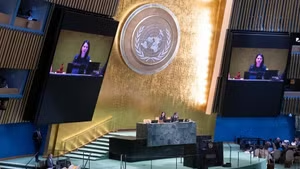
South America is not the only region taking heavy damage. UN Under-Secretary-General for Humanitarian Affairs Tom Fletcher described the current El Nino as a major threat that is making extreme weather events more frequent and severe across Latin America, eastern and southern Africa, Asia and the Pacific.
According to forecasts by the World Meteorological Organisation (WMO), the risk of drought could rise in southern Central America, parts of the Caribbean and northwestern South America towards the end of 2026.
By contrast, above-average rainfall is likely in the Horn of Africa, parts of Central Asia, East Asia, North America and southeastern South America.
In Spanish, El Nino means “the little boy”. Despite its innocent-sounding name, the phenomenon is dealing a heavy blow to communities, economies and global supply chains, according to the WMO. Sectors ranging from agriculture, trade and fisheries to health, energy, transport, water resources and disaster management are being affected.
More worryingly, El Nino could reach unprecedented intensity, going beyond anything recorded by monitoring systems over the past four decades. WMO Secretary-General Celeste Saulo said El Nino is expected to peak in late 2026, but its effects could be felt long afterwards.
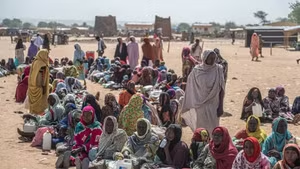
El Nino is far more than a climate issue. Its consequences can include fields cracked by extreme heat, failed harvests that deepen hunger in vulnerable communities, and floods that sweep away farmers’ property and even their lives.
The World Food Programme (WFP) has warned that El Nino could push at least 49 million more people into acute food insecurity by the end of 2027.
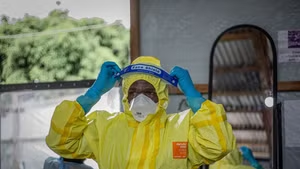
The health risks are equally alarming. The Guardian reported, citing estimates by climate scientists, that additional heat brought by El Nino could cause more than 450,000 premature deaths.
The current El Nino is striking as the world is battered by several crises at once. With many countries already burdened by conflict, inflation, public debt and food shortages, another climate shock could prove the last straw, making life even harder for millions of people. Analysts therefore see El Nino as a major test of economic resilience.
To limit the damage, countries are rushing to take precautionary measures. Several Asian countries are strengthening early warning systems and moving to protect water resources and crops.
Panama and Bolivia have declared nationwide states of emergency, allowing them to mobilise additional resources and send more rescue teams to the worst-hit areas.
Meanwhile, many countries are holding emergency drills to prepare for major storms, floods and landslides.
WMO Secretary-General Celeste Saulo said the world has the knowledge and tools to stop El Nioo from becoming a humanitarian disaster and to ensure no one is left behind.