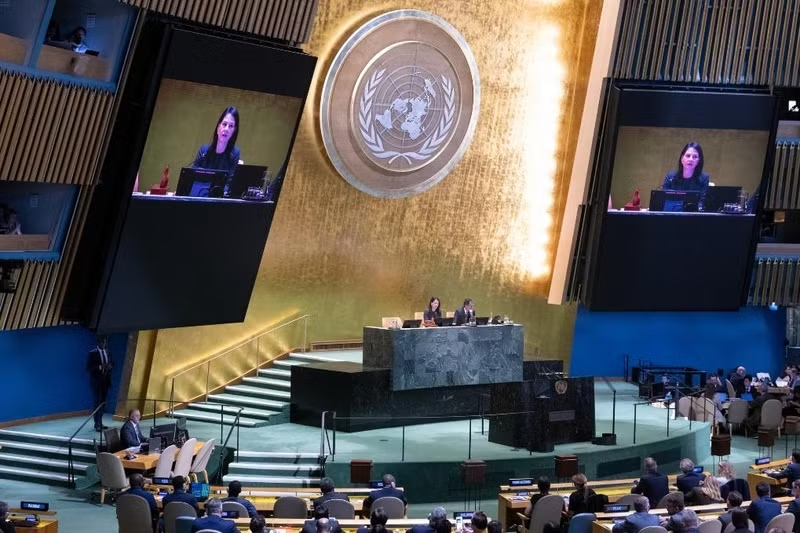
The world is witnessing a significant shift in the position and role of developing countries across Africa, Latin America, and Asia. Once largely expected to follow established international rules, these countries are increasingly making their mark on the global strategic landscape. Zimbabwe and Trinidad and Tobago were recently elected as non-permanent members of the United Nations Security Council for the 2027–2028 term.
In Asia, Pakistan has recently sought to strengthen its role as a mediator in efforts to ease tensions between the US and Iran. Nevertheless, an important question remains: Do developing countries currently have a voice commensurate with their growing international role? This issue has been raised at recent events, including the World Summit held in India and UN Day celebrations in Indonesia.
Indian Prime Minister Narendra Modi has argued that the UN's current operating model has revealed certain limitations. He stressed the need to strengthen global institutions, give developing countries a greater voice, and enhance international cooperation during times of crisis. Indonesian Foreign Minister Arrmanatha Nasir has likewise called for comprehensive UN reform, emphasising that developing countries must have a say in shaping new international rules.
There have long been calls for reform of the UN Security Council to improve its representativeness and strengthen the voice of developing nations. Greater participation by representatives of different regions and groups of countries in multilateral organisations is expected to bring more diverse perspectives, create opportunities for cooperation, and help bridge divisions, thus enabling countries to work together towards solutions to shared challenges. Developing countries are increasingly interested in promoting a multipolar world in which they can exercise greater influence over decisions that directly affect their future.
However, these countries still face considerable challenges in maintaining and strengthening their international standing, including reforming their development models and consolidating their growth advantages.
For example, as science and technology, particularly artificial intelligence (AI), become increasingly decisive factors in national competitiveness, developing economies face the challenge of integrating more deeply into global technological development. They must strengthen their production and technological capabilities rather than remaining confined to processing, assembly, or the consumption of technology products.
Organisations expanding their membership to include more developing countries also face challenges arising from disparities in development levels and differences in perspectives and interests, which can make it difficult to reach consensus.
At a time when the world is confronting increasingly complex challenges, including intensifying strategic competition, armed conflicts, and food insecurity, greater participation by developing countries in addressing shared global problems can help deliver fairer, more comprehensive, and more substantive outcomes.
Strengthening connectivity and cooperation has also become increasingly important in today's globalised world. Instability in one region can trigger a chain reaction and undermine stability and development worldwide. No country, regardless of its size or strength, can tackle today's multidimensional challenges alone.