This year’s message focuses on three core objectives: strengthening grassroots capacity (improving disaster preparedness and resilience at the individual and household levels); changing mindsets (aggressively shifting from a passive response to proactive, comprehensive risk management); and taking early action (conducting practical drills and taking small steps to build a safe community).
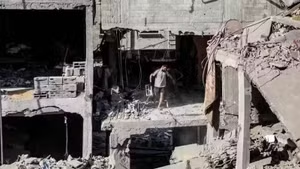
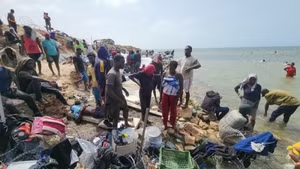
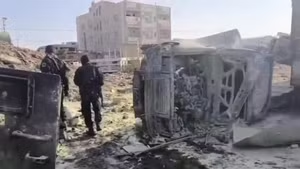
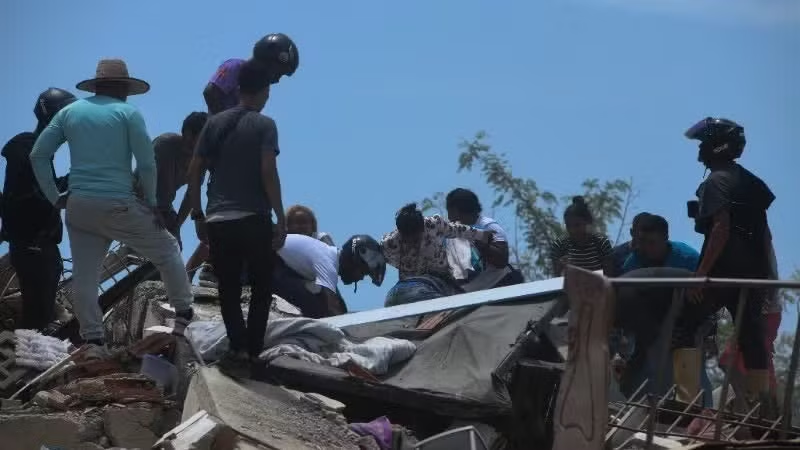
Of all our possessions, nothing is more personal or deeply connected to us than the home, where daily life takes place. However, when natural disasters strike, the home is often the first to bear the full force of nature. Since the beginning of the year, the world has faced a succession of devastating geological and climatic catastrophes. A double earthquake in Venezuela in June reduced tens of thousands of homes to rubble within minutes, claiming over 6,500 lives and causing 30 billion USD in material damage. In Asia, historic floods across the Nepal–Tibet region swept away numerous villages, leaving more than 1,400 dead and approximately 6,700 missing.
The reality demonstrates that when disaster strikes, rescue teams cannot reach every location immediately. In those critical, life-or-death moments, it is a family's own knowledge and preparedness — along with neighbourly support — that determine survival. Consequently, the capacity for on-site self-response becomes a vital line of defense for the entire community.
People have long assumed that a solidly built house is sufficient to ensure safety. However, this year’s message calls for a more proactive approach: a “resilient home” requires every household member to play a part in scientifically managing risks. Physical safety means choosing building sites carefully and regularly inspecting and reinforcing structural components and electrical systems.
Equally important is a state of mental preparedness, where family members recognise surrounding hazards, understand early warning alerts, and are thoroughly familiar with evacuation plans. Finally, families must ensure their homes are equipped with first-aid kits, stockpiled essentials, and communication devices with adequate power backup, suitable for the elderly, children, and people with disabilities.
However, emphasising the "at-home" aspect does not mean that regulatory bodies can shirk their responsibilities or shift the entire burden of disaster prevention and response onto residents. Record-breaking heatwaves across Europe since the beginning of the year have claimed more than 38,000 lives through heatstroke, demonstrating that extreme weather can exceed an individual’s capacity to cope. Residents cannot create safe living environments if authorities fail to implement rigorous land-use planning, strictly manage safety corridors, or enforce construction standards. Therefore, for every home to truly serve as a resilient "fortress," the State must play a proactive role: providing risk maps, investing in adaptive infrastructure, establishing forecast-based financial mechanisms, and organising practical drills for the community.
One humanitarian aspect highlighted by UNDRR is the need to ensure equal access to safe housing, so that no one has to choose between an affordable home and a safe place to live. In reality, people living in slums or disadvantaged areas are often the most vulnerable to disasters. A global disaster financing report indicates that economic losses since the beginning of the year have exceeded 100 billion USD, with as much as 60% falling outside insurance coverage. This enormous insurance gap places the heaviest burden on low-income households. Without financial support, losing a home to storms or floods can also mean losing an entire livelihood and becoming trapped in a cycle of poverty. Household resilience must therefore be linked to Sustainable Development Goals and supported by private-sector involvement in developing affordable, durable building materials and social protection insurance packages.
The theme of this year's International Day for Disaster Risk Reduction brings the macro-level concepts of climate change down to the most practical level: the everyday living spaces of individuals and families. While natural disasters are beyond our control, their impact can certainly be mitigated if individuals and families change their mindsets and take proactive steps toward prevention.