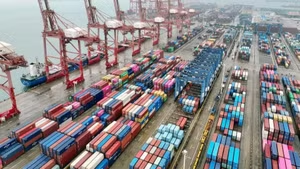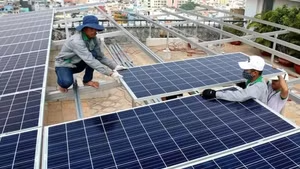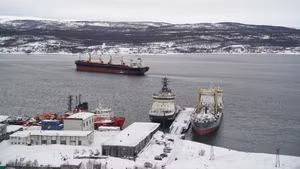
Seven months ago, the crisis in the Middle East suddenly escalated, repeatedly delivering severe blows to the global economy. The strategic shipping route through the Strait of Hormuz was blockaded, disrupting energy and goods supply chains, driving up logistics and input costs, and placing direct pressure on production and business activities in many countries.
At the time, major financial institutions issued warnings about the fragility of the global economy and expressed concern over its long-term growth prospects.
Nevertheless, the global economy has demonstrated a greater-than-expected ability to respond to and withstand such shocks. In the face of volatility in global energy markets, governments responded promptly and effectively through a range of measures, including drawing on oil and gas reserves, diversifying supplies, setting up stabilisation funds, and even reducing consumption.
As a result, despite there being many remaining challenges, the global economy is now operating in a more stable condition than previously forecast. IMF Managing Director Kristalina Georgieva said that, amid the need to withstand a series of successive “headwinds”, a 3% growth outlook for 2026 was a notable achievement.
The Asia-Pacific region has emerged as a positive bright spot. Recently, the Asian Development Bank (ADB) raised its 2026 economic growth forecast for developing countries in Asia-Pacific to 5%, an increase from the forecast issued in July.
According to the ADB, strong private-sector investment and government support measures are important “levers” underpinning growth, helping the region withstand the negative impacts of geopolitical tensions and volatility in global markets.
At the same time, a strong wave of investment in artificial intelligence (AI) is emerging as a new growth driver, partly offsetting the adverse effects of supply chain disruptions.
However, the global economy still faces a number of risks from now to the end of 2026. External factors, especially geopolitical conflicts, high energy prices, and extreme weather, continue to pose significant obstacles. If oil prices ease and remain at lower levels, inflationary pressures will decline, creating room for central banks to ease monetary policy and promote economic growth.
If the conflict in the Middle East continues, the upward trend in energy prices is unlikely to end, particularly as the Strait of Hormuz remains almost closed and reserves need to be replenished ahead of winter. The conflict not only threatens energy supplies but also poses a major challenge to global trade, as bottlenecks in supply chains could push up the prices of food, fertilisers, and other essential goods.
In addition, the IMF has warned of several risks to the growth outlook, including slowly declining inflation, rising bond yields, and most notably, mounting public debt. IMF Managing Director Kristalina Georgieva said that many governments had not taken sufficiently strong measures to control borrowing costs. Global public debt has now reached nearly 100% of GDP — exceeding levels recorded after the Second World War — and could rise above 100% of GDP by 2029, two years earlier than previously forecast.
The unpredictable changes in the geopolitical and global trade landscape in 2026 are putting the resilience of the global economy to the test. Many analysts believe that, in the current context, countries will need to address a “dual task” in order to achieve their growth targets.
On the one hand, they must continue strengthening the economy’s ability to adapt and withstand challenges arising from geopolitics, climate change, as well as changes in the trade system and supply chains. On the other hand, they need to make effective use of the opportunities offered by new growth drivers, including the wave of investment in technology.