This is the ECB’s second monetary policy tightening since the beginning of the year. Inflation in the eurozone reached 3.3% in August.
The ECB forecasts eurozone economic growth at 0.9% in 2026, rising to 1.4% in 2027 and 1.5% in 2028. It warned that the impact of new energy shock scenarios on growth and inflation could vary significantly depending on their severity and duration.
Since military tensions escalated in the Middle East, the EU has spent more than 24 billion euros extra on imported energy as prices surged, while domestic production has remained unchanged.
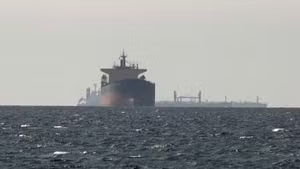
Oil prices have stayed high following fresh attacks on shipping around the Strait of Hormuz, adding to pressure on European economies heavily reliant on imported energy.
According to Eurostat, the EU imported 471.3 million tonnes of crude oil in 2024, while production within the bloc stood at just 15.5 million tonnes, putting its dependence on imported oil at 96.6%.
The Middle East crisis has also pushed short-term energy prices sharply higher, weakening financial incentives to replenish gas storage facilities in some European countries. Europe’s gas storage levels are currently unusually low, highlighting the risks associated with heavy reliance on external supplies.
The International Energy Agency (IEA) has urged governments to consider establishing strategic reserves, adopting more flexible contracts and strengthening international cooperation to prepare for future supply shortages.
To boost energy security and the resilience of the European economy to geopolitical shocks, the EU is seeking greater coordination among member states, fuller underground gas storage, more flexible management of energy reserves and the use of emergency oil stocks when necessary.
The bloc is also focusing on accelerating electrification and expanding clean energy production, while developing energy storage systems to reduce the amount of renewable electricity wasted and cut dependence on fossil fuels as electricity demand rises.
The EU is currently generating more electricity from renewable sources than ever before. However, limited storage capacity means a significant share of surplus power cannot be stored for periods of peak demand.
Europe’s electricity demand is rising rapidly, driven by the growing use of electric vehicles, heat pumps and data centres supporting artificial intelligence (AI). Expanding energy storage capacity has therefore become a top priority for the EU.
Against the backdrop of continued tensions in the Middle East, the ECB expects inflation to remain significantly above its 2% target for an extended period.
The ECB is forecast to raise interest rates twice more between now and mid-2027, as the “oil price shock” places growing economic pressure on the continent.