Amid mounting pressure to secure electricity supplies, reduce reliance on fossil fuels, and meet climate goals, nuclear power has emerged as a strategic choice for many nations, helping to maintain energy security—the “lifeblood” of the economy.
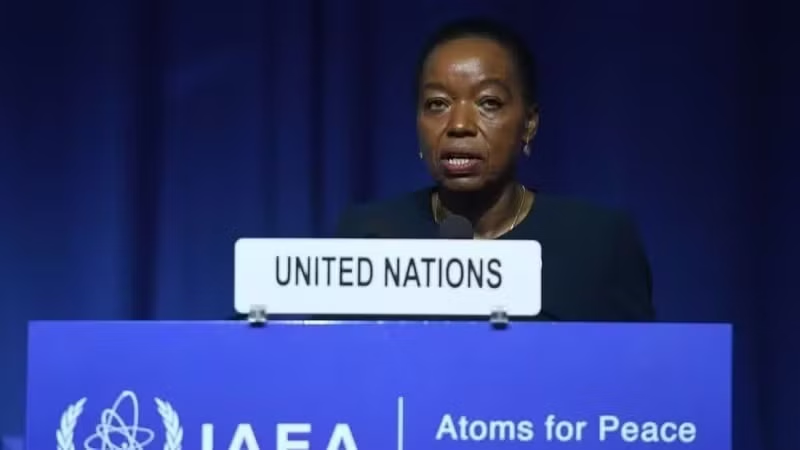
In a message delivered to the 70th session of the IAEA General Conference, UN Secretary-General António Guterres emphasised that the world stands on the threshold of a revolution in the nuclear power sector. Global nuclear power capacity is projected to potentially triple by 2060.
This marks a dramatic shift in the trajectory of nuclear power development. Historically, following a series of incidents — such as Chernobyl (1986), Three Mile Island in the US (1979), and Fukushima in Japan (2011) — the construction of nuclear power plants worldwide came to a near-halt.
For years, the international community remained wary, or even turned its back on this form of energy. It is only recently that nuclear power has seen a strong resurgence.
Many nations spanning from Europe to Asia — including Serbia, Italy, and Japan — are simultaneously considering policy reversals and deciding to revive nuclear energy, particularly as new plants utilise increasingly advanced technology that ensures safety and produces virtually no emissions.
European Commission (EC) President Ursula von der Leyen has even acknowledged that the European Union (EU) made a “strategic mistake” by abandoning nuclear power, leaving the bloc dependent on expensive imported fossil fuels and vulnerable to market shocks.
Experts attribute the resurgence of nuclear power to a combination of factors. Foremost among them is the need for energy supply autonomy amidst the current volatile international landscape.
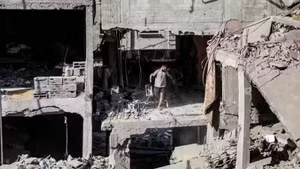
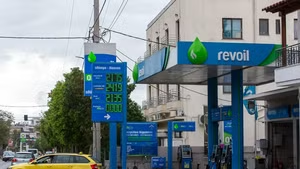
The ongoing crisis in the Middle East has exposed serious vulnerabilities in the global energy system and within individual nations. When the flow of “black gold” through the Strait of Hormuz was disrupted, many countries were almost immediately caught off guard; surging commodity prices severely strained both industrial production and the livelihoods of citizens.
This situation demonstrates that reliance on fossil fuels leaves economies fragile and vulnerable to geopolitical conflicts. Against this backdrop, the development of nuclear power is viewed as a long-term strategic solution that helps diversify energy supplies and build a “line of defence” for the economy.
Nuclear energy also serves as an effective tool to quench the “thirst” for electricity driven by the development of artificial intelligence (AI). Fatih Birol, Executive Director of the International Energy Agency (IEA), has noted that AI has become a critical factor that must be factored into the global energy security equation.
According to the IEA, global electricity demand from AI data centres rose by 17% in 2025 and is projected to continue surging, placing significant pressure on national energy infrastructures.
With its high capacity, stable operation, independence from weather conditions, and insulation from fuel price fluctuations, nuclear power can help ensure a stable and abundant energy supply for the massive, energy-hungry systems driving AI.
Furthermore, nuclear power is a low-emission energy source that supports nations in fulfilling their carbon neutrality commitments and addressing climate change. Experts note that nuclear power helps prevent billions of tons of CO2 emissions from entering the environment annually.
Developing nuclear power is not only a solution for ensuring energy security to support key industries but also a strategic, long-term choice for modernising energy systems and fostering green, low-carbon growth models.
However, the global deployment of nuclear power — particularly in developing nations — faces several challenges. According to the IAEA, nuclear power accounts for only 8.4% of total global electricity generation.
To increase the share of this energy source, nations must address complex issues regarding fuel, a skilled workforce, technology, supply chains, and safety standards, while also securing support from the international community.
IAEA Director General Rafael Grossi has called for a level playing field that allows all countries to benefit from advancements in nuclear technology, thereby ensuring a sustainable electricity supply for economic development.