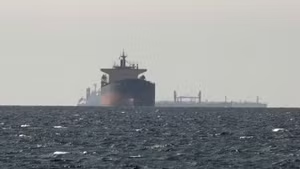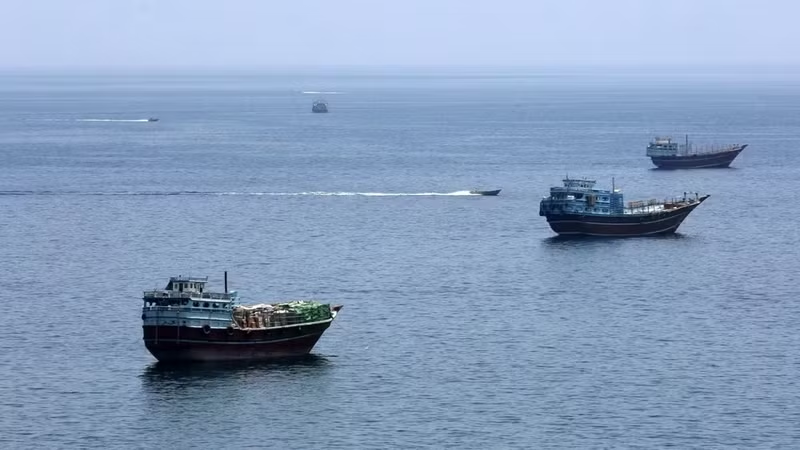
The two chokepoints in the Gulf and Red Sea directly affect the flow of crude oil and liquefied natural gas (LNG) from the Middle East, posing significant risks to global energy supplies.
In addition to disruptions to shipping through the Strait of Hormuz, the global oil market has come under further pressure since tensions escalated between Saudi Arabia and Yemen’s Houthi forces.
Saudi Arabia has carried out airstrikes on Houthi positions in response to the group’s missile and drone attacks on facilities in the Gulf state.
The situation has become increasingly concerning as the Houthis have advanced along the western coast towards the Bab el-Mandeb Strait, one of the world’s most important shipping routes. Notably, the group has also taken control of the Greater Hanish and Lesser Hanish islands in the southern Red Sea, threatening the commercial shipping route through the Red Sea used by Saudi Arabia to transport crude oil as an alternative to the route through the Strait of Hormuz.
The attacks have forced Saudi Arabia to temporarily suspend operations on its approximately 1,200-kilometre East-West pipeline, which has a capacity of around 4-5 million barrels of oil per day, equivalent to nearly 5% of global oil supply.
The pipeline transports oil from fields in eastern Saudi Arabia to export facilities on the Red Sea coast, helping the country reduce its reliance on shipping routes through the Strait of Hormuz. The Houthi attacks threaten the security of energy infrastructure and international oil supplies, particularly as the East-West pipeline has taken on greater importance amid disruptions to shipping through Hormuz.
If Hormuz is the gateway for oil and LNG flows from the Gulf to the rest of the world, Bab el-Mandeb is the southern gateway to the Red Sea, linking the Indian Ocean with the Suez Canal. Threats to maritime activity in the Red Sea are increasing risks to commercial shipping between Asia, the Middle East and Europe. The Houthis’ expansion of their control along the Red Sea and their advance towards the Bab el-Mandeb Strait have raised concerns over the security of one of the world’s most strategically important maritime routes.
Around 80% of the oil and 90% of the LNG passing through Hormuz is bound for Asia, including key markets such as China, India, Japan and the Republic of Korea. Disruptions to oil and gas flows through the strait are therefore no longer simply a concern for oil- and gas-exporting countries in the Gulf, but are becoming a shock to the global energy market.
With severe disruption continuing at the Strait of Hormuz, any attempt by the Houthis to blockade Bab el-Mandeb could eliminate another important alternative shipping route for oil exports from the Middle East.
Houthi attacks on commercial vessels and oil tankers have increased maritime costs and risks. Rerouting vessels to avoid dangerous areas can reduce exposure to threats, but it also lengthens voyages, increasing fuel consumption, chartering costs, insurance premiums and delivery times, thereby pushing up fuel prices. Disruptions to supplies through Hormuz in 2026 have also caused significant volatility in the gas market.
Spot LNG prices in Asia in the second quarter of 2026 were 45% higher than in the same period of 2025. Higher oil prices have increased transport and production costs, while higher gas and LNG prices have raised power-generation costs in countries dependent on imported gas. When electricity, fuel and transport costs all rise, the impact can spread to essential commodities such as chemicals, fertilisers, steel, cement and food, as well as many other industries.
In a global energy system deeply dependent on maritime trade, even a handful of strategic chokepoints can trigger a chain reaction, from supply disruptions and higher fuel prices to wider consequences for inflation and economic growth.
Escalating tensions and disruptions to shipping through the Strait of Hormuz and the Red Sea are posing serious threats to global energy security. With the conflict in the Middle East showing no signs of easing, finding ways to ensure safe passage and maintain maritime traffic through these waters has become one of the most urgent issues facing the region and the international community.