While 2025 saw a flurry of diplomatic activity, with negotiations over tensions between Russia and Ukraine taking place at a rapid pace, in 2026, attention from the international community shifted to the conflict in the Middle East, a region regarded as the “world’s oil hub”. The conflict in the Middle East also shifted the attention of the US —a key driver of peace efforts for Ukraine—causing the pace of diplomacy to slow considerably and the negotiation process to become stalled for months.
Recently, Russian President Vladimir Putin said that Moscow was ready for peace talks with Kyiv. Meanwhile, Ukrainian President Volodymyr Zelensky said that he had conveyed his peace proposals to the US side.
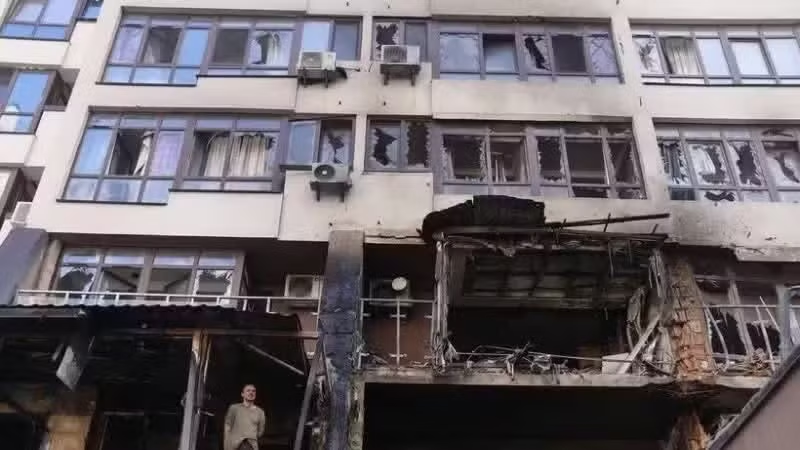
After nearly five years of prolonged confrontation, tensions between Moscow and Kyiv are considered to have entered a new and more intense phase, marked by complex strategic calculations and the intensive use of high-tech equipment.
The territorial issue remains a major and difficult obstacle, a “red line” that neither side is willing to compromise on in negotiations. Amid the diplomatic deadlock, a single retaliatory strike by either side on the battlefield could push the war to a more dangerous level.
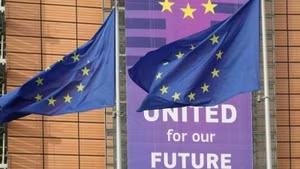
The peace process depends not only on the actions of Russia and Ukraine but is also shaped by the complex strategic interests of other stakeholders, most notably the European Union (EU). To demonstrate their pivotal role in coordinating international efforts to support Kyiv, the leaders of Germany, the UK, and France co-chaired a high-level meeting of the coalition of willing partners on August 24. Resolving the conflict in Ukraine and shaping relations with Russia are crucial for long-term European security and stability.
Consequently, Europe seeks to maintain its position and voice in the process of proposing peace solutions, rather than relying entirely on the US — an increasingly unpredictable partner. However, diplomats note that the EU's lack of direct communication channels with Russia over an extended period poses a significant limitation to proactive diplomacy.
The longer the conflict drags on, the greater the pressure on the parties involved to sustain military and financial resources.
Resolving the Ukraine issue — a protracted conflict entailing immense human, security, and economic costs, and profoundly impacting Europe's security structure — remains a shared goal of the international community. With recent diplomatic signals, the door to peace in Ukraine is inching ajar, although a dramatic breakthrough leading to a peace agreement in the near future remains highly unlikely.