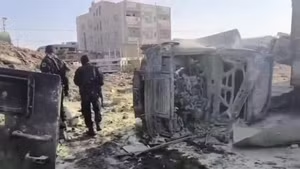
Recently, large-scale attacks launched by both Russia and Ukraine have pushed tensions between the two sides to a critical level. Ukrainian media reported that the country had endured the largest wave of air strikes since the outbreak of the conflict in February 2022.
The fierce developments on the battlefield have extinguished hopes for peace in a war that has now entered its fifth year, despite several positive signals emerging from the two sides’ ceasefire declarations.
In most conflicts, ceasefire agreements are regarded as a tactical pause, allowing the parties to maintain pressure while preventing the conflict from spiralling out of control. Ceasefires also provide an opportunity for the warring sides to regroup and reduce losses. Recent ceasefire declarations by Kyiv and Moscow have similarly served these purposes.
However, the ceasefire announcements by the two sides appeared to be out of sync, highlighting the fragility and instability of unilateral ceasefires. While Russia announced a short-term ceasefire from May 8 to 9 to coincide with celebrations marking Victory Day in the Great Patriotic War, Ukraine declared its own ceasefire beginning on May 6 and expressed a desire to extend it.
Due to differences in objectives, as well as the absence of enforcement mechanisms and monitoring systems, mutual attacks by both sides reportedly resumed almost immediately after the ceasefires took effect. This also reflects the deep erosion of trust between Kyiv and Moscow, a factor that continues to obstruct peace negotiations.
As the war drags on, both Russia and Ukraine are facing mounting pressure to sustain military and financial resources over a prolonged period. This especially poses difficulties for Ukraine, which remains heavily dependent on economic and military assistance from its Western partners.
Meanwhile, the ongoing conflict in the Middle East is increasingly overshadowing developments in Ukraine. Although the administration of US President Donald Trump continues to pledge support for negotiations between Russia and Ukraine, events in the Middle East are gradually shifting Washington’s attention and diverting global public focus away from the Ukraine crisis.
The 90-billion-EUR loan package provided by the EU has become a crucial lifeline for Ukraine. Nevertheless, estimates suggest that Ukraine is facing a budget shortfall of at least 135 billion EUR during the 2026-2027 period, as the likelihood of the conflict ending this year appears slim.
EU member states themselves are also under considerable financial strain due to soaring energy prices linked to instability in the Middle East. The International Energy Agency (IEA) has warned that even if hostilities in the Middle East were to end, restoring energy supplies would not be a rapid process.
Territorial issues remain a red line on which neither Russia nor Ukraine is willing to compromise during negotiations. Russia has repeatedly stated that it would only accept a peace agreement if Ukraine withdrew all its forces from Donbass, while Kyiv firmly rejects any territorial concessions.
Both Russia and Ukraine have gained a clear understanding of each other’s positions through the negotiations that were previously encouraged by the United States.
However, their fundamentally opposing stances make the prospect of a dramatic breakthrough towards an early peace agreement extremely difficult, especially as leaders on both sides face domestic political pressure related to negotiations.
Amid this diplomatic deadlock, even a single retaliatory strike on the battlefield could escalate the conflict to a far more dangerous level.