In his message marking the International Day of UN Peacekeepers (May 29), UN Secretary-General Antonio Guterres praised the immense contributions and silent sacrifices made by peacekeepers in maintaining peace, stability and security around the world.
From the first mission deployed in 1948 to oversee compliance with the armistice agreement between Israel and neighbouring Arab countries, a total of 71 peacekeeping operations have been launched worldwide over the past eight decades. Those wearing the blue berets have become a familiar sight in conflict zones across the globe, particularly in Africa and the Middle East.
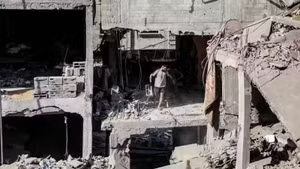
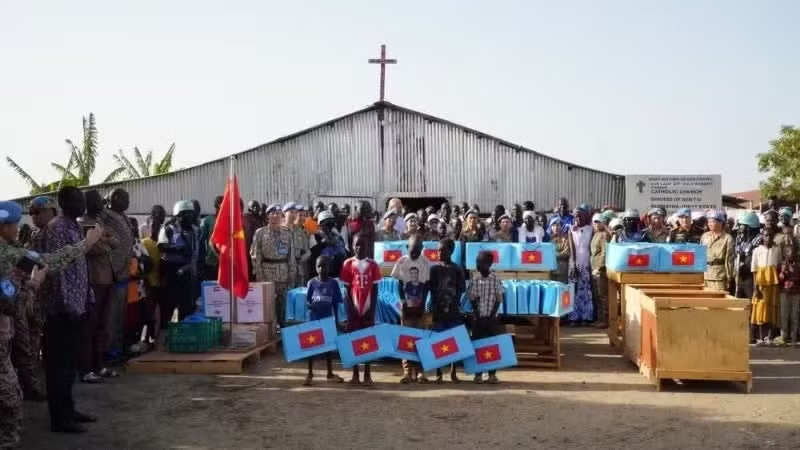
Under the UN flag, millions of troops from more than 120 countries have served far from home under extremely difficult conditions, venturing into some of the world’s most dangerous regions, where the fighting has never stopped and civilians continue to live in fear of violence and conflict.
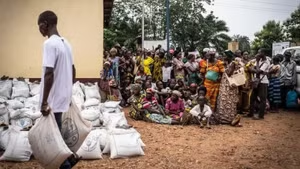
The contribution of peacekeeping forces extends beyond conflict prevention; they have also helped countries build foundations for long-term stability and rise from the ashes of war. Their presence helps ensure a secure environment conducive to political transitions and supports fledgling state institutions.
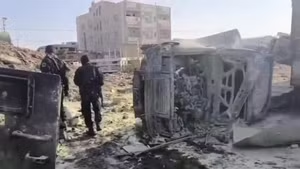
Nevertheless, as global conflicts become increasingly complex, attacks targeting peacekeeping forces have also risen. According to UN Secretary-General Antonio Guterres, peacekeeping missions are operating in increasingly complex and dangerous environments due to threats posed by armed groups, criminal organisations and terrorists.
Nearly 4,500 peacekeepers have lost their lives in the line of duty. Meanwhile, the force itself risks being weakened by limited resources, shrinking troop numbers and a deteriorating security and geopolitical environment.
A recently published report by the Stockholm International Peace Research Institute (SIPRI) shows that the UN has had to make significant personnel cuts after several countries failed to pay their contributions in full and on time. The total number of personnel deployed in international peacekeeping operations in 2025 fell to its lowest level in 25 years.
The UN chief stressed that there is a considerable gap between assigned mandates and available resources, leaving many missions operating without sufficient personnel and equipment. In addition, disagreements among the permanent members of the UN Security Council have forced the closure of some missions despite persistent instability on the ground.
The downsizing of UN peacekeeping operations could create serious security vacuums in global hotspots, potentially leading to escalating conflicts. Jair van der Lijn, Director of SIPRI’s Peace Operations and Conflict Management Programme, warned that if peacekeeping activities continue to decline, more crises will inevitably follow, with devastating consequences for innocent civilians.
For nearly 80 years, UN peacekeepers have persevered on their journey of sowing the seeds of peace, giving countless people the opportunity to escape the horrors of conflict and build new lives. With the theme “Investing in Peace”, the 2026 International Day of UN Peacekeepers calls on the world to ensure adequate resources so that peacekeeping forces can fulfil their mission.