The tit-for-tat actions between Washington and Tehran have shattered the ceasefire agreement between the two sides and pushed the Middle East into a new cycle of conflict.
The peace memorandum signed between the US and Iran, which had just sparked hope of resolving the deadlock in the Strait of Hormuz, was disabled shortly afterward.
US President Donald Trump declared that the ceasefire agreement with Iran has come to an end and that negotiations with Tehran were a waste of time. Washington warned that it would respond more forcefully than ever if international shipping lanes continue to be threatened.
Meanwhile, Tehran has declared that it will close this strategic maritime route if it continues to come under US attacks. The positions taken by both sides have further heightened tensions.
Ebrahim Rezaei, spokesperson for the National Security and Foreign Policy Commission of the Iranian Parliament, even stated that Tehran could consider withdrawing from the Treaty on the Non-Proliferation of Nuclear Weapons (NPT), revising its nuclear doctrine and expanding its retaliatory measures.
Tehran also warned that forces within the "Axis of Resistance" would not remain silent in the face of what it described as provocative actions. The Strait of Hormuz has become the focal point of the confrontation between Iran and the US.
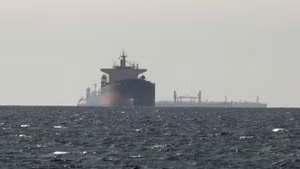
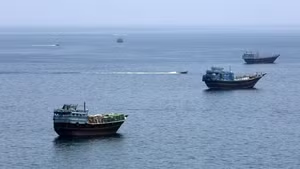
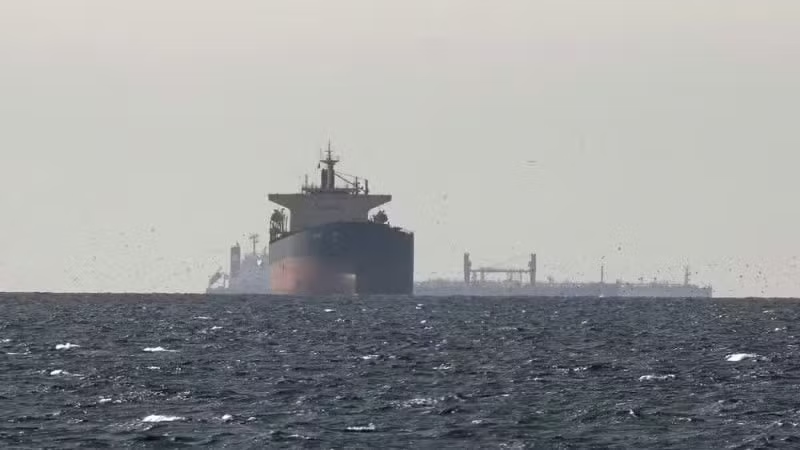
The latest attacks on commercial vessels have continued to disrupt maritime transport. Around 6,000 seafarers aboard hundreds of ships are currently stranded along this waterway. Maritime authorities have raised the threat level for the Strait of Hormuz to critical.
The renewed retaliatory attacks between the two sides have reversed the fragile recovery in commercial shipping, which had only recently resumed movement following the signing of the US-Iran ceasefire agreement and the maritime access framework.
Escalating tensions have pushed commercial shipping around the Strait of Hormuz back into crisis, raising concerns among Gulf countries over prolonged disruptions to oil exports.
With around 20% of the world's oil and liquefied natural gas passing through these waters, Gulf nations are already feeling the impact of the crisis, prompting them to seek alternative oil export routes.
Globally, the consequences are being felt through rising oil prices and soaring shipping insurance costs, which have increased from 0.25% to as much as 8%. This has driven up consumer prices and led to lower economic growth forecasts.
The World Bank has warned that the closure of the Strait of Hormuz could result in a significant slowdown in global economic growth, affecting countries dependent on imports and exacerbating food insecurity due to higher fertiliser prices.
The urgent task now is to find solutions not only to the issue of control over the Strait of Hormuz but also to the broader geopolitical consequences of the ongoing conflict.
The escalating tensions in the Gulf risk derailing the progress made since the US-Iran ceasefire framework was agreed in April, bringing diplomatic efforts back to square one.
Under the plan, the two sides were expected to continue negotiations on resolving issues related to Iran's nuclear capabilities.
However, President Trump's latest remarks indicate that the US is prepared to abandon the diplomatic path and instead seek to end the conflict through military means.
The current conflict has further complicated US-Iran negotiations, overshadowing discussions on Tehran's nuclear programme. The attacks have had serious consequences for peace, regional security, and the global economy.
Amid the growing risk of the conflict spreading, many countries and international organisations have called on all parties to exercise maximum restraint, ensure maritime safety, and maintain the uninterrupted flow of energy supplies and international trade.
With security along energy shipping routes still unstable and the US-Iran ceasefire having collapsed, the path towards establishing peace in the Middle East remains a distant prospect.