The agreement was signed by the UK and the EU on July 14 in the presence of EU Trade Commissioner Maros Sefcovic, ministers from the UK and Spain, and Gibraltar Chief Minister Fabian Picardo, and entered into force the following day.
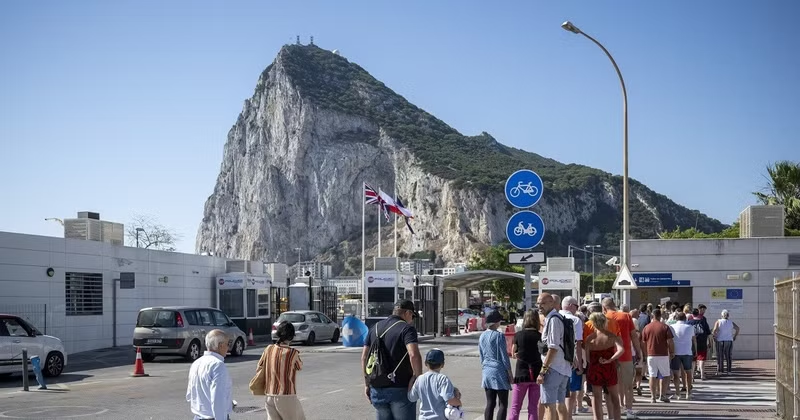
The agreement, which is widely described as historic, will make it much easier for people in Spain and Gibraltar to travel across the border. It also resolves a long-standing source of tension in relations between the UK and the European Union since Britain left the bloc, a process commonly known as Brexit. Previously, when the UK was an EU member state, people from Spain and Gibraltar crossed the border every day with ease for work, shopping, leisure, and family visits.
The European Commission (EC) said the agreement is the result of years of negotiations following the UK's withdrawal from the EU in early 2020. Its objective is to safeguard the free movement of people, maintain cross-border trade, and address issues arising from Gibraltar's departure from the EU legal framework after Brexit. At the signing ceremony, Spanish Foreign Minister Jose Albares said the agreement opens a new era for Gibraltar and neighbouring areas of Spain, while creating significant opportunities for economic development and regional cooperation.
Gibraltar is a self-governing British Overseas Territory located at the southern tip of the Iberian Peninsula, bordering Spain. It covers a relatively small area of 6.8 sq km and has a population of only about 40,000. However, Gibraltar's economy depends heavily on workers from neighbouring Spain, with around 15,500 Spanish workers crossing the border each day to work there, accounting for nearly half of the territory's workforce.
More than six years since the UK left the EU, immigration and customs document checks at the Gibraltar–Spain border crossing have continued to cause congestion, particularly during peak hours. Tensions surrounding the sovereignty dispute over Gibraltar between the UK and Spain have at times made cross-border travel a sensitive issue. Following the Brexit referendum, Gibraltar became one of the most complex issues in UK–EU relations, as the territory had previously been part of both the EU Single Market and the Schengen free movement area.
Negotiations between the UK, Spain, and the EU to establish a new post-Brexit framework for Gibraltar lasted for several years. According to the parties involved, eliminating checks on the movement of people across the border is expected to boost trade and tourism while facilitating the daily lives of tens of thousands of people who live and work in the border region.
The UK–EU agreement on Gibraltar has added another positive element to the broader picture of cooperation between the two sides. The UK and the EU have announced that they will hold their second summit on July 22 in Brussels, Belgium, to advance post-Brexit cooperation and strengthen coordination in addressing economic and security challenges.
The summit had originally been scheduled for July 13 but was postponed because of disagreements within the EU over a proposal to grant visas to young British citizens under an exchange and cultural experience programme. The meeting is expected to mark an important milestone in the process of resetting cooperation between the UK and the EU. From the British perspective, Prime Minister Keir Starmer has made no secret of his desire to move closer to the EU, viewing this as an important part of his strategy to promote economic growth and ease domestic cost-of-living pressures.