The Norwegian Refugee Council (NRC) has released heartbreaking figures: 170,000 families, equivalent to nearly one million people in Gaza, are now living in makeshift tents under the scorching summer heat; around 5,000 families have no temporary shelter at all and are forced to sleep outdoors; and 52,000 families are squeezed into severely overcrowded shelters. According to United Nations data, as many as 1.7 million people are living at 1,600 displacement sites across Gaza, 88% of which are basic temporary shelters.
According to United Nations data, as many as 1.7 million people are living at 1,600 displacement sites across Gaza, 88% of which are basic temporary shelters.
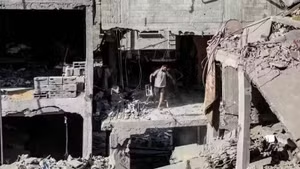
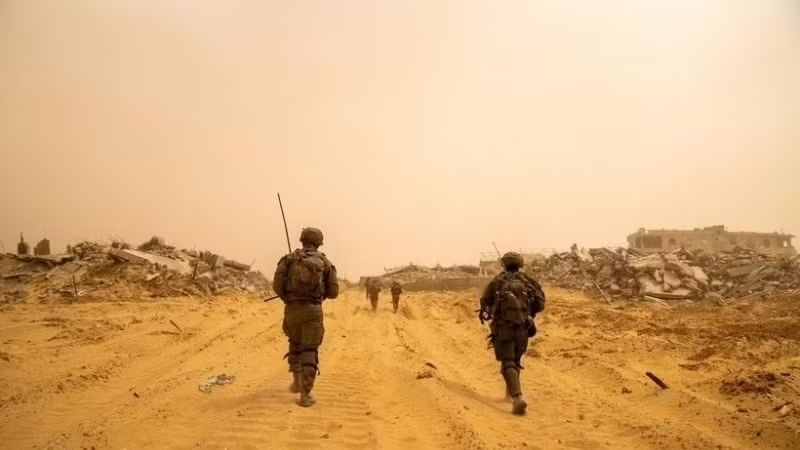
According to the NRC, the widespread destruction of houses caused by the conflict, combined with restrictions on construction materials and humanitarian aid, has forced hundreds of thousands of families to continue living in temporary conditions. The organisation stressed that the housing crisis in Gaza is not only the result of extreme weather but also of the prolonged conflict, large-scale displacement, and obstacles to relief efforts.
NRC Secretary General Jan Egeland said that materials such as shade nets, plastic tarpaulins, and basic repair kits cannot rebuild Gaza, but they can help protect residents from extreme heat, dust, and the risk of disease.
Jehan Salim, a humanitarian coordinator in Palestine, warned that this year's summer temperatures in Gaza are exceptionally high and pose serious health risks, particularly for children, the elderly, and people living without adequate shelter, clean water, electricity, and healthcare services.
She noted that simple measures such as providing shade, improving ventilation, and carrying out basic shelter repairs could significantly reduce heat-related risks. However, the volume of essential materials delivered to Gaza remains far below what is needed to meet the population's demands.
Just ahead of a donor conference held in Belgium, Dubravka Suica, European Union Commissioner for the Mediterranean, announced that European donors had committed 1 billion USD towards Gaza's reconstruction effort.
The support package includes contributions from Belgium, France, Germany, Denmark, Finland, the European Commission (EC), and the European Investment Bank (EIB). According to EU officials, the package also includes part of the aid that had already been pledged previously for Gaza.
The generous aid package of the Europe will be used to clear debris left by the conflict and restore essential services such as water supply, environment sanitation, and waste management. Observers have highlighted the fact that the 1 billion USD package does not impose political conditions, demonstrating that the funding is intended solely to support the people of Gaza.
The United Nations has emphasised that humanitarian needs in Gaza remain enormous and that reconstruction will take many years and require tens of billions of dollars. The territory is also facing severe shortages in construction materials and equipment needed for debris removal. Therefore, in addition to financial assistance, international donors are encouraged to provide necessary equipment and materials directly in order to accelerate the construction and reconstruction of the Gaza Strip.