According to a recent report from the United Nations High Commissioner for Refugees (UNHCR), in 2025, nearly 15 million refugees worldwide returned or were forced to return to their home countries, the second-highest level since record-keeping began 60 years ago. Many of them face dire living conditions, as infrastructure in their homelands has been severely devastated by conflict, essential services are lacking, employment is unstable, and security risks remain.
According to UNHCR interviews with Afghan returnees, 80% of surveyed households said they lacked enough meals daily, while more than one-third said they lacked access to healthcare services. This reality has raised concerns over long-term reintegration, while also increasing the risk of a renewed wave of irregular migration.
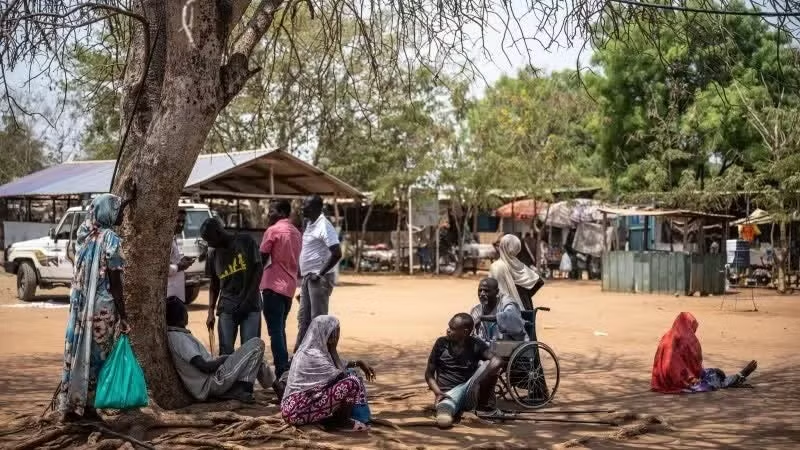
Unlike those who have returned home, nearly 118 million people, equivalent to one in every 70 people worldwide, remain trapped in displacement abroad as they flee violence and poverty. Most refugees come from security hotspots, such as South Sudan, Sudan, Syria, and Ukraine.
UN High Commissioner for Refugees Barham Salih affirmed that many people cannot return home but face rejection in their asylum countries. At present, many countries are scaling back or suspending reception programmes. The US, which for many years was the world’s largest refugee resettlement country, has sharply reduced the number of people granted refugee status.
Recently, White House adviser Stephen Miller declared that “America’s doors are completely closed to asylum seekers,” after the US Supreme Court issued a key ruling on immigration policy, providing further legal grounds for President Donald Trump’s administration to implement tighter border controls and scale back several humanitarian protection programmes.
Alongside the US, many countries have also reduced reception quotas or suspended long-standing resettlement programmes. The European Union (EU) has recently adopted one of its toughest regulations in years to tighten immigration control.
As more doors close, opportunities for asylum seekers are increasingly narrowing. At present, much of the responsibility falls on countries with limited resources. UNHCR said nearly 68% of the world’s refugees are being hosted by low- and middle-income countries. These countries already face numerous challenges in economic development, employment, education, healthcare, and infrastructure. In addition, an estimated 2.37 million refugees worldwide will need resettlement in a third country in 2027.
Escalating conflicts in many regions are driving a growing wave of displacement. The Middle East is among the regions with the highest numbers of displaced people in the world, with around 24 million people displaced due to instability and humanitarian crises. The United Nations has called on the international community to work together to address the root causes of the refugee crisis by extinguishing conflict hotspots, ending violence, and stabilising people’s lives.