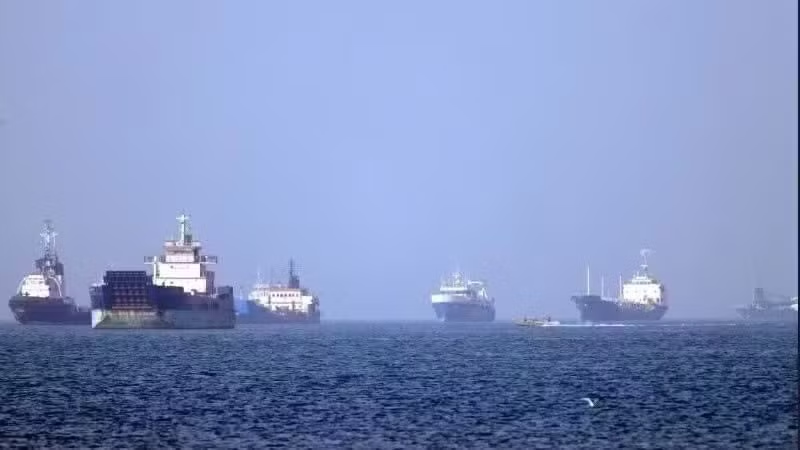
The International Energy Agency (IEA) fears that the world may only be able to “hold out” for a short time longer, as countries are drawing down oil reserves at a record pace.
The global oil market is facing a severe supply shortage due to disruptions to shipping through the Strait of Hormuz. According to the IEA, more than 14 million barrels of oil per day are currently stalled, causing global oil reserves to fall at a record rate. In March and April alone, global oil stocks declined by around 250 million barrels. The current supply shock is unprecedented, forcing many countries to release oil from strategic reserves to stabilise the market.
However, the IEA warned that even if governments around the world release strategic reserves, commercial oil supplies remain critically short due to disruptions to supply from the Gulf. According to IEA Executive Director Fatih Birol, the world may be able to hold out for only a few more weeks.
Amid the global thirst for energy, the IEA has had to coordinate the release of 426 million barrels of oil from emergency reserves held by 32 member countries, of which around 164 million barrels have been used. The crisis has also spread to the refining and petrochemical sector, with global refinery output in the second quarter of 2026 forecast to fall by around 4.5 million barrels per day due to infrastructure damage, export restrictions, and a shortage of crude oil supplies for refineries. This could cause shortages to emerge first in products such as diesel, jet fuel, petrol, and marine fuel, thereby affecting food prices and global logistics costs.
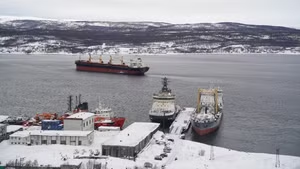
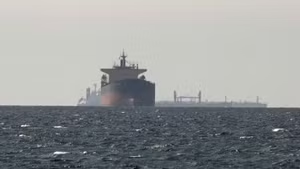
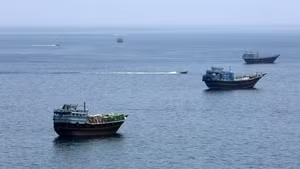
More worrying is the supply shortage caused by oil being “trapped” in the maritime transport system due to security risks, high insurance costs, and ships being forced to take longer routes.
According to analysts, oil on offshore vessels does not have the same operational value as oil stored near refineries. The issue now is not only oil prices or the risk of military conflict between the US and Iran but also a paradox in which oil inventories are falling sharply while the amount of oil held on ships drifting at sea is increasing. The IEA’s latest report showed that onshore oil stocks fell by as much as 170 million barrels in April, while oil stored at sea increased by 53 million barrels.
Analysts said the global energy market is currently being affected simultaneously by geopolitical risks, the production policy of the Organisation of the Petroleum Exporting Countries and its partners (OPEC+), and the transition towards clean energy. The market for “black gold” has become even gloomier as OPEC+ output has also recorded a significant decline.
In April, the alliance’s production fell by 830,000 barrels per day to 34.1 million barrels per day. Notably, eight key countries in the group, including Russia, Saudi Arabia, and the United Arab Emirates (UAE), produced as much as 8.8 million barrels per day below their target. Although the organisation has sought to reassure markets that global oil supply and demand can remain relatively balanced in the medium term, IEA forecasts show that the market could face a shortage of around 1.78 million barrels per day in 2026 if Middle East supplies are not fully restored.
The Hormuz Strait crisis is having a wide-ranging impact, completely altering the pattern of global energy consumption and forcing countries to confront the urgent challenge of energy security. The rapid narrowing of reserve buffers amid prolonged supply disruptions could lead to sudden price surges in the coming period.
Experts warned that if shipping through the Strait of Hormuz continues to be restricted and inventories in countries keep falling at the current pace, the oil market could become extremely sensitive by the end of June. In the worst-case scenario, oil prices may continue to climb. With fuel demand usually rising sharply in summer, oil prices are forecast to remain highly volatile.