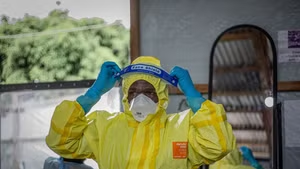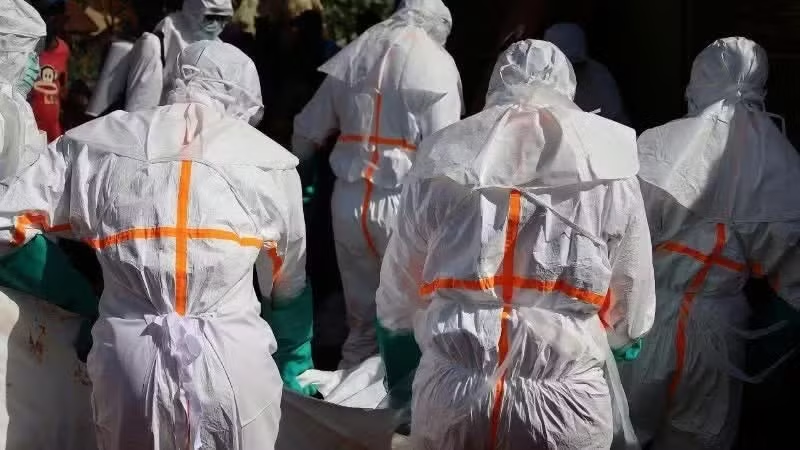
The number of infections has surged to more than 1,000, while the death toll has exceeded 200. Countries outside the region, including the US, Canada and several European nations, are also taking steps to prevent the disease from spreading across borders.
Health authorities warn that the outbreak may already be beyond control, with healthcare systems in affected areas struggling under mounting pressure as cases continue to rise. Particularly concerning is the fact that the Ebola strain currently detected in Congo and Uganda has no approved vaccine or specific treatment. Experts believe the virus may have circulated within communities for some time before being identified, suggesting the true scale of the outbreak could be far greater.
The current outbreak involves the Bundibugyo strain — a rare variant for which no preventive vaccine or dedicated treatment currently exists. Medical experts say this is making containment efforts significantly more difficult than during previous Ebola outbreaks.
Scientists around the world are now racing against time to develop a vaccine targeting the Bundibugyo strain. Researchers are pursuing two main approaches.
One strategy focuses on adapting existing Ebola vaccine technologies to combat the new strain, which is considered the faster option as it builds on available scientific and manufacturing platforms.
Another approach involves replacing the surface protein used in older Ebola vaccines with the specific glycoprotein of the Bundibugyo strain in order to trigger an immune response against the virus. However, experts acknowledge that moving from laboratory research to real-world deployment remains a lengthy process.
Time is now the most critical factor. Even under the most favourable scenario, it is unlikely that a vaccine could receive widespread approval within less than a year. This means traditional public health measures — including isolating infected patients, tracing contacts and raising public awareness — remain the primary line of defence.
In response to the worsening outbreak, the African Union (AU), the East African Community (EAC) and numerous governments have issued urgent warnings.
At a time when the World Health Organisation (WHO) has declared the outbreak a Public Health Emergency of International Concern (PHEIC) and international aid funding has fallen sharply, African healthcare systems are facing enormous strain.
Limited financial and technological resources are further complicating efforts to contain the virus. While African countries are calling for stronger collective action and greater self-reliance in epidemic preparedness, the WHO and international partners are working to control the outbreak. The international community has pledged nearly 500 million USD in emergency support to strengthen response capacity and prevent the disease from spreading further.
The race to combat the Bundibugyo strain is not only a scientific challenge, but also a test of the world’s preparedness for future pandemics.
Following COVID-19, many had hoped humanity had entered an era of rapid responses to emerging viruses. However, the situation unfolding in the Democratic Republic of Congo shows that when a lesser-known pathogen emerges, gaps in vaccine development and scientific research can still leave the world vulnerable.
The latest Ebola outbreak also highlights a familiar reality in global healthcare: diseases that primarily affect poorer countries often fail to attract sufficient research investment until a crisis erupts.
The Bundibugyo strain was previously regarded as relatively rare and not a priority for pharmaceutical companies. As a result, the world now finds itself almost starting from scratch in the fight against Ebola once again.