The world is not short of warnings about the severity of climate change. What is lacking is concrete action delivered at the speed and scale required.
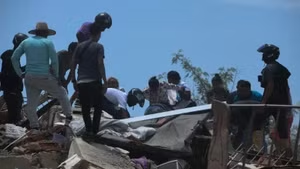
While climate discussions and pledges continue to dominate international agendas, extreme heatwaves, devastating floods and severe droughts are occurring with increasing frequency.
The UK and France have recently recorded their hottest May on record. Asian countries such as India and Japan have also been grappling with extreme heat, with cases of heatstroke and heat-related deaths reported.
Simon Stiell, Executive Secretary of the United Nations Framework Convention on Climate Change, described the record-breaking early-season heatwave scorching large parts of Western Europe as a stark reminder of the worsening impacts of the climate crisis.
It cannot be denied that the global fight against climate change has achieved some positive progress. Many countries have made climate adaptation a vital priority within their development strategies.
Even in the field of climate finance—a contentious issue that has long generated disagreement and division—there are signs of hope.
According to a report by the Organisation for Economic Co-operation and Development (OECD), developed countries have exceeded their commitment to provide developing nations with 100 billion USD annually for climate action for three consecutive years.
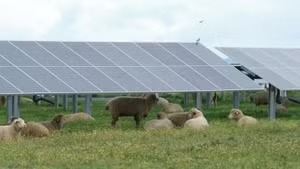
At the same time, the green transition is gathering momentum as humanity benefits from expanding scientific knowledge and increasingly sophisticated technological tools for managing climate risks.
Nevertheless, the battle against climate change remains extremely challenging due to the gap between commitments and implementation, as well as competing interests among different stakeholders.
This was evident in the outcome of the 30th Conference of the Parties to the United Nations Framework Convention on Climate Change (COP30), held in Brazil in 2025. The conference produced a compromise agreement, but critics argued that it was “not ambitious enough” to save the planet.
In terms of climate finance, the agreement raised the annual adaptation finance target to 120 billion USD but postponed the deadline until 2035. Vulnerable countries warned that the delay would leave them without sufficient resources to address rapidly growing adaptation needs.
Virtually every climate action measure—from deploying early-warning systems to upgrading infrastructure for climate resilience—requires substantial financial resources. The issue of phasing out fossil fuels has also remained highly contentious.
Many countries have made commitments to reduce dependence on fossil fuels, yet concrete implementation has often lagged behind.
The final agreement reached at COP30 failed to establish a clear roadmap for phasing out fossil fuels, reflecting conflicting interests between climate-vulnerable countries calling for decisive global action and fossil fuel-dependent nations seeking to minimise environmental impacts while safeguarding their energy interests.
While difficult negotiations continue behind conference doors, climate conditions outside are deteriorating day by day.
What the world needs is not another round of promises or new commitments, but the swift, transparent and accountable implementation of those already made—for the future of humanity.