In its assessment of the situation in Afghanistan five years after the Taliban returned to power, the United Nations Assistance Mission in Afghanistan (UNAMA) highlighted several positive developments.
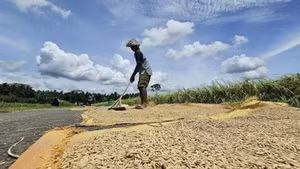
Conflict has gradually declined, while an initial improvement in security has created more favourable conditions for national reconstruction. Despite numerous obstacles, opportunities for economic cooperation with several countries in the region are gradually emerging. The Taliban authorities have also focused on infrastructure and road development projects and expanding irrigation systems to support agricultural production.
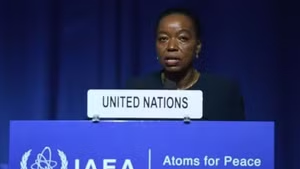
After decades of conflict, the Afghan people continue to harbour a strong desire for peace and a prosperous, happy life. However, Georgette Gagnon, Acting Head of UNAMA, stressed that achieving sustainable peace and prosperity would require more than simply ending conflict. Afghanistan continues to face numerous difficulties.
Around 14 million Afghans are currently experiencing severe food insecurity. Nearly seven million refugees returning to the country over the past three years have placed additional pressure on an already fragile economy. Meanwhile, policies towards women and girls remain one of the most contentious issues during the Taliban’s five years in power.
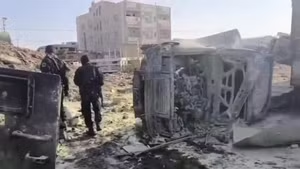
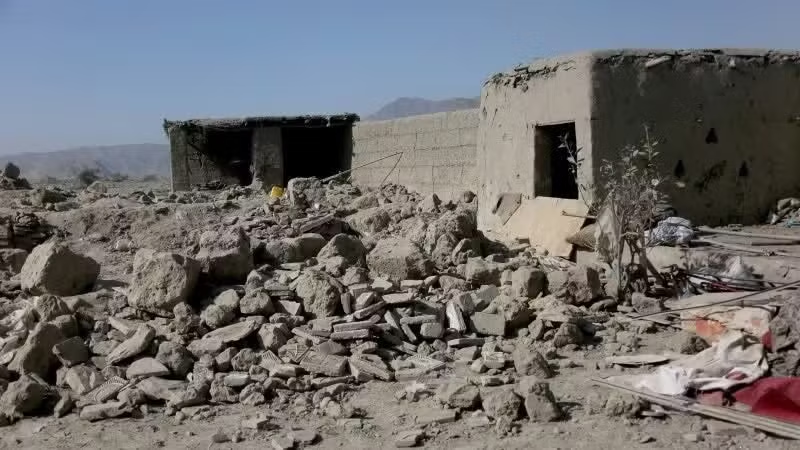
One of the achievements frequently cited by the Taliban authorities is the improvement in Afghanistan’s security situation. After taking power, the Taliban repeatedly launched counter-terrorism operations, significantly reducing the frequency and scale of terrorist attacks. However, security risks remain. Tensions along the Afghanistan-Pakistan border have also escalated sharply following months of reciprocal military actions. Hundreds of people have been killed in cross-border clashes since February this year.
For many Afghans, everyday life has become safer, but concerns over making ends meet continue to weigh heavily. The United Nations says millions of Afghans remain at risk of severe food shortages.
The World Food Programme (WFP) estimates that 900 million USD is needed to maintain emergency relief and nutrition assistance operations in Afghanistan in 2026. Without timely additional funding, the country’s food crisis could take a turn for the worse, threatening the lives of millions.
Another major concern in Afghan society today is the policy towards women and girls. The United Nations Educational, Scientific and Cultural Organisation (UNESCO) says Afghanistan is currently the only country in the world where girls are banned from attending secondary school and university. The ban on education for females is estimated to result in around 600,000 women leaving the workforce over the next 35 years, while causing an estimated 9.6 billion USD in losses to the Afghan economy.
UNESCO warns that maintaining the ban could exacerbate poverty, leave Afghanistan facing labour shortages, undermine its development potential and create difficult-to-reverse socio-economic consequences. It is also one of the major obstacles preventing the Taliban authorities from breaking out of international isolation and securing recognition from the international community.
Five years after the Taliban returned to power, Afghanistan can be said to have emerged from the “nightmare” of war. However, the road towards lasting peace and sustainable prosperity remains extremely challenging. Intensifying counter-terrorism efforts, ensuring human rights, reversing discriminatory policies and restoring girls’ access to education are among the urgent issues that need to be addressed.
The international community believes that only by removing these “bottlenecks” can Afghanistan make significant progress on its path towards reconstruction and deliver a more prosperous and happier life for its people.