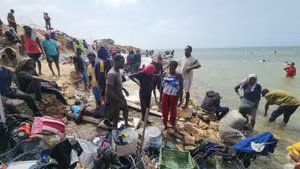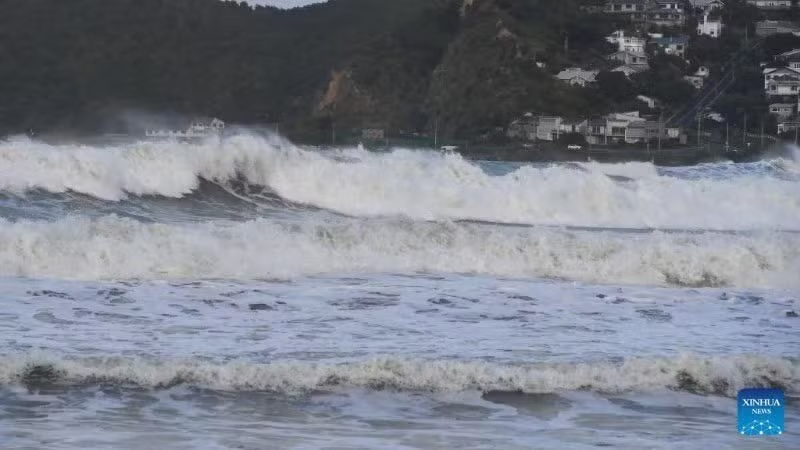
A small island nation in the Pacific with only about 11,000 people, Tuvalu is nevertheless on the “frontline” of the climate crisis, suffering severe consequences from rising sea levels.
In the past 30 years alone, sea levels in Tuvalu have risen by 21cm, nearly double the global average. Saltwater has flowed into homes and flooded roads. Groundwater has been contaminated, while many key crops can no longer grow.
More worryingly, scientists say that at the current rapid pace of sea-level rise, by 2050, half of Tuvalu’s capital Funafuti will be flooded. Much of the island nation could even be submerged by the end of the 21st century.
For many regions around the world, sea-level rise has long become a permanent threat.
United Nations Secretary-General Antonio Guterres has repeatedly warned of the serious consequences as coastal communities face the risk of being submerged, freshwater sources contaminated, crops and infrastructure destroyed, biodiversity diminished and economies devastated.
Sectors considered pillars of the economy, such as fisheries, agriculture and tourism, are under the greatest pressure.
According to the United Nations, global sea levels rose by 4.7mm per year during 2014-2023 and surged to a record 5.9mm in 2024.
Under the worst-case scenario, sea levels could rise by more than 1m by the end of the century, threatening the lives of communities in coastal areas and on islands.
From Pacific island nations to Asia, the Caribbean and Central America, many once-crowded coastal cities and villages are gradually becoming deserted as people are forced to leave their homeland when their homes are no longer safe places to live. The United Nations forecasts that around 1.2 billion people worldwide will be displaced by 2050 due to sea-level rise.
In fact, in 2025, more than 90% of Tuvalu’s population applied for visas to migrate to Australia.
The Tuvalu Government has even created a “digital nation” in the virtual world to preserve national sovereignty and cultural identity if its physical territory disappears.
Many people in other island nations such as Kiribati, Vanuatu and the Marshall Islands have also been forced to leave their homeland as the places where they live are submerged by the sea.
However, experts are concerned that the wave of migration is not merely a change in where people live and work, but may also bring negative consequences for the preservation of cultural values and heritage of Pacific island nations.
Global warming causes ice to melt, while the thermal expansion of water caused by rising ocean temperatures is a leading cause of sea-level rise.
The World Glacier Monitoring Service (WGMS) said global glacier systems are melting at an unprecedented rate. Since 1975, glaciers, excluding the Greenland and Antarctic ice sheets, have lost more than 9,000 billion tonnes of ice.
Experts emphasise that melting ice causes sea levels to rise by about 1mm per year, while also creating many risks of serious natural disasters such as floods, landslides and rockfalls.
Notably, support from major countries is not sufficient for areas directly affected by sea-level rise to withstand natural disasters.
At the 55th Pacific Islands Forum Leaders Meeting, regional leaders are pushing for the Pacific Resilience Facility to be put into operation, thereby helping vulnerable communities more easily access the resources needed to respond to the impacts of climate change, especially urgent issues such as sea-level rise.