Smoke-free standards at attractions and accommodation establishments
Ha Van Sieu, Deputy Director of the Viet Nam National Authority of Tourism, said that in today’s tourism activities, visitors not only look for beautiful landscapes and good facilities, but also expect clean, safe, healthy and friendly spaces.
Clearly, a fresh, clean and safe environment helps enhance visitor experience and build a destination brand. Conversely, an unhealthy tourism environment can affect the quality of visitors’ experiences.
From the perspective of green and sustainable tourism development, the tourism sector aims not only to increase visitor numbers but also to improve visitor quality, enhance value and strengthen competitiveness.
“A smoke-free environment is not only a regulation. It needs to become a standard of quality.”
Ha Van Sieu, Deputy Director of the Viet Nam National Authority of Tourism
Developing green and sustainable tourism first of all requires creating a good environment for people. Specific actions such as building cleaner attractions, healthier accommodation establishments and more friendly service spaces will help form new standards for destinations.
In practice, building a smoke-free environment at attractions and accommodation establishments is a concrete and practical task. It helps protect health, improve service quality and build the image of a civilised, friendly and sustainable destination.
“A smoke-free environment is not only a regulation. It needs to become a standard of quality,” Deputy Director Ha Van Sieu said.
In Hue, this criterion is gradually being introduced at attractions, accommodation establishments and tourism service spaces. According to the Tourism Information Centre, Hue is a suitable place to implement and spread this value. Building a green, clean and healthy tourism environment will help improve visitor experience, consolidate the destination brand and create additional value for tourists, businesses and the community.
Creating a civilised tourism space for a heritage land
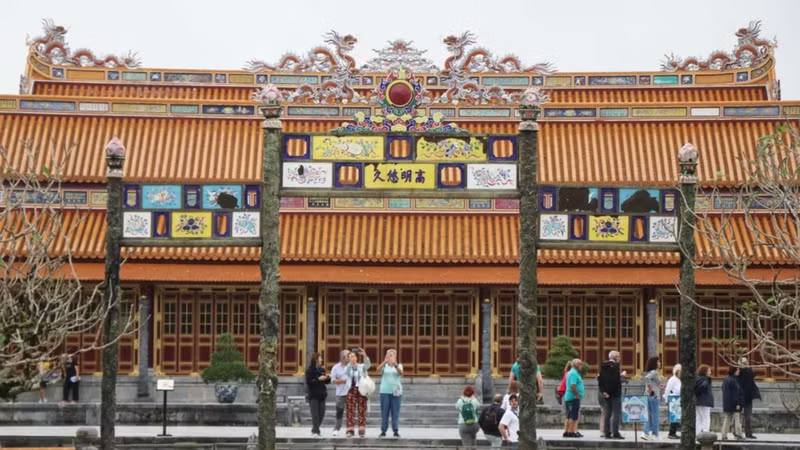
As a centrally-run city, Hue has affirmed its position as a distinctive heritage city thanks to its invaluable system of resources, including the Complex of Hue Monuments and eight UNESCO-recognised heritages.
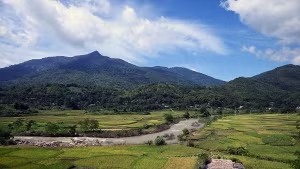
Visitors to Hue can admire natural landscapes such as the Huong River, Ngu Mountain and the Tam Giang-Cau Hai lagoon system, explore long-standing traditional craft villages and experience a rich culinary culture with nearly 1,700 dishes.
It is this rich and outstanding heritage resource, together with the determination to innovate, that has become the core foundation for Hue to build the image of a living heritage city rich in identity, while also serving as a basis for sustainable tourism services.
For a smoke-free environment to truly become a quality assessment standard for destinations and accommodation environments, Deputy Director Ha Van Sieu proposed that, after training courses, agencies, units and businesses proactively develop plans suited to their actual conditions. Communication should also be strengthened, along with guidance for staff and visitors. Inspection and evaluation need to be maintained regularly to ensure that smoke-free environments are implemented in a substantive and sustainable manner.
In implementing its strategy for sustainable tourism development, Hue City has set out key tasks and solutions. One notable solution is to take heritage as the foundation for developing distinctive products and building a diverse product ecosystem. At the same time, the city is diversifying its tourism product ecosystem by market segment, developing chains of experiences linked within the region, and strengthening inter-regional development linkages to expand market space.
Alongside this, Hue is modernising its communication language and renewing methods of destination promotion, while accelerating digital transformation and the application of modern technology in management and conservation.
According to Nguyen Huy Hien, Deputy Director of the Hue Department of Culture, Sports and Tourism, building a civilised tourism environment, including a smoke-free environment, is a factor that helps enhance the attractiveness and competitiveness of the destination.
In the coming period, the locality will continue directing the implementation of documents and plans on preventing and controlling the harmful effects of tobacco at tourism and service businesses and tourist sites, so that these units can supplement, improve and better carry out this work.
In addition, the Hue Department of Culture, Sports and Tourism will coordinate with relevant units to organise training and knowledge-building activities for workers at tourism and service businesses and tourist sites on the harmful effects of tobacco and the provisions of the Law on Prevention and Control of Tobacco Harms. At the same time, it will coordinate with city departments, sectors and agencies to establish an intersectoral team to supervise, inspect and handle violations related to smoking in places where smoking is banned, in accordance with the Law on Prevention and Control of Tobacco Harms.
For tourism businesses and accommodation establishments, building a smoke-free environment in particular and a green, sustainable tourism environment in general should be seen as an investment in brand value and visitors’ health. This also helps improve the working environment for employees and enhance the long-term competitiveness of the destination.
Above all, the goal of building a smoke-free tourism environment also contributes to forming a sense of respect for shared spaces. A civilised destination should offer visitors a feeling of comfort and safety in every experience.
For a heritage city like Hue, cultural values are not found only in monuments, but are also reflected in the way people behave towards the living environment, the community and visitors.