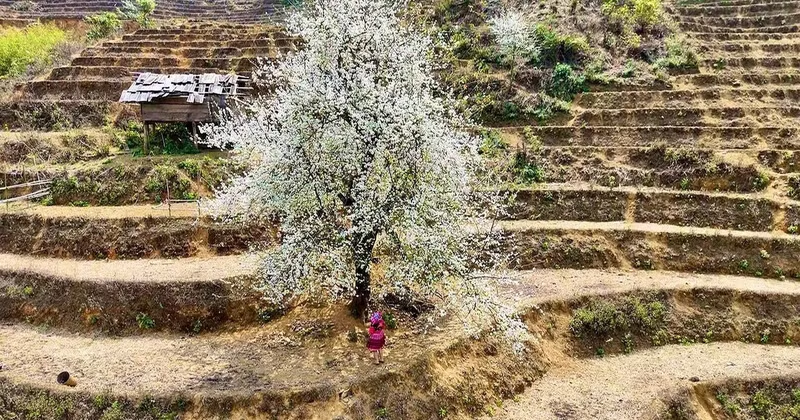
More than 300 kilometres from the capital Ha Noi, the pristine and unspoilt beauty of this place makes Ngoc Chien feel like an “ecological oasis” amid the great forests.
Covering a natural area of 21,219 hectares, of which over 18,000 hectares are forested, with a forest coverage rate of around 87%, the environment here has been carefully protected and preserved, sustaining a pure vitality that nourishes every breath of life.
A happy ecosystem
“Ngoc Chien is beautiful in every season. This land retains its original values, from landscape to indigenous culture — distinctive and unique. The people are friendly, courteous, and exceptionally hospitable. I believe this is the locality with the highest happiness index in our country,” Bui Manh Sy, Deputy Secretary of the commune Party Committee shared.
The route to Ngoc Chien is arguably one of the most scenic in the north-west, running along National Highway 32, crossing the Khau Pha Pass and the famed terraced rice fields of Mu Cang Chai. At Kim Junction, towards Nam Khat–Ngoc Chien, the road winds through majestic mountains and highland villages.

The road into the commune meanders across the Sam Sip Pass. Infrastructure has been significantly improved, with clean concrete roads making travel convenient, yet the overwhelming sense of vast, untamed nature remains intact. Terraced fields stretch alongside traditional stilt houses roofed with po mu wood and characteristic stone walls, all blending harmoniously into a landscape rich in identity.
Beyond its dense forest coverage, Ngoc Chien boasts rare ecological assets. Beneath the canopy of primary forest, more than 1,000 hectares of ancient tea trees are preserved as part of the region’s heritage, alongside 2,650 hectares of son tra orchards and hundreds of hectares of naturally formed bonsai pine hills, creating a cool, green, and refreshing environment. Interwoven within this setting is around 405 hectares of water surface from the Nam Chien hydropower reservoir — known locally as “Ngoc Lake” — featuring an arched dam that adds both grandeur and poetic charm. Complementing this are multi-tiered waterfalls of various forms, from the hundreds-of-metres-high Pu Danh waterfall to the seven-tiered Bang Long and Bang Ang falls, as well as the Sung stream, completing a vivid natural tableau where each step offers visitors a distinct experience.
Development without compromise
Guiding us to the martyrs’ cemetery and local cultural-historical sites, Nguyen Minh Tuan, Secretary of the commune Party Committee, proudly shared that the climate remains cool year-round, with an average temperature of about 23°C. Ngoc Chien is home to 13 natural hot mineral springs, with temperatures ranging from 30 to over 70°C, along with two communal bathing areas — valuable tourism resources that are highly appreciated by visitors.
The commune comprises 15 villages, with 2,345 households and a population of 12,083, representing four ethnic groups. The Thai account for 65%, the H’Mong 33%, with the remainder being La Ha and Kinh. “People here still maintain traditional lifestyles: meals are served on banana leaves, chopsticks are lacquered red, wine is drunk from bowls, and families live in po mu wooden houses, largely self-sufficient with forest vegetables, stream fish, mountain goats, free-range chickens, and locally raised pork hung outside the stilt houses,” said local official Lo Thi Ngoc.
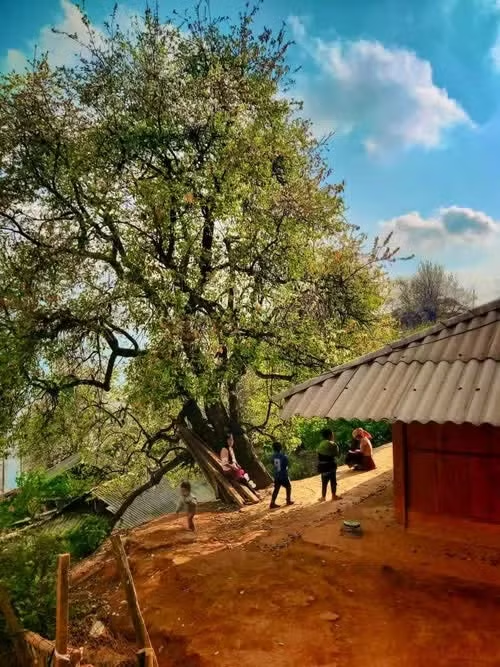
Happiness here is evident in every intricately crafted po mu wooden house, some centuries old. Doors are left unlocked, fences are absent, and motorbikes can be parked along the roadside without supervision — silent affirmations of the trust shared among the people.
It is also reflected in how people treat nature. There are no haphazard concrete constructions or the noise of heavy machinery. Mountains remain mountains, forests remain forests. The terraced fields that contour the hillsides represent a harmonious human presence that does not harm the environment.
In Ngoc Chien, despite ongoing change and the growth of tourism, nature is consistently protected and not exploited to exhaustion. Hot mineral streams flow through the villages year-round, not for large-scale resort developments but as places where locals soak after a day’s work. A precious resource is thus preserved as part of everyday life, shielded from the commercialisation seen in many other destinations.
Preserving the purity of the mountains
Lo Van Thoa, Vice Chairman of the commune People’s Committee, shared: “At an altitude of over 2,000 metres above sea level, Nam Nghep is considered one of the highest H’Mong-inhabited villages in Viet Nam. It is also home to the country’s largest son tra forest, covering more than 1,600 hectares. Visitors are deeply impressed by its untouched local culture.”
The main livelihoods here are cultivating son tra, cardamom, and terraced rice. Recognising forest protection as essential to their survival, every resident of Nam Nghep cherishes and safeguards each tree, maintaining a clean and healthy living environment.
At A Vang Homestay, one of the better-known destinations, owner Thao A Vang — formerly a village head and Party cell secretary for 20 years — decided to step down from administrative roles to focus on tourism and household economic development, creating sustainable livelihoods.
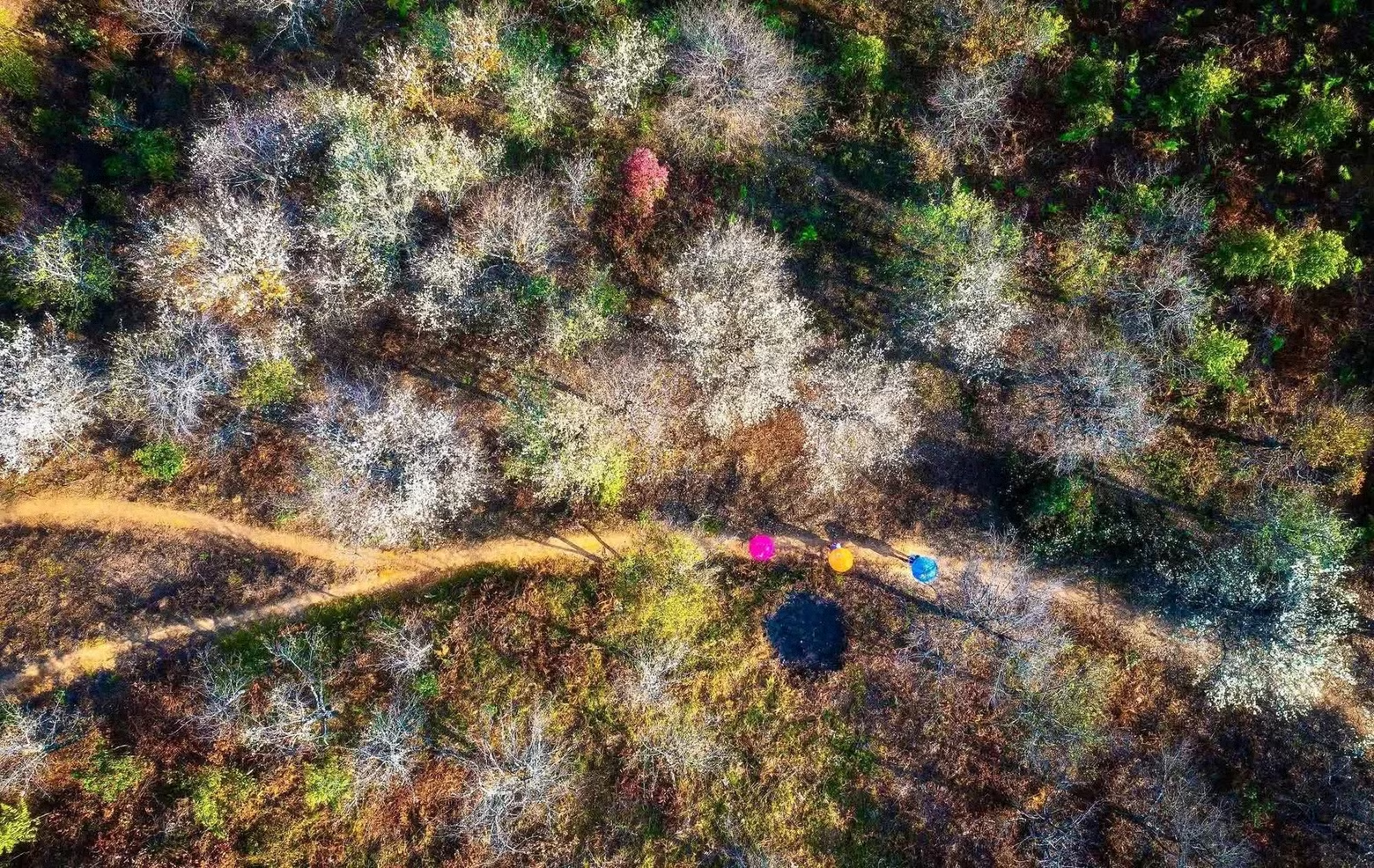
The H’Mong man, born in 1976, deftly prepared food as he recounted: starting the homestay in 2022, his family initially had just two traditional wooden stilt houses, each accommodating around four guests. At the time, there was no concrete road (only completed in 2025), making access difficult, yet the homestay was frequently fully booked. Seeing rising demand, this year he added two more houses built with traditional earthen walls and po mu tile roofs — retaining rustic local character while adapting to modern accommodation needs. He has also launched trekking tours to the 2,720-metre Ta Tao peak, known for its primary forests, moss-covered landscapes, and spectacular scenery. In April, visitors can immerse themselves in the romantic sight of nearly 800 hectares of rhododendrons blooming across the mountains.
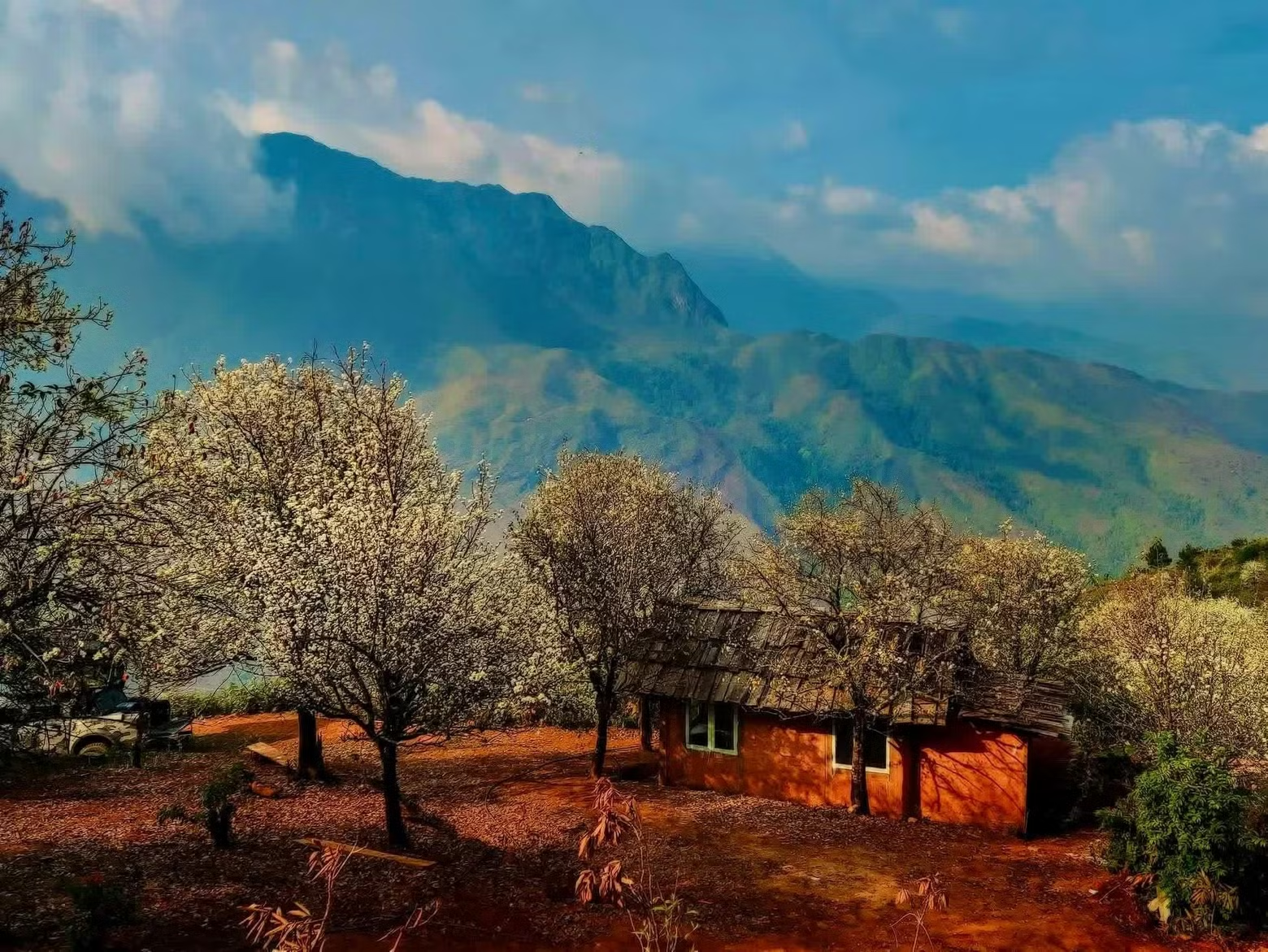
I’ve travelled widely — north-western Viet Nam has many beautiful villages, but it is rare to find a place that retains such raw and pure beauty as Ngoc Chien. From its people to its landscapes, everything seems to have developed naturally, with minimal interference, remaining separate from the noise and bustle of the outside world.
Minh Khang, a visitor from Ho Chi Minh City
Ngoc Chien aspires to develop while preserving its essence. Hot spring tourism may be professionally invested in, but it must remain closely tied to local life. Villages such as Nam Nghep, Luot, Na Tau, and Dong Xuong may become tourist destinations, but must not lose their po mu wooden houses or centuries-old customs. This is no easy task, as development often brings the risk of eroding identity. “But Ngoc Chien will strive to maintain that balance,” affirmed Secretary Nguyen Minh Tuan.
![[Video] Viet Nam among Top three Asian destinations for return visitors](https://en-cdn.nhandan.vn/images/nyM650OGFWrOVWc-xajqN-rTZ68Rlmc1fiGJOhBRYHErj-E25MBpvJqrpphXazfrpe9t-fYCGuQU4CN0yXo3Rg/du-lich-vietnam.jpg.avif)







![[In Pictures] Nui Chua Rock Park: A million-year-old outdoor museum of landforms on the Khanh Hoa coast](https://en-cdn.nhandan.vn/images/nyM650OGFWrOVWc-xajqNz57td8idIAL_VG9puyG2UZEKOnmq1DVlT1--ZclbO3z2WBaWZhbt6O3e8kjPZqJMWkfEz7RO9qhcwg8o8LQFK8/ndo-br-cao-nguyen-da-moi.jpg.avif)