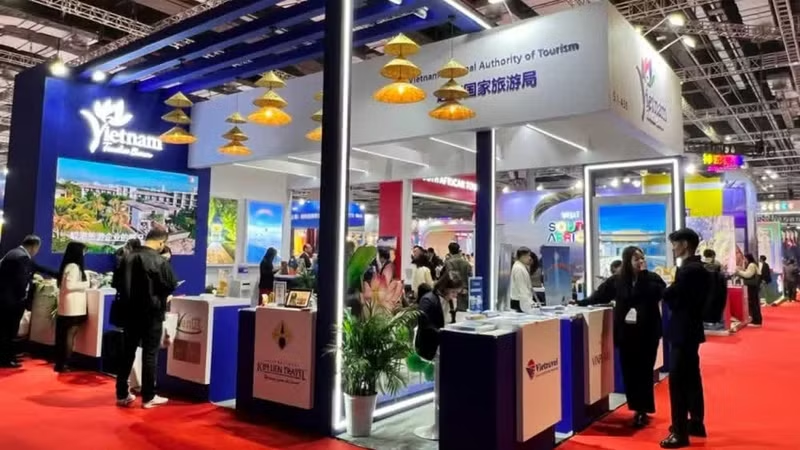
According to Nguyen Thi Hoa Mai, Deputy Director General of the Viet Nam National Authority of Tourism, China continues to be identified as a key market for Viet Nam’s tourism sector and will remain a priority in the time ahead. Efforts will focus not only on increasing visitor numbers but also on improving visitor quality, targeting high-spending and long-stay segments.
In 2026, promotional activities in the Chinese market will be carried out in a more focused and strategic manner. The Viet Nam National Authority of Tourism plans to organise two roadshows to connect directly with Chinese partners and travel businesses, while also participating in the China International Travel Mart (CITM) to strengthen its presence and promote Viet Nam’s tourism image.
In addition, bilateral cooperation activities will be enhanced, multilateral cooperation mechanisms leveraged, and seasonal promotion plans developed in line with travel demand cycles. Choosing the right timing for promotional campaigns is also considered a crucial factor in designing products suitable for different tourism seasons.
In reality, Chinese tourists’ consumption behaviours are shifting significantly, moving from low-cost tours to higher-quality products. Travellers from this market now prioritise experiences and prefer high-standard accommodation services.
This trend requires upgrading service quality and diversifying tourism products at destinations to attract visitors. Tourism businesses need to focus on improving service standards and designing tours and itineraries suited to high-spending segments.
Currently, Chinese tourists primarily search for information through online platforms. Therefore, strengthening presence on these platforms, collaborating with key opinion leaders (KOLs), and creating engaging content are seen as key factors in improving promotional effectiveness.
Building on previous efforts, the Viet Nam National Authority of Tourism will enhance the visibility of Viet Nam’s destinations on popular Chinese social media platforms, while also mobilising resources from businesses to implement large-scale, continuous communication campaigns. This is expected to increase destination awareness in this highly promising market.
At the same time, closer coordination will be needed to establish effective cooperation mechanisms among management agencies, travel companies, airlines, and media organisations in order to implement synchronised and effective promotional programmes. Enhancing visitor experience and encouraging social media sharing are also seen as important solutions to create organic spillover effects contributing to the promotion of Viet Nam’s tourism image.
The Viet Nam National Authority of Tourism stated that it will continue to play a coordinating role, connecting stakeholders and mobilising both public and private resources to effectively implement promotional programmes in the Chinese market. Clearly positioning messages, improving content quality, and strengthening digital presence are expected to enhance the value of Viet Nam’s tourism brand and attract international visitors more effectively in the coming period.
![[Video] Viet Nam among Top three Asian destinations for return visitors](https://en-cdn.nhandan.vn/images/nyM650OGFWrOVWc-xajqN-rTZ68Rlmc1fiGJOhBRYHErj-E25MBpvJqrpphXazfrpe9t-fYCGuQU4CN0yXo3Rg/du-lich-vietnam.jpg.avif)










![[In Pictures] Nui Chua Rock Park: A million-year-old outdoor museum of landforms on the Khanh Hoa coast](https://en-cdn.nhandan.vn/images/nyM650OGFWrOVWc-xajqNz57td8idIAL_VG9puyG2UZEKOnmq1DVlT1--ZclbO3z2WBaWZhbt6O3e8kjPZqJMWkfEz7RO9qhcwg8o8LQFK8/ndo-br-cao-nguyen-da-moi.jpg.avif)