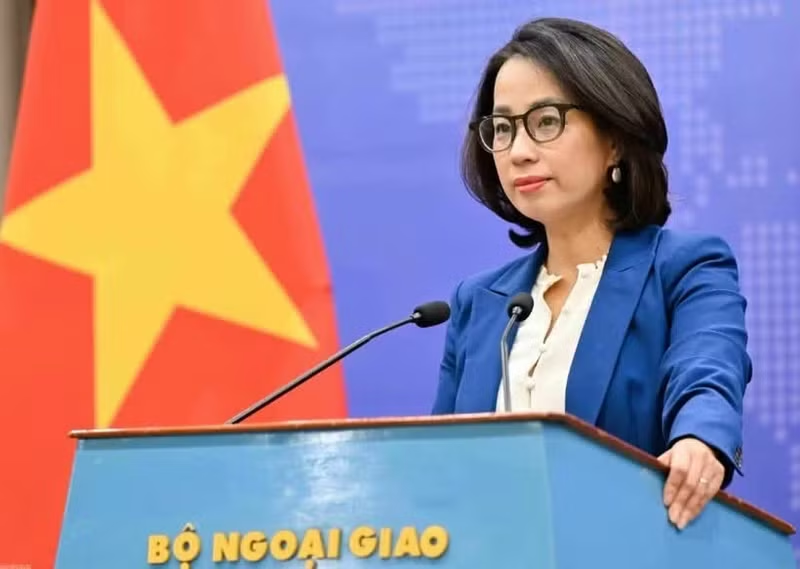
Viet Nam requests all relevant parties to respect its sovereignty over Truong Sa (Spratly), stated Spokesperson of the Ministry of Foreign Affairs Pham Thu Hang at the ministry's press briefing in Ha Noi on May 14.
Hang made the statement while responding to reporters’ questions about Viet Nam’s response to the recent dispatch of personnel by the Philippines and China to plant flags asserting sovereignty over Hoai An (Sandy Cay) reef in Viet Nam’s Truong Sa.
The spokesperson stated that the dispatch of personnel by relevant parties to features belonging to Truong Sa without Viet Nam’s permission constitutes a violation of Viet Nam’s sovereignty under international law. She stressed that such actions run counter to the Declaration on the Conduct of Parties in the East Sea/South China Sea (DOC) as well as ongoing efforts by countries to negotiate a Code of Conduct in the East Sea/South China Sea (COC).
“Viet Nam requests relevant parties to respect its sovereignty over Truong Sa, refrain from actions that complicate the situation, comply with international law, seriously implement the DOC, and contribute positively to maintaining peace and stability in the East Sea/South China Sea,” Hang emphasised.
Also at the press briefing, responding to a question on the possibility of human-to-human transmission of the Hanta virus, Hang cited competent authorities as saying that Viet Nam has so far recorded no cases of Hanta virus infection.
She noted that Viet Nam has strengthened updates on global disease developments, seriously followed border health quarantine procedures, proactively tightened disease surveillance at border gates and medical facilities, carried out sanitation and disinfection measures, and adopted appropriate disease prevention and control measures to minimise the risk of the Hanta virus entering the country.
Relevant Vietnamese agencies have also issued recommendations urging the public to maintain environmental hygiene and measures to prevent infectious diseases.
Domestic authorities are continuing to coordinate closely with the World Health Organisation and relevant agencies to monitor developments, assess risks, implement timely response measures and provide updated information to the public as new developments arise, added the spokesperson.