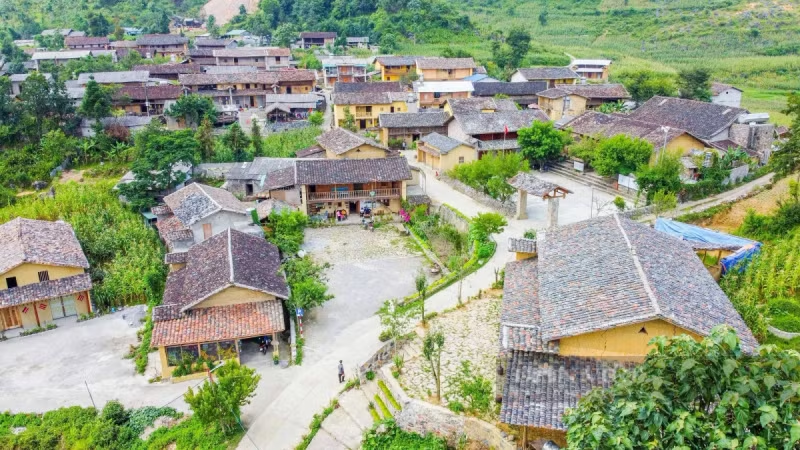
Despite the significant rise in tourism popularity, the northernmost village of Viet Nam continues its daily rhythm undisturbed. Tourists come and go, yet the community remains true to itself — perhaps the very secret behind its international recognition.
Traditional architecture
Nestled at the foot of the Lung Cu flagpole, the small village of the Lo Lo ethnic community sits at 1,470 metres above sea level. Life has gradually shifted since residents began opening their homes to visitors.
Coming to Lo Lo Chai, visitors are immediately captivated by the village’s distinctive ‘trinh tuong’ (earthen) houses, built from dark yellow soil with black tiled roofs and rustic wooden frames, cluster along the mountainside. Stone-paved paths and handmade fences connect them, creating a sense of uniformity, harmony with the terrain and natural landscape.
As tourism has developed, rather than replacing old houses with modern structures, villagers have carefully renovated their traditional homes, adding only essential facilities. Today, around 60 homestays operate within the residential area in Lo Lo Chai.
Homestay owner Vang Mi Ca explained that his decades-old house is popular with guests who wish to experience authentic village life.
His guests say that sharing a family meal, spending the night in an earthen house, strolling through the village, and joining locals in the fields or paddies are vivid and memorable experiences.

Nguyen Thanh Ha, a visitor from Ha Noi, said the homestays offered a sense of peace and closeness to nature that modern hotels cannot replicate.
Lo Lo Chai overcame 270 applications from 65 UN Tourism Member States to advance to the list of 52 best tourism villages in 2025, which are from 29 countries of all regions – Africa, the Americas, Asia, Europe and the Middle East.
After receiving the title, visitor numbers to Lo Lo Chai soared. At peak times, tens of thousands flocked to the Lung Cu–Lo Lo Chai area, with overnight stays reaching 700 and daytime visitors averaging 250–350. Despite the sharp increase in visitors, daily life in the village remains unchanged.
“We’re busier when visitors arrive, but our routine is the same. In the morning we go to the fields, in the afternoon we cook, and in the evening, we rest. Guests don’t alter our way of life,” said Vang Mi Ca.
Value rooted in people and identity
The traditional attire of the Lo Lo ethnic group is a cornerstone of cultural identity. Each outfit, often requiring months or even a year to complete, features intricate hand-embroidered motifs reflecting beliefs and worldviews. Importantly, these garments are worn not only for festivals but also in everyday life.
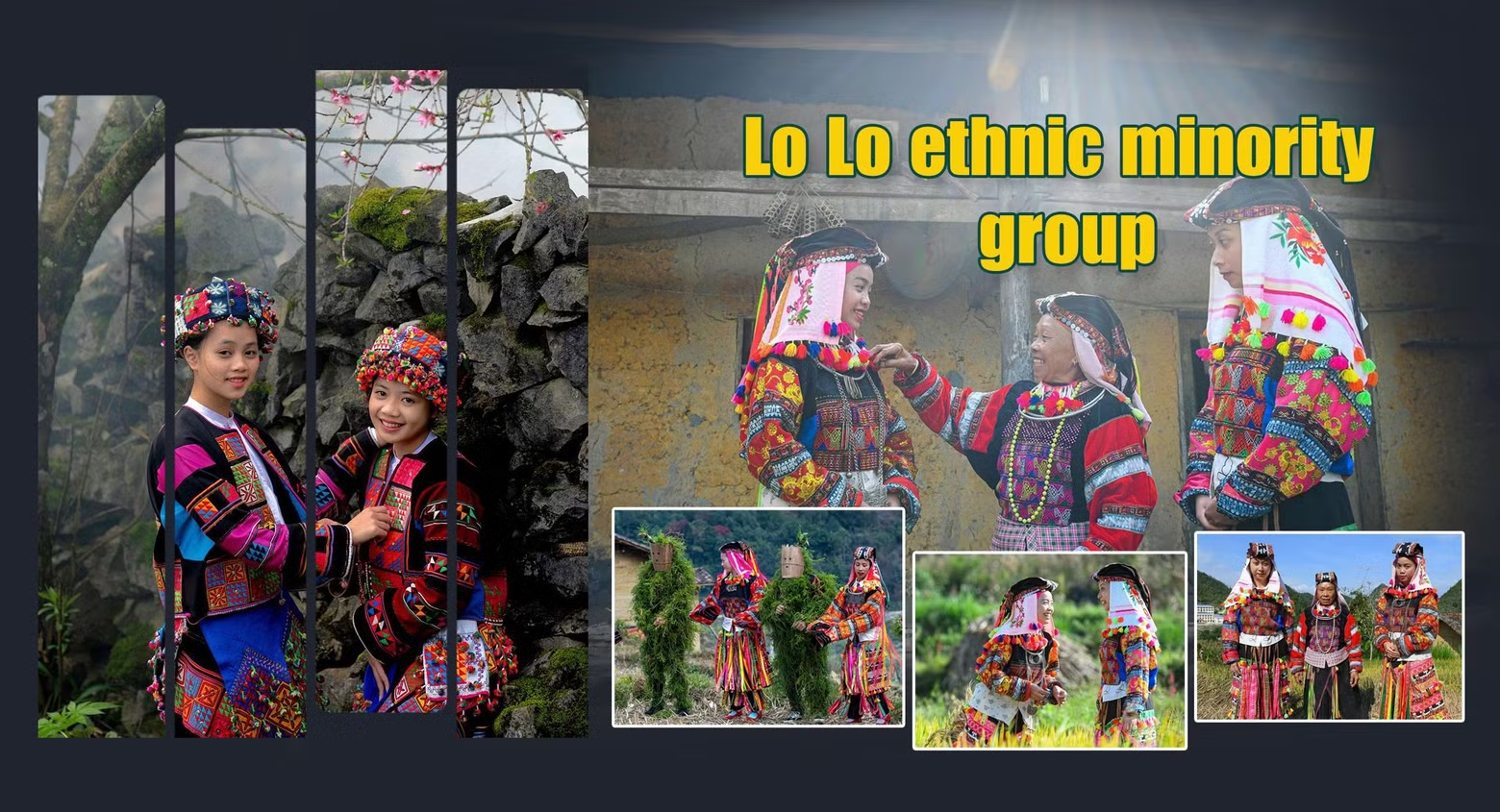
Villager Lu Thi Phuong explained that wearing traditional clothing is a lifelong habit passed down through generations. “When visitors try it on, we explain its meaning so they understand it’s not a costume for show,” she said.
Australian traveller Mark Johnson shared that he has been to many cultural villages in Southeast Asia, but Lo Lo Chai is the only place where he has seen people truly living their culture, not performing for tourists. “Elderly women still embroider on their porches, children play freely, and locals invited me to gather firewood in the fields. That’s what genuine cultural experience feels like,” he remarked.
At a time when many rural communities risk over-commercialisation, Lo Lo Chai demonstrates how tourism can thrive alongside heritage preservation. Its strength lies not in awards but in the way villagers live their culture daily, allowing tourism to complement — not overshadow — their traditions.
The Best Tourism Villages by UN Tourism initiative launched in 2021, under the UN Tourism for Rural Development Programme, accelerates the role of tourism in rural development by valuing and safeguarding rural areas along with their associated landscapes, knowledge systems, biological diversity and cultural heritage.



![[Video] Viet Nam among Top three Asian destinations for return visitors](https://en-cdn.nhandan.vn/images/nyM650OGFWrOVWc-xajqN-rTZ68Rlmc1fiGJOhBRYHErj-E25MBpvJqrpphXazfrpe9t-fYCGuQU4CN0yXo3Rg/du-lich-vietnam.jpg.avif)