Cultural heritage goes hand in hand with tourism development
On an afternoon at the water pavilion of Do Temple in Bac Ninh, as lien anh and lien chi singers hurriedly prepared to welcome a group of tourists from the “Ha Noi Five Gates” train tour, Nguyen Thi Xuan Lan, head of the Do Temple Quan ho Club, quietly retreated backstage, still busy with work. From checking sound and lighting systems, arranging props and adjusting costumes for each member, every detail was carefully attended to by her.
When the programme began, although she did not stand directly on the dragon boat with the lien anh and lien chi, she remained the “soul” behind the scenes: introducing Quan ho and Kinh Bac culture to visitors, while quietly singing backup to support young performers who were still unfamiliar with the stage.
“Sometimes I can take the whole troupe to perform by myself, from driving and adjusting the sound system to teaching the children how to sing,” Lan shared.
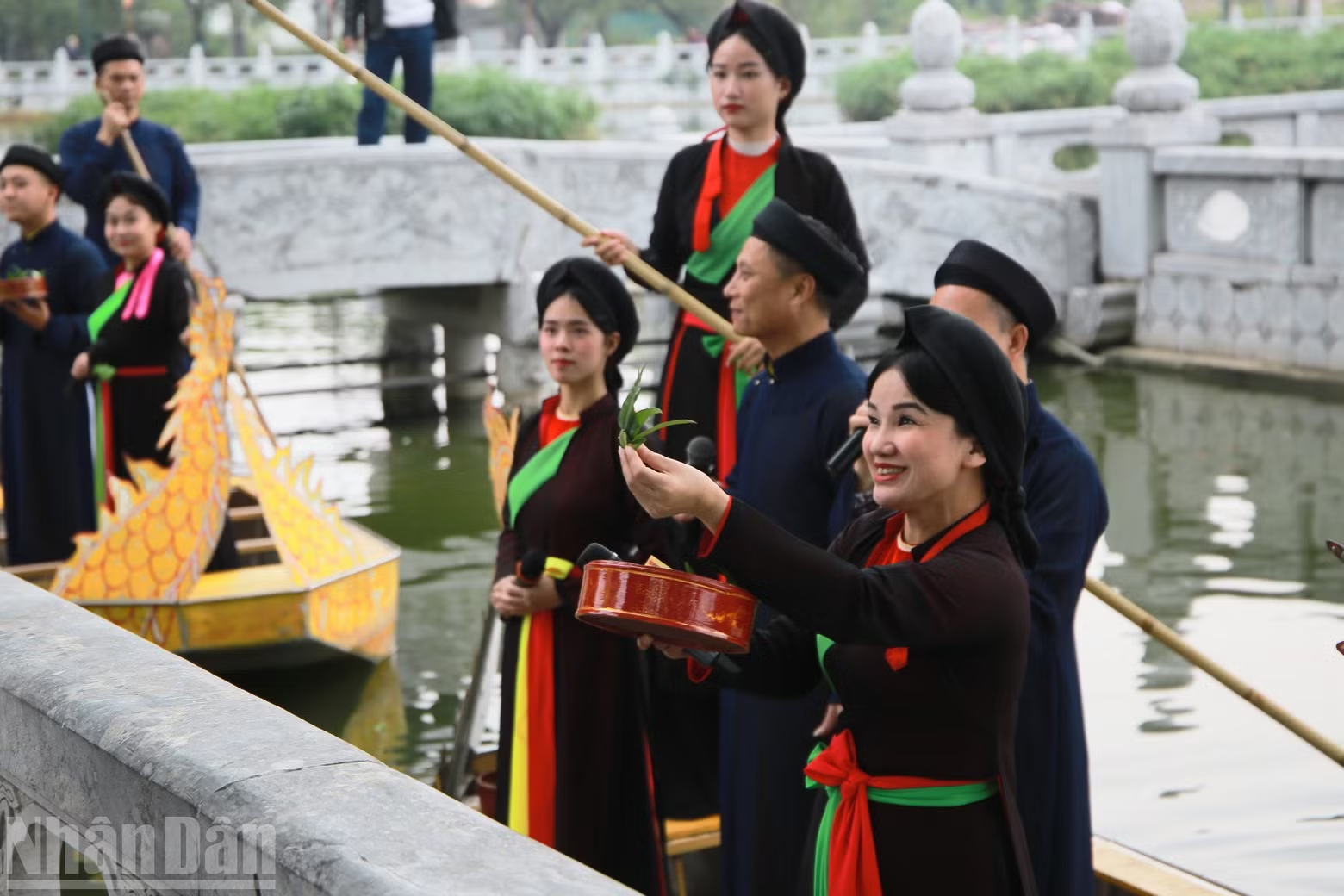
Having been attached to Quan ho for more than 40 years, she describes herself as someone “intoxicated with Quan ho”. For her, this attachment does not come from material benefits, but from enduring passion.
“I only know that I love it and am passionate about it, so I do it. The most important thing is to teach and promote Quan ho,” she said.
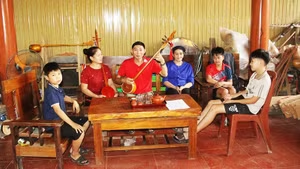
That spirit has spread throughout the club, where it is common to see primary and secondary school students sharing the stage with older lien anh and lien chi, creating a natural continuity between generations.
Under the leadership of Nguyen Thi Xuan Lan, the Do Temple Quan ho Club shows a dynamic face of Quan ho in the context of tourism and modern life. In addition to maintaining regular activities, the club frequently brings Quan ho to dragon boat performance spaces with the support of sound and lighting systems, meeting the diverse enjoyment needs of the public.
At present, the club performs on most days of the week. Since September 2025, it has maintained dozens of performances each month to serve the “Ha Noi Five Gates” tourism route. Notably, with members of different ages, the club can mobilise about 50 performers at the same time, creating a lively cultural space and helping bring Quan ho closer to both domestic and foreign audiences.
For many years, the model of grassroots cultural and art clubs in Bac Ninh Province has been maintained and developed strongly, contributing to the preservation of local customs, traditions and cultural identity. For Bac Ninh Quan ho folk songs in particular, the development of traditional folk singing clubs has also created momentum for tourism and local socio-economic development.
To date, the province has about 260 practising Quan ho villages and more than 600 Quan ho clubs with nearly 10,000 members taking part in regular activities. The diversity of age groups within these clubs creates an environment of intergenerational exchange. This is the core force in organising Quan ho activities and opening classes to pass the heritage on to younger generations.
Preserving heritage in modern life
Unlike the Do Temple Quan ho Club, whose activities are performance-oriented and closely linked to tourism services, the Diem Village Quan ho Club still maintains a traditional form of practice, centred on ancient singing sessions.
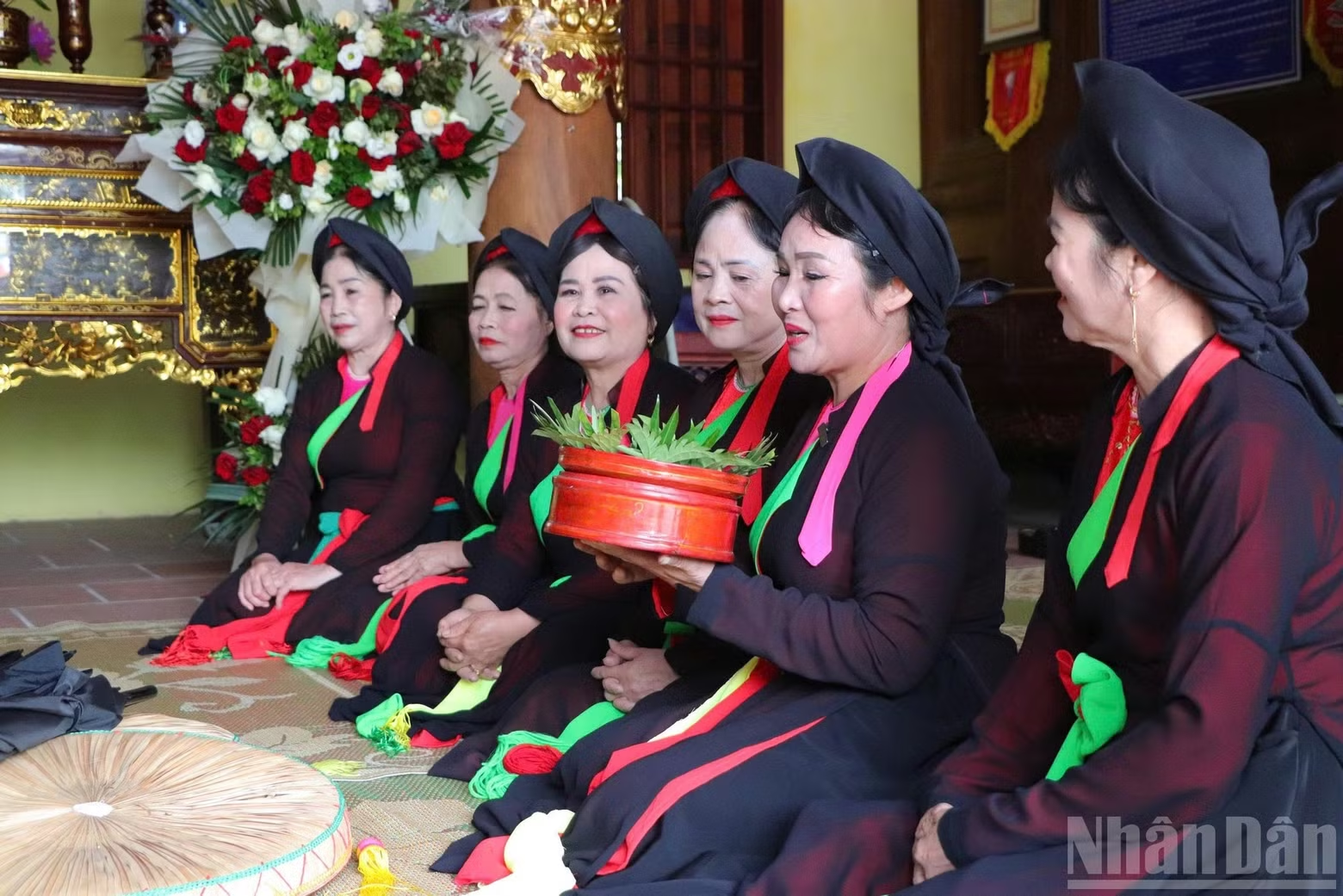
In Viem Xa Village, known by its traditional name as Diem Village, the “cradle” of the Quan ho ancestor, activities here still largely retain the style of the old Quan ho. In the Quan ho communal house, activities are organised according to strict customs, with full rituals such as inviting guests to chew betel, offering tea, receiving visitors and singing love duets. In this way, the original values of the heritage are preserved within community life.
Along with provincial investment in building Quan ho singing huts and restoring old Quan ho communal houses, clubs now have more spaces for activities and for promoting the image of the heritage.
Nguyen Van Dap, Deputy Director of the Bac Ninh Department of Culture, Sports and Tourism, said the province has invested about 100 billion VND in restoring more than 10 Quan ho communal houses, while maintaining regular operation of hundreds of clubs.
The Quan ho club model in Bac Ninh Province is receiving attention, with exchanges and performances held frequently.
In the flow of modern life, Quan ho clubs are not only places that preserve ancient melodies, but have also become bridges bringing the heritage closer to communities and visitors. From village gatherings to festival stages, from classes for children to tourism experience activities, today’s lien anh and lien chi continue to keep the flame of their homeland’s heritage alive.
It is this continuity that has helped Bac Ninh Quan ho folk songs remain vibrant in contemporary life, affirming the enduring vitality of a distinctive cultural heritage of the Vietnamese nation.