Creating space for a strong Viet Nam
In every era, major steps in the nation’s development have always been associated with corresponding architectural and urban spaces. If the 11th century marked Thang Long as the capital of an independent nation, then in the 21st century, Viet Nam must build a system of modern, smart and green cities with international competitiveness.
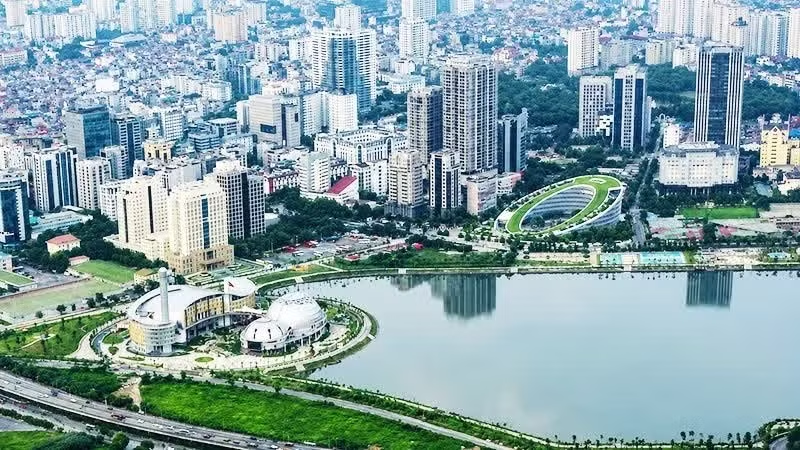
The foremost task of architecture is to create a high-quality living environment for the people. A developed nation cannot exist on the foundation of cities that are flooded, congested, polluted and lacking in identity. Architecture must help address these challenges through advanced planning thinking, sustainable design and effective spatial governance. Architects need to move from the mindset of designing individual works to that of creating spatial ecosystems. Each building must be placed within the overall urban, landscape, cultural and environmental context. Each project should aim for long-term value rather than short-term gains. In the new era, architecture must become a driver of development, not merely a product of development.
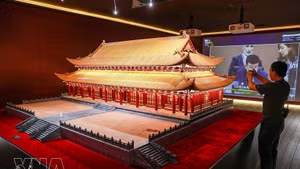
At present, the homogenisation of architecture is a risk facing world architecture. Many modern cities are becoming similar to one another, with high-rise buildings, commercial centres and urban areas lacking character. Without caution, Vietnamese cities will also lose their own identity. Vietnamese architecture cannot compete through the scale or height of buildings. What creates its distinctive value is national cultural identity. Identity does not mean formally copying communal house roofs, pagoda roofs or traditional details. Identity must be expressed in the way architecture responds to the tropical climate, nature, the community and local cultural memory.
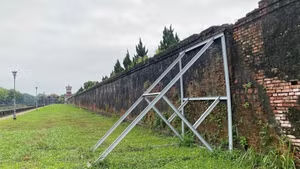
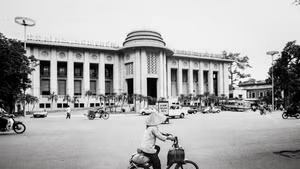
A great architecture must know how to combine tradition and modernity in harmony. The values of folk housing, Vietnamese villages, old quarters, royal architecture, colonial architecture and modern Vietnamese architecture need to be studied, inherited and creatively developed under new conditions. The deeper the integration, the greater the need to affirm Vietnamese identity. Therefore, architecture must become a physical language that tells the story of Viet Nam to the world.
Adapting quickly to avoid falling behind
Climate change is becoming a global challenge. Viet Nam is among the countries most affected by sea level rise, extreme natural disasters and resource depletion. In this context, architecture cannot continue to follow a model of high energy consumption and uncontrolled resource exploitation.
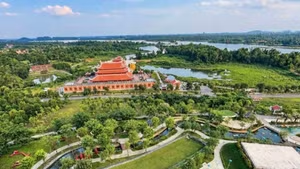
Vietnamese architecture needs to become a pioneering force in green transition. This requires the strong development of ecological architecture, energy-saving architecture, environmentally friendly materials, low-emission buildings and circular urban models. Each new building must be considered not only in terms of initial investment costs but also in terms of its life cycle over the following decades. Cities need to be organised in a way that reduces dependence on private vehicles, expands public spaces, develops public transport and protects natural river and lake systems.
The Fourth Industrial Revolution is profoundly changing the construction and architecture sector. Technologies such as BIM, artificial intelligence, big data, digital simulation, virtual reality, smart materials and automated construction are creating entirely new modes of professional practice. Without rapid adaptation, Vietnamese architecture will fall behind.
Architecture schools need to renew their curricula towards a combination of art, technology and management. Architectural consultancy organisations need to promote digital transformation and enhance their capacity for research and the application of new technologies. However, technology cannot replace human creative thinking. The core value of architects remains their ability to envision the future, solve problems and create meaningful spaces for the community. Technology is a tool; humans are the creative subjects.
Rural areas cannot be replicas of cities
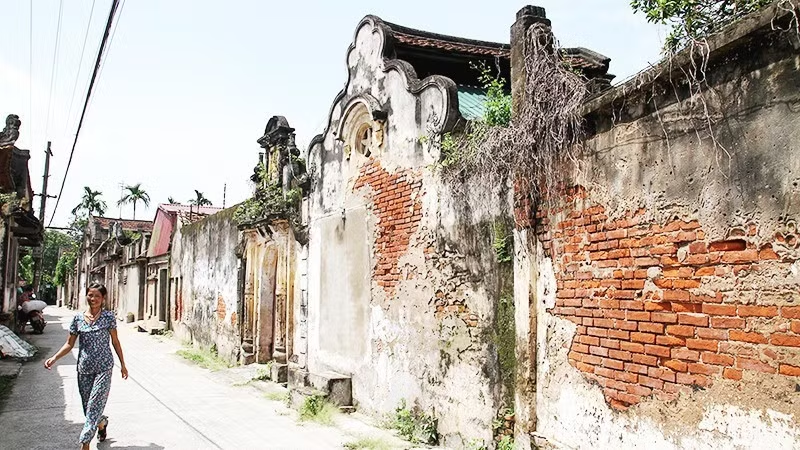
For many years, architecture has mainly focused on major cities. However, more than half of Viet Nam’s population still lives in rural areas. The era of the nation’s rise cannot be only a story of cities. Architecture needs to pay greater attention to rural areas, mountainous regions, islands and disadvantaged areas. These are places facing the erosion of identity, the decline of public spaces and the growing impacts of climate change.
Architects need to study models of ecological villages, smart villages, the preservation of traditional architecture and the development of housing suited to local conditions. Rural Viet Nam should not become a miniature copy of urban areas. Each region needs to retain its own distinctive features in the process of modernisation.
A developed architecture is measured not only by the number of buildings but also by the social responsibility of architects. In many important issues such as urban planning, heritage preservation, the rehabilitation of rivers and lakes, the development of social housing and climate change response, the critical voice of the architectural community needs to be heard more.
Architects are not merely those who receive commissions to design. They are also social intellectuals with the responsibility to contribute opinions to decisions on national development. A spirit of scientific, independent and constructive criticism for the benefit of the community needs to become an important professional value. That is also how architecture can truly accompany the nation in the development process.
If the 20th century was the century of winning national independence and reunifying the country, the 21st century is the century of economic development and competition in the quality of living spaces, cultural identity and creative capacity. In that process, Vietnamese architecture has the mission of helping shape the appearance of a developed, civilised and happy nation.
The era of the nation’s rise under the leadership of the Party is opening up unprecedented major opportunities for Vietnamese architecture, while also posing new requirements and responsibilities. Vietnamese architecture does not only build houses, streets or urban areas. It is helping create the future of the country.
In the coming period, architecture needs to carry out many missions at the same time: creating spaces for national development, protecting national cultural identity, leading green transition, promoting the creative economy, mastering new technologies, reviving rural areas and strengthening social criticism. The aspiration to build a strong Viet Nam by the middle of the 21st century cannot become a reality without civilised, humane and sustainable living spaces.
For Ha Noi in particular, West Lake, the Red River and the system of inner-city lakes need to be regarded as strategic urban assets, not merely as land reserves for real estate development. Green architecture is no longer an optional trend but has become a mandatory requirement for the future.