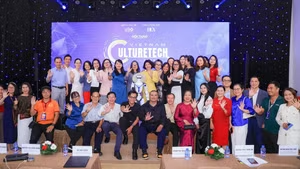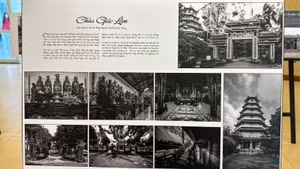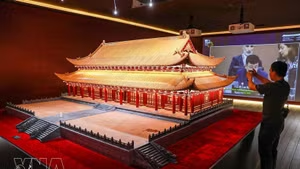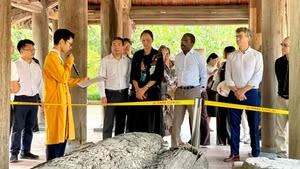
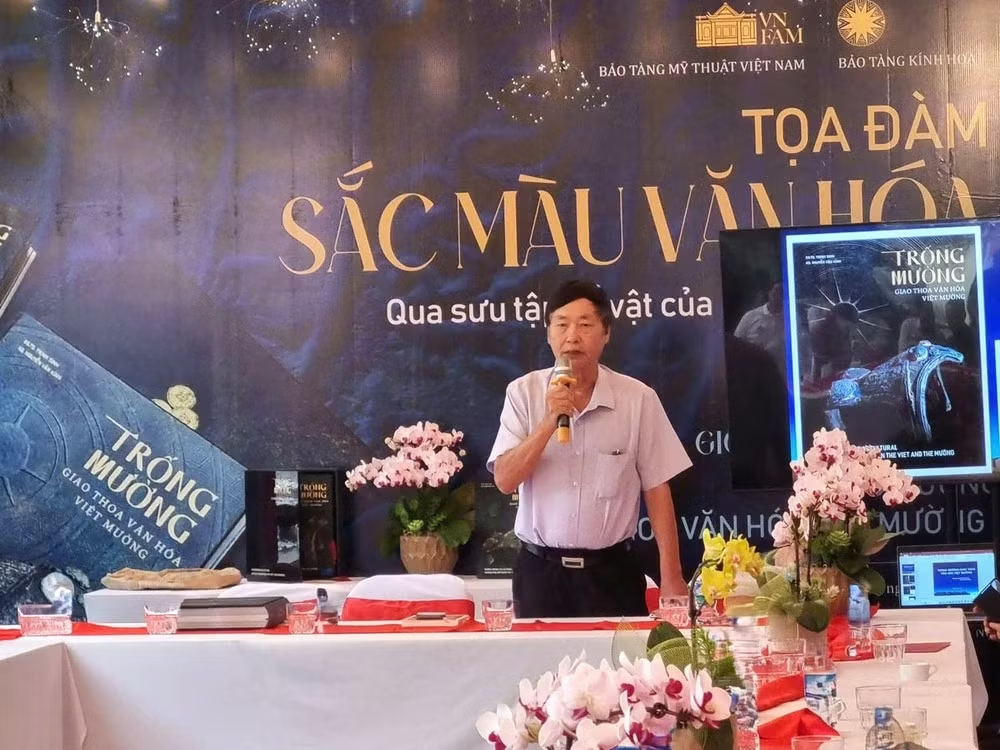
Professor Dr Trinh Sinh of Ha Noi University of Culture spoke to Nhan Dan (People) Newspaper about this issue.
Question: As Viet Nam enters the digital era, what do you see as the biggest change for the cultural sector?
Prof. Dr Trinh Sinh: Viet Nam’s entry into the digital era means stepping into a global media space. Today, within seconds, information about culture, heritage or history can spread internationally via the internet, digital data and artificial intelligence (AI).
This is both an opportunity and a challenge. On one hand, we have unprecedented scope to promote the country, its people and Vietnamese culture. On the other, false or unverified information can spread just as quickly, shaping public perception at home and abroad.
Therefore, in the digital age, digitising data, building reliable knowledge bases and proactively communicating cultural values are essential requirements.
Q: You have conducted extensive research on heritage. In your view, how can digital technology support the protection and enhancement of heritage values?
A: I recall the case of the seal Hoang de chi bao (Emperor’s Treasure) of the Nguyen dynasty (1802–1945). When the artefact was returned to Viet Nam, online opinions emerged claiming it was a fake. The information spread rapidly and provoked considerable debate.
In that instance, digitised historical sources enabled researchers to consult, compare and refute claims using scientific evidence. This demonstrates that digital technology not only aids archiving but also supports authentication, protection and the promotion of heritage values in today’s media environment.
I believe that in the digital era, cultural heritage must be digitised, studied and communicated proactively if it is to be effectively protected. Otherwise, we will remain reactive to the constant flow of information online.
Q: In your opinion, which core values of Vietnamese culture must be preserved most in the competition of soft power?
A: To my mind, it is tangible and intangible cultural heritage — the soul and essence of Vietnamese national identity. As countries increasingly compete through soft power, heritage not only preserves historical memory but also becomes a resource for tourism, cultural industries and national image-building.
One exemplary case is the Dong Son bronze drum. This distinctive heritage of the ancient Vietnamese is recognised worldwide and has become a cultural symbol featured in diplomacy, media and contemporary life.
Therefore, artefacts such as the Dong Son drums should continue to be inventoried, digitised, conserved and promoted through modern communication channels. Only when heritage is embedded in today’s life can traditional cultural values be transformed into national soft power.
Q: Resolution 80-NQ/TW of the Party Central Committee aims to build a cultural ecosystem. In your view, how can heritage and traditional culture truly live in modern life, especially among young people?
A: For heritage to truly live in modern life, we must first help young people understand and appreciate those values. Today’s youth are intelligent and quick to absorb information.
However, to engage them we must adapt our approach. We cannot simply present artefacts or convey knowledge in traditional ways; we must tell compelling stories about heritage, history and national culture.
Viet Nam has abundant material to produce films, documentaries, media programmes and digital content on dynasties, historical figures, antiquities and cultural heritage.
When these values are conveyed in a modern, relatable and emotionally rich language, young people will engage with them and actively share them.
In the context of international integration and a rapidly evolving digital space, this requirement is even more pressing. To integrate without assimilating, we must clearly identify the values that constitute Vietnamese identity, thereby fostering cultural pride and transmitting it to younger generations.
Q: With social media and cross-border platforms strongly influencing tastes and lifestyles, what do you see as the greatest challenge in preserving national cultural identity today?
A: In my view, the greatest challenge is not merely the influx of foreign cultural trends, but the fact that we have not fully defined and communicated the core value system of Vietnamese cultural identity.
Historically, our ancestors were conscious of preserving national identity, evident in language, customs, practices and cultural values passed down through generations.
Today, in the context of international integration and a rapidly evolving digital space, this requirement is even more pressing. To integrate without assimilating, we must clearly identify the values that constitute Vietnamese identity, thereby fostering cultural pride and transmitting it to younger generations.
I believe a culture can remain vital only when it understands itself, possesses its own value system and is confident enough to engage with the world on the basis of its identity.
Thank you for your insights!