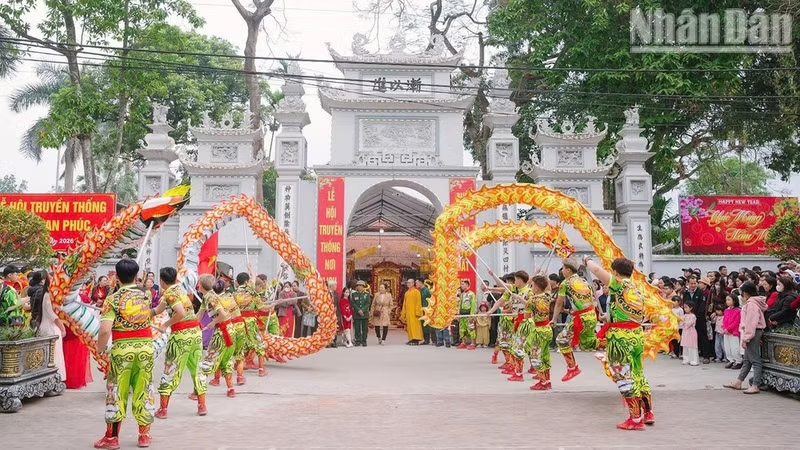
This unique form of inter-village fraternity reflects the spirit of solidarity and mutual support among local communities. Although once widespread across the Red River Delta, few places have preserved the custom in its original form. Among the rare examples that have done so are the villages of Van Phuc and Nga My.
According to local oral tradition, the bond of friendship between the ancient villages of Van Phuc and Nga My in Ha Noi has endured for nearly a millennium and continues to be preserved as a living heritage. Beyond its historical significance, the ket cha tradition also offers valuable insights into heritage conservation linked to tourism development and the strengthening of local identity in the modern era.
A distinctive tradition of Vietnamese village culture
Traditional Vietnamese villages are often defined by bamboo hedges, communal houses, and traditional festivals. Yet what has sustained these communities over generations lies equally in their codes of conduct and the relationships nurtured over centuries. Among them, the ket cha tradition stands out as a distinctive cultural practice symbolising close ties between villages.
Known by various names in Vietnamese such as ket nghia, an cha, di cha, di nuoc nghia, or giao hieu, the ket cha tradition is one of the oldest and most humane customs of communities in the Red River Delta. Emerging from the need to strengthen cooperation in land reclamation, flood control, agricultural production, disaster response, defence, and the organisation of cultural and spiritual activities, it became a lasting bond that has been connecting Vietnamese villages for centuries.
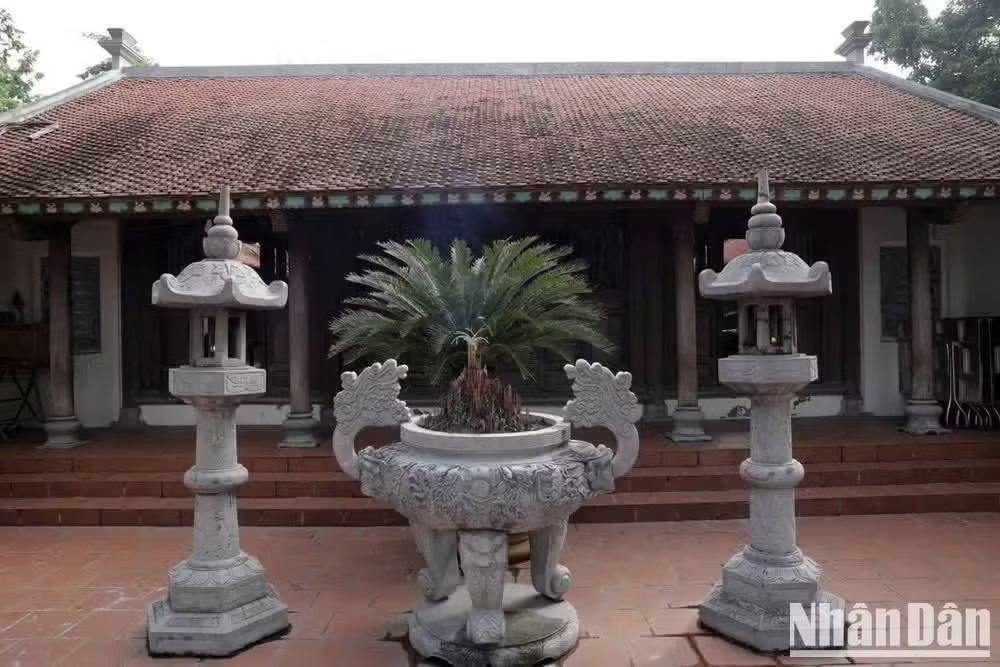
More than simply a form of friendship between communities, the tradition embodies core Vietnamese cultural values, including solidarity, loyalty, respect, self-sacrifice, and mutual assistance. These values are reflected in community conventions governing forms of address, daily interactions, cooperation in production and village development, and the organisation of traditional rituals.
Because of its profound social and humanistic significance, the ket cha tradition has survived the passage of history and continues to be preserved by many villages as a living cultural heritage. It not only preserves memories of inter-village friendship but also reinforces cultural identity, strengthens community cohesion, and passes on enduring values from one generation to the next.
According to folklore researchers, among the surviving ket cha traditions, the bond between Van Phuc Village and Nga My Village is regarded as particularly remarkable.
For nearly a thousand years, the ket cha relationship between Van Phuc Village (formerly in Van Phuc Commune of Thanh Tri District, now part of Nam Phu Commune, Ha Noi) and Nga My Village (formerly in Thanh Mai Commune of Thanh Oai District, now part of Thanh Oai Commune, Ha Noi) has been preserved as a symbol of Vietnamese solidarity and fraternity.
According to village genealogies and historical documents written in Han and Nom scripts, the tradition dates back to the reign of King Ly Thai To, when the imperial capital of Thang Long was first established.
Village elders recount that while building dykes and controlling floods to protect riverside settlements, residents of the two villages worked together to overcome devastating floods. From this shared effort, they pledged brotherhood and vowed to preserve their friendship for future generations. Remarkably, that commitment has remained unbroken for nearly a millennium.
Residents of both villages still observe traditional customs, addressing one another respectfully as “elder brother village”, treating each other as members of one family, visiting each other during annual festivals, and attending each other's important events. This uninterrupted continuity has transformed ket cha from a historical story into an intangible cultural heritage that remains alive today.
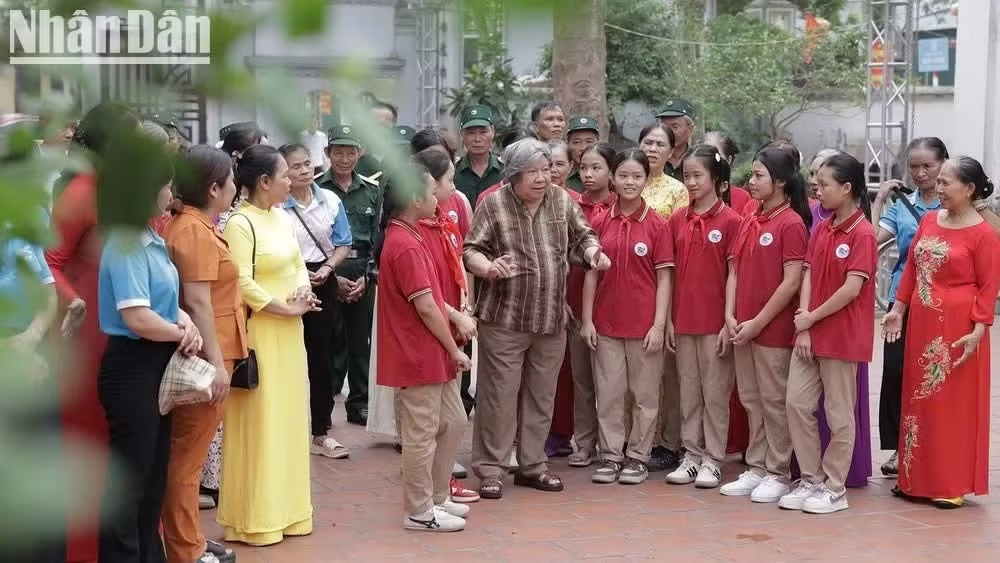
A millennium of fraternity — a rare community heritage
Historian Le Van Lan said that within the cultural landscape of Vietnamese villages, the ket cha relationship between Van Phuc and Nga My possesses several distinctive features rarely found elsewhere.
He explained that villages entering into ket cha relationships are usually located close to each other, often separated only by a river, making travel and mutual assistance convenient. By contrast, Van Phuc and Nga My are about 30 kilometres apart.
While this distance may seem short today, a thousand years ago it involved crossing rivers, alluvial plains, and difficult terrain. Yet the people of the two villages consistently maintained contact and preserved their bond through countless historical changes.
"The distance is only about 30 kilometres, but in the past the journey involved many natural obstacles and barriers. Yet the two villages still managed to maintain their relationship. That is the first remarkable value," historian Le Van Lan said.
He added that the second distinctive feature lies in its historical longevity. Most ket cha traditions in the Red River Delta originated in the 18th or 19th centuries and have histories spanning only a few hundred years. In contrast, Van Phuc and Nga My have maintained their bond for nearly one thousand years.
"The affection, friendship, mutual respect, and support between Van Phuc and Nga My have endured for a thousand years. That is an extraordinary value," he said.
According to the historian, however, the greatest significance does not lie in the number of years. The most valuable aspect is that the relationship has never existed only in written records or legends. Generation after generation, residents of both villages have continued to practise traditional rituals and regard visiting and supporting their "brother village" as a shared responsibility.
"After a thousand years, this bond of fraternity remains exceptionally strong. Some village alliances have gradually faded over time, but the relationship between Van Phuc and Nga My has remained steadfast from the past to the present and will continue into the future," he added.
His observations help explain why the Van Phuc–Nga My ket cha tradition is not merely the heritage of two localities but also a vivid testament to the vitality of Vietnamese village culture.
At a time when many traditional customs are at risk of disappearing, the preservation of such a close bond for nearly a millennium is exceptionally rare. Beyond maintaining ancient rituals, local people have also preserved the spirit of the tradition by valuing fraternity, mutual support, and community solidarity — values that remain highly relevant in modern society.
Reviving a thousand-year-old heritage through the arts
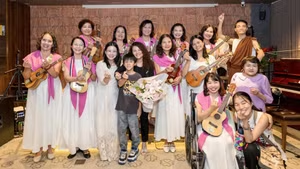
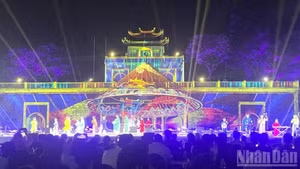
Van Phuc Communal House has hosted a ceremony marking 1,000 years of friendship between Van Phuc and Nga My, together with an art programme titled "Van Phuc–Nga My — Ancient Villages, Enduring Heritage".
Staged within the grounds of Van Phuc Communal House, part of a nationally recognised historical and cultural relic complex, the programme recreated the origin and development of the ket cha tradition through music, dance, theatre, and performance art.
It also aimed to promote the historical and cultural values of a community heritage nurtured over nearly a millennium. By bringing the story of Van Phuc and Nga My to the stage, the programme enabled the heritage to move beyond historical records and village memories, becoming a cultural experience for a wider audience.
Through the story of friendship between the two ancient villages, the programme helped promote traditional cultural values, inspire pride in national identity, and showcase Van Phuc as a cultural and tourism destination with significant potential in the capital city of Ha Noi.