Heritage: From the “museum display case” to everyday life
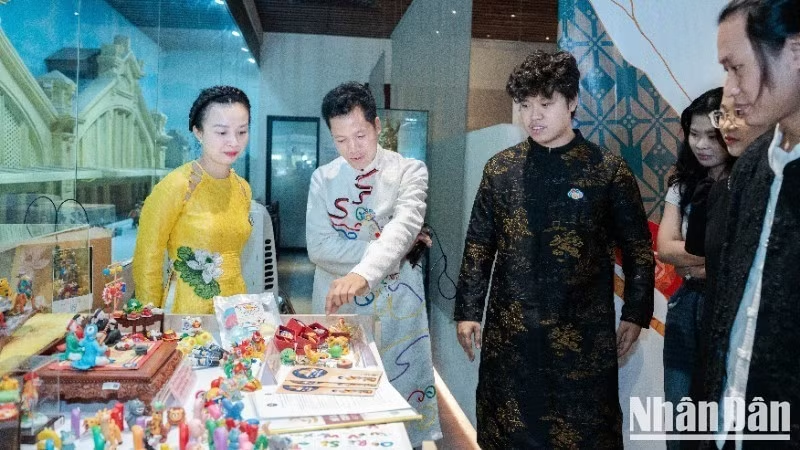
Today, as the design market gradually becomes saturated with international trends, elements deeply rooted in local identity are increasingly demonstrating their strong appeal. Traditional culture is no longer confined to values enclosed within a “museum display case”; instead, heritage is becoming the foundation for creating distinctive hallmarks of contemporary applied arts.
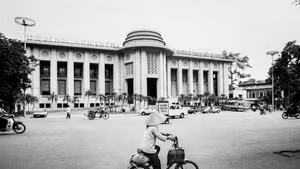
When translated through the creative perspectives of young people, cloud motifs, the forms of ancient architecture, or colour palettes inspired by folk paintings can give rise to products of genuine practical value. However, the journey of bringing heritage into everyday life still faces many bottlenecks. Many groundbreaking ideas from young designers remain only graphic concepts due to a lack of funding for prototype production and limited connections with traditional craft villages and workshops to commercialise their products.
Notably, the absence of consultation with cultural experts places young people at risk of misapplication or falling into the “trap of cultural appropriation”. Recognising these obstacles, “Following Community Heritage 2026” has been positioned as both a professional and financial launchpad for the new generation of creatives.
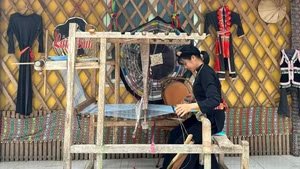
This year, the competition has expanded eligibility to individuals and creative teams aged between 21 and 30, with design briefs focusing on the tangible heritage of three communities: Bat Trang Pottery Village, Ha Thai lacquerware, and the handicrafts of the Hmong community in Che Cu Nha (Mu Cang Chai).
A highlight of the programme is its highly practical support structure. In addition to prizes worth more than 50 million VND, promising projects will enter an intensive one-to-one mentoring phase. Contestants will also have the opportunity to join a five-day field study trip to craft villages, working directly with artisans and experts.
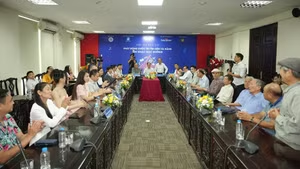
Pham Minh Hien, representing the organising committee, emphasised: “The most sustainable way to preserve culture is to allow young people the freedom to retell heritage stories in the design language of their own generation. Our role is to equip them with sufficient resources, both financial and professional, so that they can confidently bring those stories to life.”
Sharing the same view, Pham Minh Hong, Project Manager at the British Council Viet Nam, reflected on the previous season: “Nearly 100 competition entries demonstrated the tremendous interest young people have in heritage. Season Two has been designed based on practical needs: not only generating ideas, but also equipping participants with local knowledge, design thinking, and commercialisation capabilities so that their work can deliver lasting benefits to communities.”
Enabling heritage to sustain itself
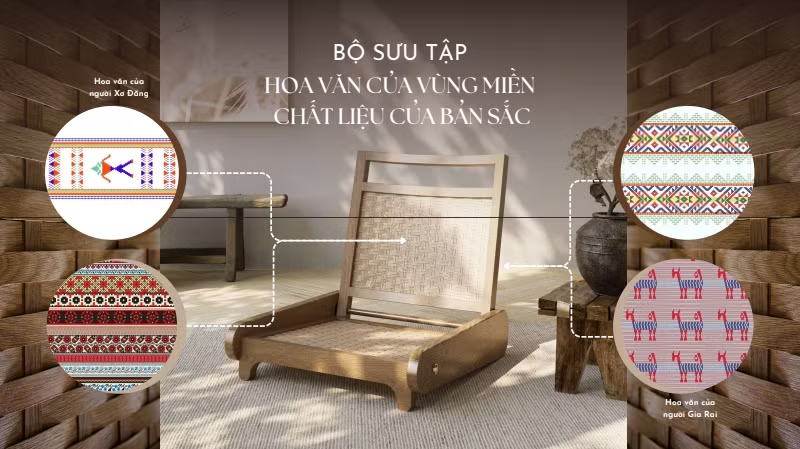
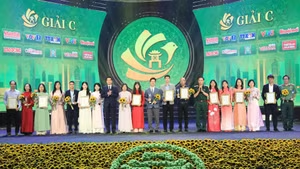
From the perspective of practical design, Truong Quang Dang Nguyen, leader of the Thanh Y project (Gold Prize 2025), affirmed that “Heritage should not merely be patterns to admire; it should be something we can touch, lean back on, and feel comforted by every day. The best way to preserve culture is to integrate the past naturally into today’s living spaces with subtlety.”
From the viewpoint of traditional artisan Dang Van Hau (Founder of Tohe+, Silver Prize 2025), heritage should be given bold new forms and functions: “Only when it is applied in practical design and creates economic value can heritage sustain itself and proudly reach the world.”
However, transforming a design from a drawing into a market-ready product requires corresponding manufacturing capacity. Tran Tuyet Lan, CEO of Craft Link and a member of the judging panel, advised young creatives to step beyond the studio and understand the realities of traditional craftsmanship: “No matter how outstanding a design may be, if it cannot be produced consistently in craft villages or fails to deliver tangible benefits to artisans, the project is unlikely to endure. Understanding cultural characteristics together with production feasibility is the most sustainable way to develop the cultural industries.”
“Following Community Heritage 2026” is not merely a creative competition, it is also a journey supporting the Contemporary Craft Development Programme within the framework of the Ha Noi Creative Design Festival 2026. The programme helps connect younger generations with the enduring roots of the nation's cultural identity, enabling values that have endured for thousands of years to continue flourishing in contemporary life.