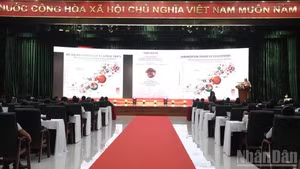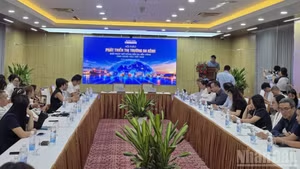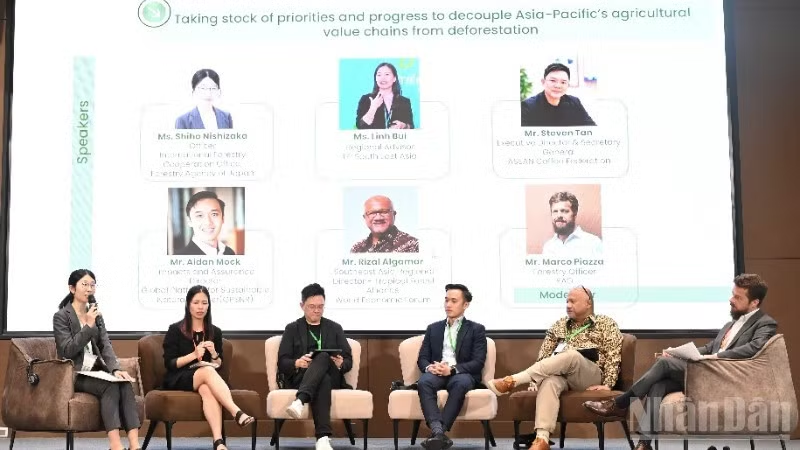
The dialogue, taking place from June 23 to 26, brings together representatives of government agencies, international organisations, businesses, and producer communities across the region to exchange experiences, promote cooperation, and develop solutions for sustainable agricultural value chains.
In his opening remarks, VNFOREST Deputy Director General Nguyen Van Dien pointed out that the Asia-Pacific region is one of the world's largest agricultural production centres, playing a vital role in food security and economic growth. However, the expansion of industrial crop cultivation, including rubber, coffee, cocoa, and palm oil, in several countries has placed significant pressure on forest resources, contributing to deforestation and forest degradation.
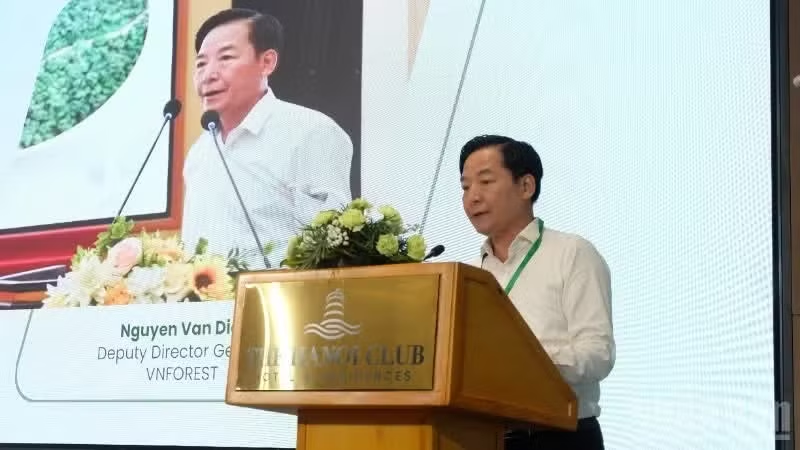
He observed that this reality compels countries to shift their development models towards improving quality and value addition rather than expanding production areas, while ensuring a balance between economic development, environmental protection, and people's livelihoods. In this context, developing transparent, traceable, and deforestation-free agricultural value chains has become an inevitable trend, meeting international market requirements while enhancing competitiveness and promoting sustainable development.
For Viet Nam, this requirement remains particularly urgent as the country is one of the world's major exporters of timber products, coffee, and rubber, especially to the European market. The European Union Deforestation Regulation (EUDR) requires products to be deforestation-free, legally produced, and supported by comprehensive traceability systems based on geolocation data from production areas.
VNFOREST leadership highlighted that, while the EUDR presents challenges, it also creates opportunities for Viet Nam to strengthen governance capacity, improve transparency, enhance product quality, and increase the reputation and competitiveness of its agricultural exports in international markets.
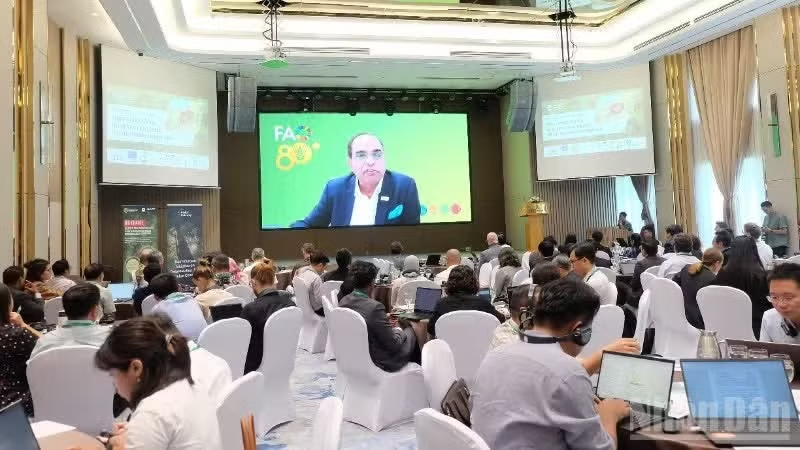
Organisers noted that the dialogue aims to raise awareness of solutions for developing deforestation-free value chains, strengthen mutual learning among countries, share experiences in establishing national traceability systems, and gradually develop a common regional roadmap for sustainable agricultural value chains across the Asia-Pacific region.
An FAO representative noted that in recent years, a series of global commitments on climate action, forest protection, and sustainable land use — including the United Nations Framework Convention on Climate Change, the Glasgow Leaders’ Declaration on Forests and Land Use, and the European Union Deforestation Regulation (EUDR) — have demonstrated the international community’s growing determination to halt deforestation and forest degradation. Beyond governments, an increasing number of businesses and private-sector organisations have also committed to eliminating deforestation from global supply chains.
On the occasion, FAO introduced an online course on developing deforestation-free agricultural value chains and agrifood systems. The programme is designed to support countries, businesses, and other stakeholders in strengthening capacity, sharing experiences, and effectively applying sustainable development solutions.