Enjoying iced tea on hot days is a familiar image for many Vietnamese people. However, behind seemingly harmless ice cubes may lie food safety risks that not everyone fully recognises.
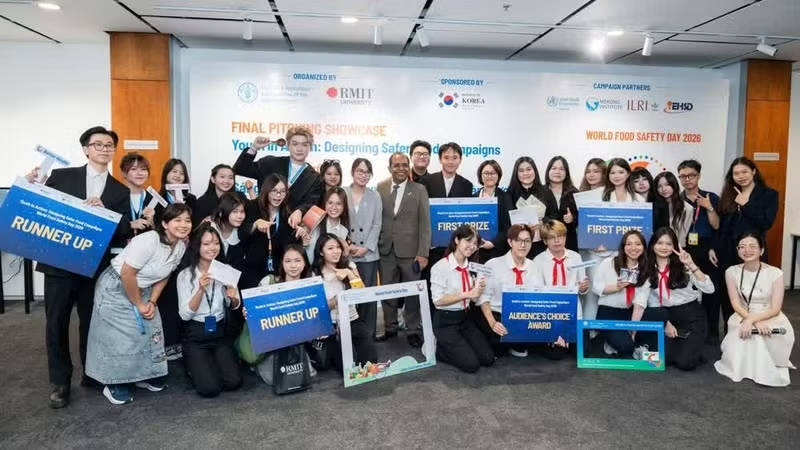
This was the issue chosen by the student team Ice Breaker as the focus of its communication campaign, which won first prize in a competition organised by RMIT University Viet Nam, with experts from the FAO Office in Viet Nam participating in the judging process.
In addition to developing social media content featuring the mascot “Icey Cube” and an approach close to Gen Z, the team also proposed a certification label for businesses that use clean ice in their products.
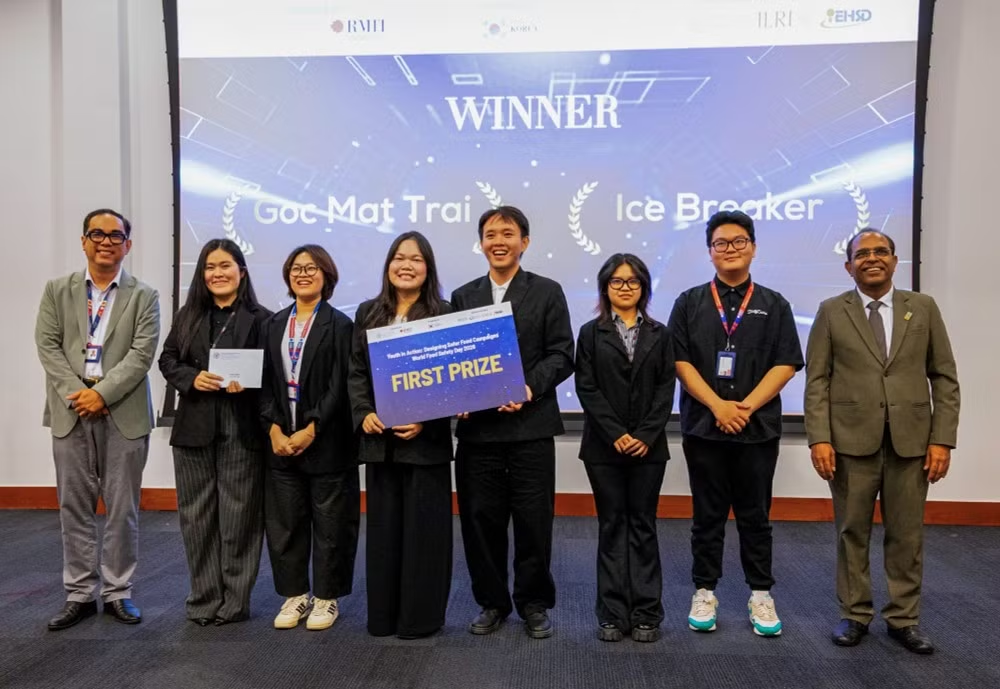
According to experts, as food systems become increasingly diverse and complex, raising consumer awareness of food safety at home, in schools, markets and food service establishments is no less important than controlling food production, processing and preservation processes.
Launched in March 2026, the project “Youth Initiative: Communicating Food Safety” brought together nearly 400 students, who worked with experts from FAO, the National Institute for Food Control, and RMIT lecturers to develop communication campaigns on food safety.
Many products were developed in the form of short videos, social media content, media engagement plans and community communication campaigns.
After several rounds of assessment, the 12 best teams advanced to the final round held on May 28. Several ideas are now being considered by FAO in Viet Nam for inclusion in its mass communication activities in the coming time.
Vinod Ahuja, FAO Representative in Viet Nam, said young people play a special role in changing social behaviour related to food safety.
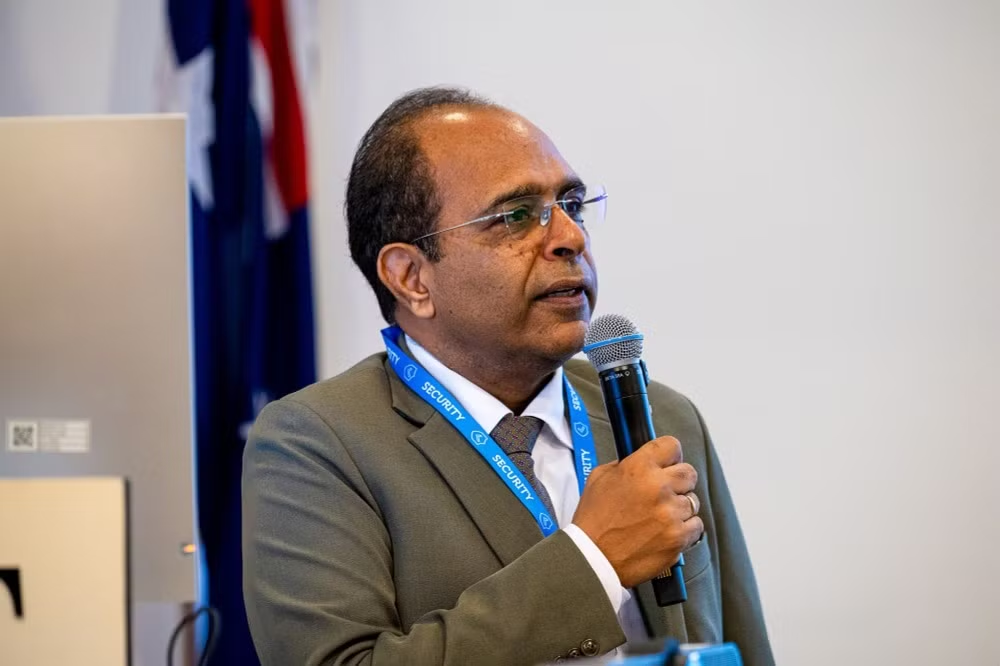
“Young people are not only food consumers, but also powerful communicators and drivers of change, helping shape food safety habits in families and communities,” Vinod Ahuja said.
According to Dr Manny Ling, Deputy Dean for Engagement and International at the School of Communication and Design, the project demonstrates how higher education can connect academic knowledge with real-life social issues.
Ling added: “Food safety is ultimately a story of behaviour change. Through this project, students understood how their ideas and communication strategies can contribute to driving that change.”
Through the cooperation between FAO and RMIT University Viet Nam, the ideas proposed by students do not stop within the classroom but open up the possibility of being applied in community communication campaigns, helping raise awareness and build a culture of food safety in society.