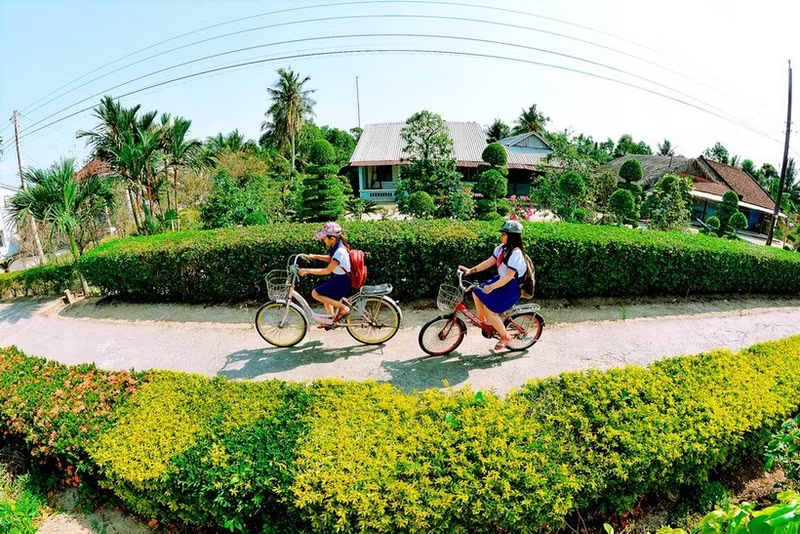
According to the Central Office for New-Style Rural Development Coordination, the programme to strengthen environmental protection, food safety, and clean water supply in rural areas during the 2021-2025 period has achieved many positive results. Specifically, the percentage of the rural population with access to clean water meeting standards is estimated to have reached 60% by 2025. Of these, the Red River Delta region has the highest percentage of rural households using clean water meeting standards at 91.9% compared to other regions nationwide; the Central Highlands region has the lowest percentage at 39.5%.
Most rural residential areas do not yet have a centralised wastewater collection and treatment system. Nationwide, 3,498 communes and nearly 22,960 villages have domestic wastewater drainage systems (accounting for 42.16% of the total number of communes and 34.67% of the total number of villages). Domestic wastewater in rural areas is largely discharged directly into the environment or seeps in without being collected and treated thoroughly to meet environmental technical standards. 83.86% of farm animal waste and 72.24% of household animal waste have treatment measures in place.
To date, 31 out of the 47 seriously polluting craft villages on the list have implemented pollution remediation and environmental improvement activities. Many of these villages have completed pollution remediation measures, or have voluntarily reduced their scale, switched to other production sectors, or ceased operations, and are now essentially no longer polluting. The other 16 out of the 47 craft villages are currently implementing pollution remediation measures.
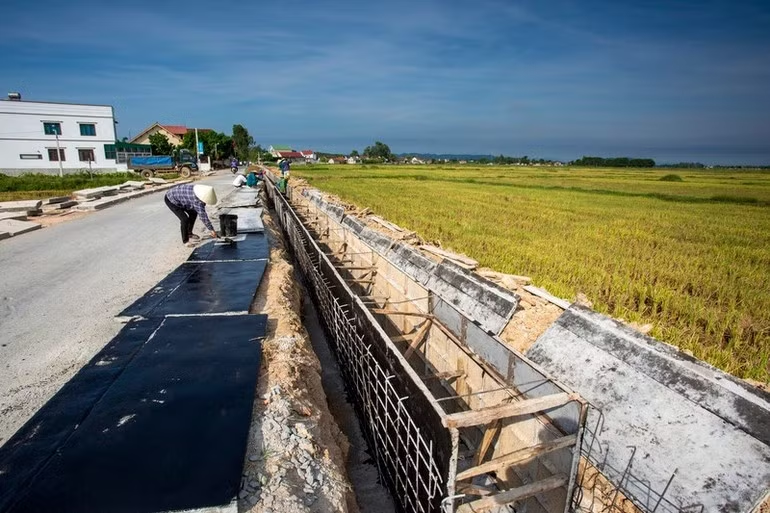
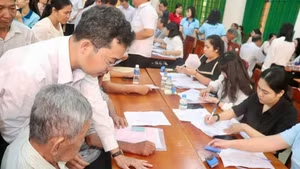
The programme has attracted a large number of people as well as units and organisations to participate. During the 2021-2025 period in particular, the Viet Nam Women’s Union supported more than 550,000 households in building hygienic toilets. In addition, the Women’s Union at all levels has included the criteria of “Families with 5 ‘haves’ and 3 ‘cleans’” in the annual emulation targets of localities. After more than 3 years of implementation, 100% of advanced new rural communes have established the “Families with 5 haves and 3 cleans” model, contributing to improving the quality of life, fostering family values, and creating a foundation for widespread dissemination in the community. To date, over 26,000 models have been established nationwide, becoming a shining example and promoting the core and exemplary role of rural women in building new rural areas.
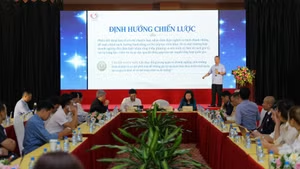
According to Ngo Truong Son, Chief of the Central Office for Coordinating New Rural Development, the programme has generally created a shift in the awareness of rural communities regarding environmental protection. People are concerned about and demand better environmental quality and want to participate in environmental protection efforts. Simultaneously, it has mobilised the attention and involvement of central ministries and agencies, socio-political organisations, localities, and the support of environmental service businesses, international organisations, non-governmental organisations, research institutions, and environmental experts.
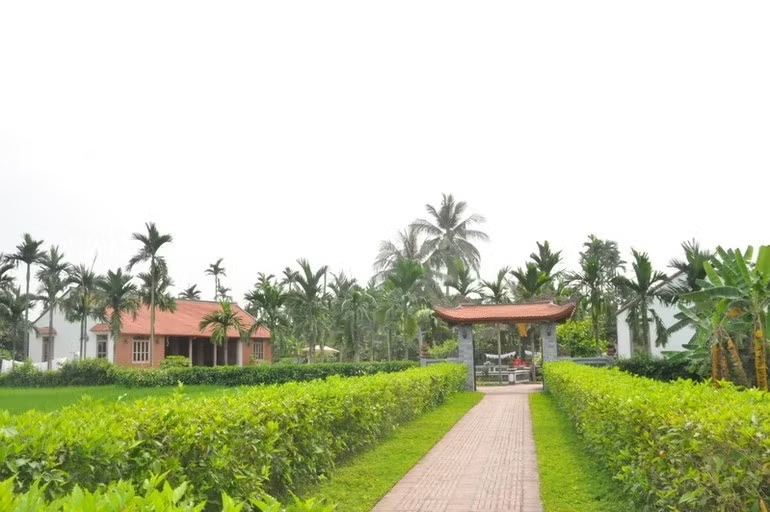
In the 2026-2030 period, the Central Office for New Rural Development Coordination proposes several solutions to promote environmental protection and clean water supply in rural areas — such as: expanding pilot models that have been implemented; developing many models of green, clean, and beautiful residential areas, free of waste, green roads, model gardens, and rural landscapes suitable to the specific characteristics of each region; continuing to pilot the implementation of some environmental protection models on waste recycling and treatment of rural domestic wastewater — as a basis for summarising into technical guidelines, introducing and replicating them.
Developing ecological village models and model residential areas, expanding community living spaces, planting trees, improving landscapes associated with the community. Promoting the self-governance role of the community in maintaining a harmonious, safe, and nature-friendly living environment. Promote the application of digital technology in environmental management and monitoring, operating waste and wastewater treatment systems, and environmental warning systems. Strengthen communication efforts and raise public awareness about environmental protection linked to landscape development; change the perceptions and actions of all levels of government and citizens; so that environmental protection becomes a need, a desire, and an aspiration of every citizen.
In addition, solutions are needed to diversify investment resources for this sector, alongside preferential credit from the Viet Nam Bank for Social Policies and the Viet Nam Environmental Protection Fund and the environmental protection funds of provinces and cities. More decisive and forceful measures for inspection, enforcement, and penalties for environmental violations should be applied in rural areas.