Reducing regulatory fragmentation
In recent years, the use of biological plant protection products has grown rapidly worldwide. The Plant Production and Protection Department (under the Ministry of Agriculture and Environment) forecasts that between 2023 and 2028, the global market for biological plant protection products will expand at a compound annual growth rate (CAGR) of 15.9%.
From a market size of 6.7 billion USD in 2023, the segment is projected to reach 13.9 billion USD by 2028. Notably, by the period 2040–2050, it may achieve market parity with chemical plant protection products. These figures reflect a strong and inevitable shift from chemical to biological plant protection products.
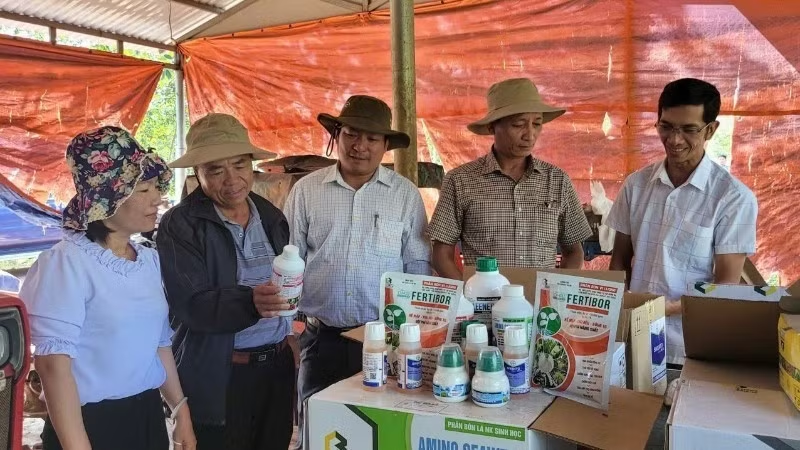
Nguyen Quang Hieu, Deputy Director of the Plant Production and Protection Department, said that in Viet Nam, biological preparations are capable of controlling up to 65% of harmful organisms across various crop groups. Since 2020, the number of commercial names of biological plant protection products listed in the national register has increased from 768 to 878. The proportion of biological products used has risen from 16.67% in 2020 to 19.46% in 2024. On average, Viet Nam imports around 18,000–20,000 tonnes of biological plant protection products each year, accounting for nearly 20% of total plant protection product imports.
In Viet Nam, biological preparations are capable of controlling up to 65% of harmful organisms across various crop groups. Since 2020, the number of commercial names of biological plant protection products listed in the national register has increased from 768 to 878. The proportion of biological products used has risen from 16.67% in 2020 to 19.46% in 2024. On average, Viet Nam imports around 18,000–20,000 tonnes of biological plant protection products each year, accounting for nearly 20% of total plant protection product imports.
Nguyen Quang Hieu,
Deputy Director of the Plant Production and Protection Department
In the context of green agricultural development, reducing dependence on synthetic chemicals is an inevitable trend. However, regulatory frameworks governing biological plant protection products vary considerably between countries, particularly within ASEAN, and remain unharmonised. Member states operate under separate standards, resulting in regulatory fragmentation that complicates product registration and circulation across borders.
Against this backdrop, the need for a scientific, transparent, and harmonised management system for biological plant protection products in ASEAN has become more urgent than ever.
According to Pham Quang Minh, a representative of the ASEAN Secretariat, the regional framework programme for managing biological plant protection products is not intended to impose a single model but rather to identify areas of consensus while respecting each country’s regulatory sovereignty. The aim is to build a modern system that enables both chemical and biological plant protection products to complement one another effectively.
Developing an appropriate roadmap
Dr Tan Siang Hee, Executive Director of CropLife Asia, affirmed that harmonising regulatory principles would help reduce technical barriers, foster innovation, and ensure user safety in the application of biological plant protection products.
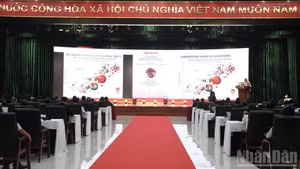
Over the past period, the ASEAN Bioefficacy Task Force (ABETF), in collaboration with CropLife Asia, has implemented a regional framework programme on biological plant protection product management over 30 months. The programme focuses on reviewing and analysing existing legal frameworks; promoting science-based harmonisation of registration requirements; developing unified assessment methodologies; and strengthening technical capacity. At the same time, it enhances public–private cooperation in knowledge-sharing and in piloting field models, with a view to promoting the consistent and effective application of biological plant protection products across the region.
For ASEAN member states as a whole, the programme contributes to improving regulatory capacity, reducing fragmentation, and promoting a risk-based management approach. This, in turn, supports the safe, effective, and responsible use of biological plant protection products, aligned with the goals of sustainable agricultural development and the protection of human health and the environment.
For Viet Nam in particular, the initiative is regarded as an important reference channel for international experience and practice, supporting the review, revision, and refinement of the legal framework governing biological plant protection products. It also contributes to the realisation of national targets to increase the use of biological plant protection products by 2030, with a vision to 2050, in line with the country’s orientation towards international integration and modern agricultural development.
To achieve harmonised development of biological plant protection products across ASEAN, relevant bodies will need to continue reviewing and analysing the current legal frameworks and the level of application in all member states. On that basis, common objectives should be agreed, key components identified, and a roadmap for implementing the ASEAN Regional Framework Programme on Biological Plant Protection Product Management developed at an early stage.