In his speech, Le Hoang Tai, Deputy Director of the MoIT’s Viet Nam Trade Promotion Agency, said the two neighbors’ economic and trade ties have sustained positive momentum, fueling regional connectivity, supply chain stability and better livelihoods in border areas.
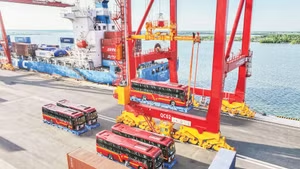
Under a shared strategic vision for the 2026–2030 period, Viet Nam and Cambodia are moving beyond simple commodity exchange toward building a peaceful, friendly, stable and fully developed border zone. A top priority is fast-tracking key transport infrastructure, particularly expressway projects that connect southern Viet Nam’s economic hubs with international border gates, laying the groundwork for seamless and efficient cross-border supply chains.
Ho Sivyong, Government Delegate and Director General of the General Department of Trade Support Services under the Cambodian Ministry of Commerce, described the gathering as a practical dialogue platform between government agencies and business communities, aimed at driving stable and sustainable border trade while deepening economic ties.
Participants discussed mechanisms and policies to facilitate bilateral trade and investment, production and trade cooperation in sectors of mutual strengths, logistics and border infrastructure, e-commerce and digital payment, and plans for more joint trade and investment promotion. Companies from both sides explored broader cooperation opportunities and gathered insights to forge supply chain linkages and expand border trade with Cambodia.
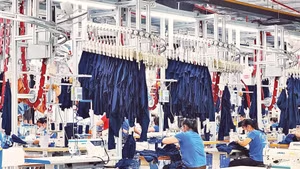
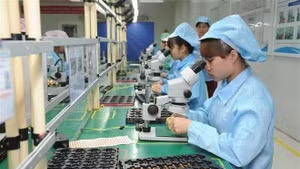
The event also gave Vietnamese manufacturers, exporters and importers direct access to Cambodian partners operating in agro-forestry-fisheries, food, apparel, leather and footwear, and heavy industry.
Two-way trade has surged into a key pillar of bilateral economic cooperation in the Greater Mekong sub-region. The two countries share a land border of about 1,137 km, underpinned by a relatively developed network of international, main and auxiliary border gates that facilitate trade, logistics and cross-border investment.
Total two-way trade neared 10.1 billion USD in 2024, up 17.5% year-on-year and jumping to more than 11 billion USD in 2025. Viet Nam’s key exports to Cambodia include apparel, iron and steel, petroleum, machinery and equipment, chemicals, and processed food. Its main imports are cashew nuts, rubber, farm produce, and industrial raw materials.
Both countries are targeting 20 billion USD in trade by 2030 by expanding formal trade channels, upgrading logistics and embedding more deeply into regional supply chains.