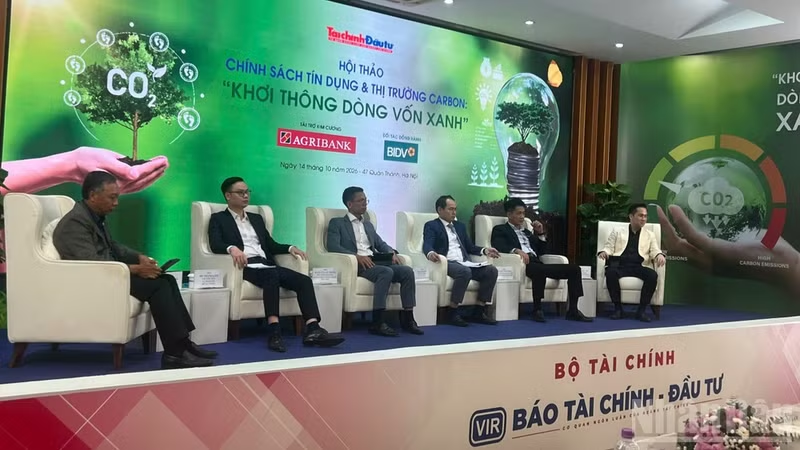
Abundant green credit resources
At the 2021 United Nations Climate Change Conference, Viet Nam pledged to achieve net-zero emissions by 2050. To meet this target, the country has stepped up efforts to promote green growth, energy transition, and the development of a low-carbon economy. This transition requires substantial resources to invest in technological innovation, transform production methods, improve energy efficiency, and reduce greenhouse gas emissions.
Speaking at the seminar “Credit Policy and the Carbon Market: Unlocking Green Finance,” Chief Economist at the Asian Development Bank (ADB) in Viet Nam Bui Minh Giap, said the country would need approximately 368 billion USD in additional investment by 2040 for climate change adaptation, enhanced resilience, and emissions reduction, equivalent to 6.8% of GDP annually.
Capital needs are substantial, but funding will only be disbursed when projects are assessed as effective, capable of repaying loans, and able to provide verifiable emissions-reduction data.
However, access to green credit remains a challenge for businesses.
Acknowledging the difficulties faced by businesses, Deputy General Director of EY Viet Nam Consulting Nguyen Viet Long, said investment in green technology was costly, while businesses often lacked the capital needed to make such investments.
On the banking side, Vietnamese commercial banks have proactively mobilised domestic resources to prioritise green financing and sustainable growth. They have also actively expanded international cooperation, received technical transfers, and secured funding and entrusted capital from international financial institutions, standing ready to disburse funds promptly for eligible green projects, affirmed Deputy Director of the Credit Department at the State Bank of Viet Nam Tran Anh Quy.
Green credit resources available at banks are therefore currently abundant. The key is for businesses to develop appropriate green transition roadmaps to establish a basis for accessing green credit from banks.
The experience of Miza Joint Stock Company, which recycles waste paper into packaging paper supplied to packaging manufacturers, shows that businesses can secure green credit relatively quickly if they follow a well-structured process.

Deputy General Director of Miza Joint Stock Company Nguyen Huu Tu, said the company had made substantial investments in advanced technologies to meet environmental criteria and minimise emissions, while implementing a renewable energy transition strategy.
The company's management was determined to operate its production and business activities according to a clear roadmap and green criteria, including implementing an environmental, social, and governance (ESG) model and complying with green commitments. This enabled the company to qualify for high-quality green credit from BIDV and a European bank.
After securing green finance, the next challenge lies in operations — putting the funds to practical use in production.
“Businesses must strictly comply with the standards and commitments set out in the green finance framework. Once they demonstrate compliance with the standards and tangible results, investment funds and green capital providers will proactively seek them out and pursue cooperation,” Tu added.
Effective green transition roadmaps
The experience of Miza Joint Stock Company shows that businesses need to clearly define project objectives from the outset and demonstrate both project effectiveness and their overall financial health to access credit or successfully issue bonds.
Deputy General Director of EY Viet Nam Consulting Nguyen Viet Long, said businesses must clearly identify which parts of their operations are “green” within the overall ESG framework, such as greenhouse gas emissions reduction, climate change adaptation, solid waste and wastewater treatment, or the development of a circular economy.
Businesses should also take advantage of the convergence of international standards. Global green and ESG reporting standards are increasingly converging around common frameworks, such as those of the International Sustainability Standards Board (ISSB) and International Financial Reporting Standards (IFRS), making it easier for businesses to prepare information and compile application dossiers.
In addition to meeting green standards for individual projects, businesses must ensure they have comprehensive financial capabilities, including audited financial statements and risk analysis, as financial institutions assess the overall financial health of the entire business rather than looking at a single project in isolation.
Completing legal framework and data infrastructure to unlock green finance
Although substantial funding is available for businesses undertaking green transitions, credit institutions and regulatory agencies are also continuing to improve policies and procedures to support them.
Deputy Director of the Credit Department at the State Bank of Viet Nam Tran Anh Quy said relevant state agencies were actively developing shared green databases and information-sharing mechanisms to directly connect businesses with credit institutions. This would significantly reduce businesses' consulting and assessment costs while easing the burden of preparing application dossiers for bank staff.
Credit institutions are also stepping up the sharing and use of alternative data from specialised organisations, making banks' appraisal and lending approval processes more flexible and efficient. This, in turn, helps businesses minimise costs and gain easier access to green finance.
To help businesses access green credit more effectively in the coming period, Deputy General Director of Miza Joint Stock Company Nguyen Huu Tu proposed that the Government promptly establish a green taxonomy framework and appropriate credit policies. He also called for longer loan tenors and suitable interest rates, as green investment typically requires substantial upfront capital and a long period to recoup costs.
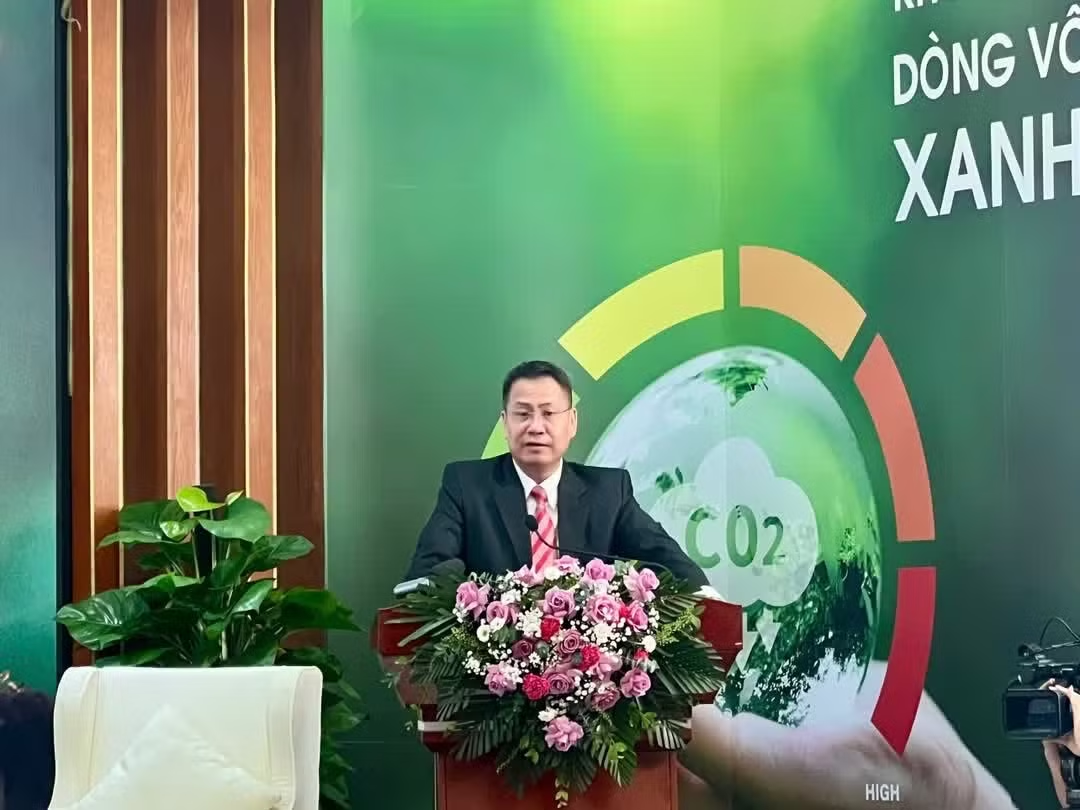
To unlock green finance, Bui Minh Giap, Chief Economist at ADB in Viet Nam, stressed that Viet Nam needed to strengthen its institutional framework alongside the development of the carbon market and green finance. Policy quality and effective coordination among regulatory agencies, credit institutions, and market participants would directly affect the scale and cost of financing, as well as access to capital.
The essential foundations include, first and foremost, a standard set of criteria for green activities and transition activities, followed by a highly reliable emissions database, carefully prepared projects, and appropriate risk-sharing mechanisms.
Responsibilities for drafting, managing, supervising, and operating the system must be clearly defined. Cross-sectoral and interbank coordination should be strengthened, while credit institutions' capacity to appraise green and transition credit should be enhanced. A comprehensive institutional framework would also enable the market to operate with greater confidence, lower transaction costs, and direct capital towards more viable projects.