Q: Reputable global brand valuation reports show that the value of Viet Nam’s National Brand (Viet Nam Value) has reached 519.6 billion USD, ranking 32nd in the world and recording impressive growth of 63% over five years. However, the combined value of Viet Nam’s 100 largest corporate brands stands at approximately 38.4 billion USD. How does the Ministry of Industry and Trade assess this “gap” between the country’s reputation and the actual competitiveness of domestic businesses, and what are the main bottlenecks?
A: First, we need to recognise that these figures are not contradictory, as they measure different things at different levels. The value of the National Brand reflects a combination of factors relating to the reputation, competitiveness, and image of the economy as a whole, while corporate brand value reflects the value-generating capacity of individual businesses, industries, and specific brands. Therefore, the fact that Viet Nam’s National Brand ranks considerably higher than the combined value of its largest corporate brands also highlights an issue that requires attention: we must continue to ensure that “national value” is more effectively translated into “corporate value” and product value.
In practice, after more than 20 years of implementation, the National Brand Programme has helped foster a group of businesses with strong brands, enabling them to participate more deeply in regional and global value chains. In 2026, 227 businesses were recognised under the programme, compared with just 30 when it was launched in 2003. Notably, Brand Finance valued Viet Nam’s National Brand at 519.6 billion USD in 2025, ranking it 32nd among 193 economies. These are positive results, but they also point to the need to strengthen the substance and depth of corporate brands.
In our view, the main bottlenecks fall into five groups.
First, some businesses still do not regard investment in branding, research and development (R&D), and innovation as essential long-term commitments.
Second, capabilities in product design and development, brand management, and international marketing remain uneven.
Third, the protection and enforcement of intellectual property rights overseas have not received commensurate attention.
Fourth, many businesses remain dependent on contract manufacturing and the original equipment manufacturer (OEM) model, while their capacity to build distribution channels and establish their own brands overseas remains limited.
Fifth, new requirements relating to the green and digital transitions, traceability, and international standards are rapidly raising the bar for brands seeking to expand internationally.
Therefore, the goal for the next phase is not simply to increase the number of well-known businesses. More importantly, it is to develop brands capable of generating high value, maintaining sustainable competitiveness, and securing a position in global value chains. This is precisely the direction in which the Ministry of Industry and Trade is focusing its efforts through the National Brand Programme, trade promotion activities, and the Go Global programme.
Q: The Ministry of Industry and Trade has set strategic targets of having 1,000 products recognised as National Brands by 2030, bringing five to 10 Vietnamese brands into the world’s top 500 most valuable brands by 2035, and ranking Viet Nam’s National Brand among the world’s top 25. What breakthrough policy mechanisms will be introduced to encourage businesses to invest more boldly in R&D and move from working for others to owning their own independent brands under the original brand manufacturer (OBM) model?
A: For more Vietnamese brands to become internationally competitive, businesses need to build up their technological capabilities, product design, and development expertise, as well as their ability to organise production and reach customers. In the industrial sector, support policies should focus on developing these capabilities so that businesses can gradually move into stages of the value chain that generate higher added value.
OEM refers to manufacturing products according to customers’ designs and requirements; ODM, or original design manufacturing, involves designing and manufacturing products for customers; while OBM refers to developing products under brands owned by the businesses themselves. The transition between these models must suit each industry and the resources available to individual businesses. A component supplier can build an international reputation through specialised technology and consistent quality, while a consumer goods manufacturer may develop its own brand once it has established the necessary design capabilities and distribution network. Policies should facilitate these different pathways while encouraging businesses to progressively strengthen their ownership of products.
First, we must continue to improve and effectively implement policies to develop supporting industries. Decree No. 111/2015/ND-CP, as amended and supplemented by Decree No. 205/2025/ND-CP, has added support for research, trial production, technological innovation, and quality testing and inspection. This provides a basis for helping supporting-industry businesses address specific challenges in product development.
Second, we must develop shared technical support capabilities and strengthen links between businesses, industrial development support centres, research institutes, and training institutions. Businesses need access to design, measurement, testing, and process improvement services to reduce product development costs and verify quality before commercial production. Research activities should be driven by products’ technical requirements and customers’ actual needs.
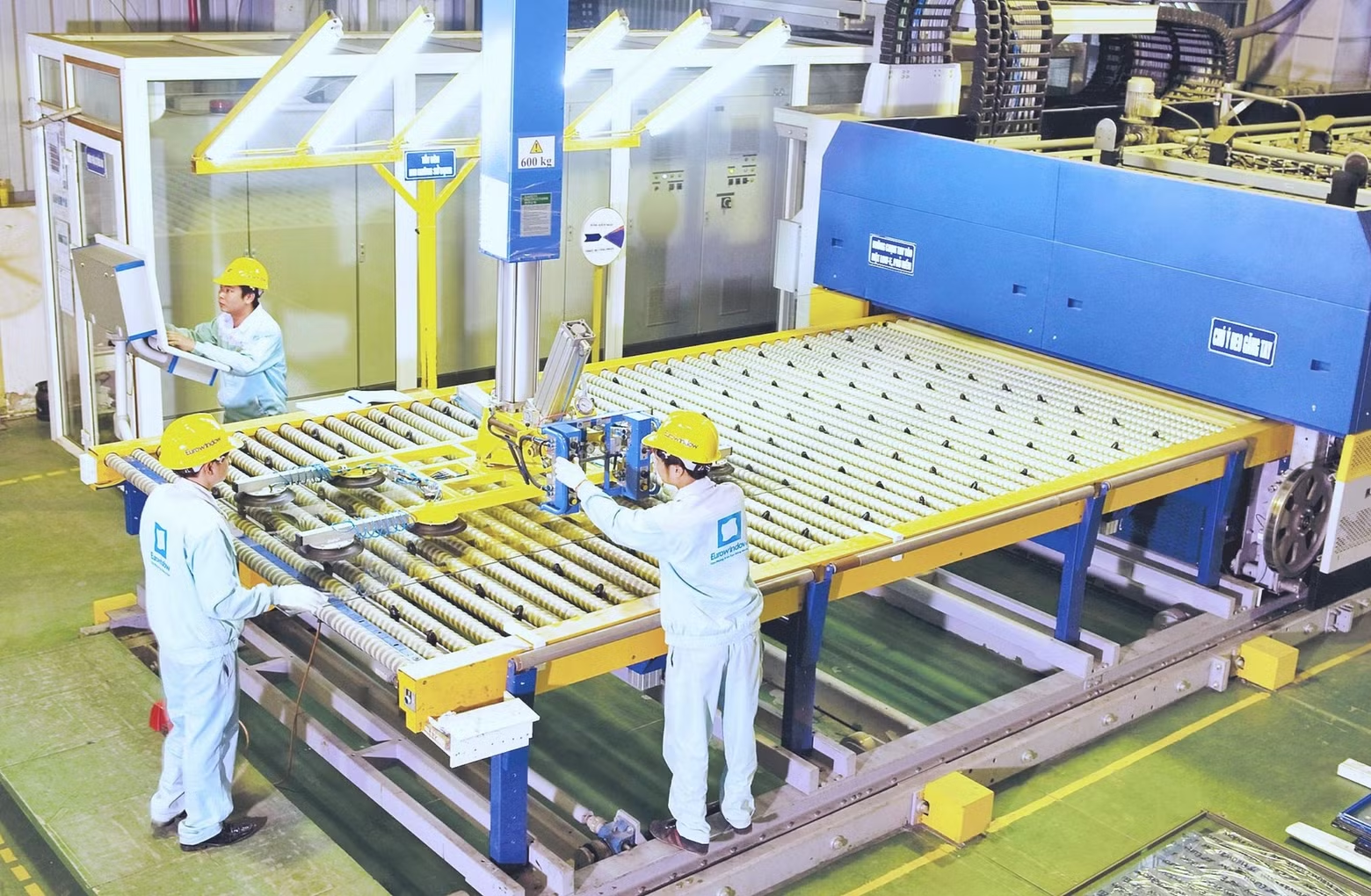
Third, we must strengthen links between manufacturers of finished products and domestic supporting-industry businesses. Such connections should be accompanied by assessments of suppliers’ capabilities, advice on improvements, and assistance in meeting buyers’ requirements. Stable supply relationships will give businesses greater scope to invest in technology, train their workforce, and participate more deeply in product development.
Fourth, we must promote improvements in productivity and quality as well as the application of technology in manufacturing. Linking support for production capabilities with market development and branding provides a foundation for businesses to make long-term investments in R&D and develop products under Vietnamese brands.
Q: In the 10th edition of the Viet Nam National Brand Programme 2026, what new sets of screening criteria is the Ministry of Industry and Trade applying to ensure that the businesses honoured are truly leading enterprises that are capable of guiding value chains and pioneering international expansion?
A: An important new feature of the 10th edition is that the criteria have been updated under Circular No. 18/2026/TT-BCT, which took effect on April 3, 2026. The circular sets out the criteria for registering and selecting products for National Brand recognition under three main categories: Quality; Innovation and Creativity; and Pioneering Capacity.
Significantly, the criteria do not focus solely on current business performance. They also require businesses to demonstrate their management capabilities and their potential for medium- and long-term development. The Quality category focuses on management systems, quality policies and strategies, investment in maintaining quality, and quality-related achievements and awards. The Innovation and Creativity category examines innovation policies, R&D activities, technology, the green economy, the circular economy, digital transformation, new processes and business models, and workforce development capabilities. The Pioneering Capacity category examines vision, core values, business strategy, brand positioning, brand protection, brand-building within and beyond the business, and capabilities that create differentiation.
In addition to meeting the scoring criteria, businesses and products must satisfy registration requirements, including those concerning the origin of goods, intellectual property protection, and compliance with relevant laws on finance, taxation, the environment, and other obligations. Verification and assessment are conducted in accordance with established procedures to ensure objectivity, transparency, and verifiability.
Therefore, when we refer to “leading enterprises”, we do not mean simply large businesses. More importantly, they must offer quality products, demonstrate innovation capabilities, have a clear brand strategy, protect their intellectual property assets, adapt to change, and exert a positive influence across value chains. These are the factors that underpin the leadership role and wider influence of a National Brand.
Q: Within the Ministry of Industry and Trade’s policy implementation structure, the Viet Nam Trade Promotion Agency plays a central role in implementing the National Brand Programme and facilitating international business connections. How will the ministry direct the agency to reform its approach so that trade promotion truly becomes a “launchpad” for elevating the standing of Viet Nam’s National Brand internationally?
A: In this new phase, the Ministry of Industry and Trade will direct the Viet Nam Trade Promotion Agency to shift decisively from the mindset of “organising promotional activities” to one of “building an ecosystem for market and brand development.” The ultimate goal is not merely to give businesses more opportunities to meet potential partners but rather to help them secure markets and customers, build brands, and establish sustainable positions in international value chains. Going forward, trade promotion and brand-building and development activities will focus on several key directions.
First, we will link the National Brand Programme with market promotion activities. Businesses recognised under the programme should receive priority and be featured in key trade promotion initiatives, international fairs and exhibitions, business forums, and programmes connecting them with distribution networks and major importers.
Second, we will step up the use of data and digital technology. The ministry will expand the digitalisation of market information and business and product profiles, develop digital trade promotion channels, and intensify the promotion of Viet Nam’s National Brand and businesses recognised under the programme through digital platforms and cross-border e-commerce.
Third, we will make better use of Viet Nam’s overseas trade offices and trade promotion focal points. These are important resources for providing market intelligence, issuing risk alerts, facilitating business connections, verifying partners, and helping businesses address issues that arise as they enter new markets.
Fourth, we will link trade promotion with stronger competitiveness. Alongside helping businesses access markets, we must pay close attention to helping them meet requirements relating to standards, branding, intellectual property, digital transformation, the green transition, and the specific demands of individual markets.
The Ministry of Industry and Trade will strengthen coordination with other ministries and sectors, local authorities, associations, businesses, international organisations, Vietnamese representative offices overseas, and the press, with the aim to build close links and harness collective strength. Only when trade promotion, brand-building, communications, and market development are connected into a coherent chain can the National Brand truly become a “launchpad” for Vietnamese businesses expanding globally.
Q: On the occasion of Vietnamese Entrepreneurs’ Day (October 13), what message would you like to convey to the country’s business community, whose members are working hard to bring Vietnamese products and brands to the world? What concrete commitments will the Ministry of Industry and Trade make to accompany and support Vietnamese businesses in the coming period?
A: On Vietnamese Entrepreneurs’ Day (October 13), I would like to extend my congratulations and deepest appreciation to the Vietnamese business community and entrepreneurs. The country’s economic achievements today owe much to entrepreneurs, who have consistently taken the lead in production, business, innovation, and job creation, while bringing Vietnamese products and brands to international markets.
At a time when the global economy is facing considerable volatility, competition is intensifying, and markets are imposing increasingly stringent requirements on quality, technology, green standards, traceability, and sustainable development, I hope the business community will continue to demonstrate resilience, initiative, creativity, and ambition. Businesses should focus on strengthening their competitiveness, mastering technology, building their brands, and gradually participating more deeply in global value chains. Every business that builds a strong brand contributes to strengthening and elevating Viet Nam’s National Brand; every Vietnamese product that earns a reputation in international markets adds to the country’s record of quality, capability, and standing.
The Ministry of Industry and Trade has always maintained that supporting businesses must be demonstrated through concrete and practical action, rather than being regarded merely as a responsibility. The ministry will continue to proactively help businesses expand and develop markets and make effective use of signed free trade agreements (FTAs). It will also step up the provision of information, forecasts, and early warnings about policy changes, standards, and trade barriers so that businesses can adapt proactively.
The fact that Viet Nam’s National Brand ranks considerably higher than the combined value of its largest corporate brands also highlights an issue that requires attention: we must continue to ensure that “national value” is more effectively translated into “corporate value” and product value.
The ministry will continue to promote more practical and results-oriented trade promotion; strengthen links between businesses and international partners, importers, and distribution networks; and help businesses to develop their brands, increase product value, and promote Vietnamese goods. At the same time, it will enhance trade remedies and help businesses respond to investigations overseas, protecting the legitimate rights and interests of Vietnamese businesses and goods. In addition, the ministry will continue to reform administrative procedures, accelerate digital transformation, facilitate trade, and work with relevant parties to remove bottlenecks in logistics, infrastructure, and production and business operations.
I would like to emphasise that businesses are the driving force behind development, while the state’s role is to create a favourable environment in which they can maximise their capabilities. Vietnamese businesses are not alone on their journey towards international integration. With the initiative, resilience, and ambition of the business community, together with practical support from the state, I am confident that more Vietnamese businesses will build internationally competitive brands, helping to establish a National Brand that is reputable, high-quality, and increasingly well positioned in global markets.
Thank you very much!