Phan Thi Thuy Phuong, from An Hoi Dong Ward, Ho Chi Minh City, once worked as a journalist for a newspaper under the city’s former Department of Industry. In the early years following the country’s economic reforms, she wrote articles praising the benefits of plastic bags, which were a relatively new product at the time. However, after learning about the harmful effects of plastic bags, she came to feel remorse and resolved to take action, regarding her efforts as a way to “make amends for her mistake.”
In 2011, she learned that chemical engineer Le Loc was among the first few people to research the production of environmentally friendly biodegradable packaging. She decided to leave her job and work alongside Loc to research, manufacture, and bring biodegradable bioplastic bags to market. However, the challenges mounted: imported raw materials were expensive and there were no support policies in place, while consumers remained accustomed to traditional plastic bags and largely indifferent to biodegradable alternatives.
Phuong and her colleagues were determined to change people’s awareness and habits. She travelled extensively to traditional markets across the city to raise awareness of the harmful effects of conventional plastic bags and the benefits of biodegradable plastic bags. Her team partnered with a company to manufacture biodegradable plastic bags. After the products reached the market, Phuong and several others pooled their capital to establish a plastic bag manufacturing factory in Dong Thap Province in 2013. However, the factory closed after about a year of operation, primarily because it struggled to find buyers for its products.
As if that were not enough, chemical engineer Le Loc died of a serious illness in late 2014. Phuong was also diagnosed with cancer and had to spend a long time in hospital. Production and sales of biodegradable plastic bags consequently came to a halt. Around 2017, after recovering from her illness, she returned to her familiar line of work and resumed her commitment to biodegradable plastic bags.
With the support and encouragement of the Ho Chi Minh City Women's Union, Phuong once again threw herself into raising awareness and campaigning at traditional markets. Although she repeatedly failed to persuade market traders to buy and use biodegradable plastic bags, she refused to give up. In 2019, to facilitate transactions with customers, she established Phuong Lan Environmentally Friendly Packaging Company Limited.
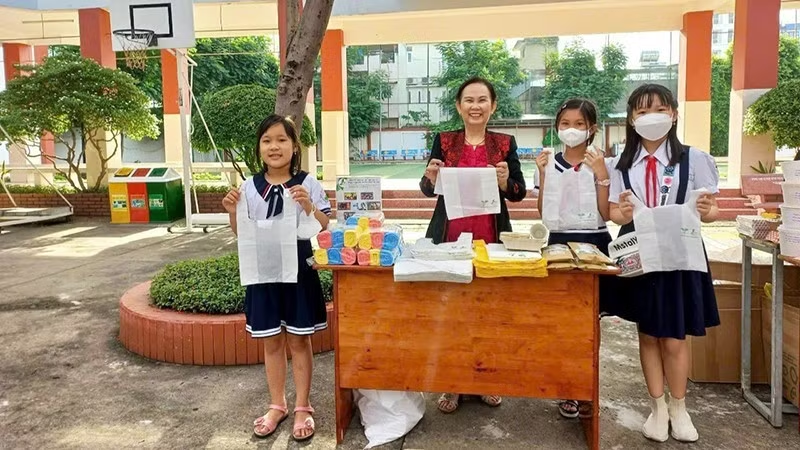
A major source of joy and motivation that has kept her going is the unwavering support of her husband and two children. She has recently reached the age of 65, and her health has deteriorated because of the effects of her illness. Nevertheless, Phuong remains undaunted and continues to participate actively in environmental protection activities, such as promoting waste sorting at source and exchanging rubbish for gifts. She regards these activities as both a mission and a source of fulfilment in her later years.
Sharing Phuong’s passion for environmentally friendly practices is Nguyen Thanh Diem, a single mom. Nearly a decade ago, at the age of 37, Diem left Ha Noi for Ho Chi Minh City with her two children, one of whom was not yet a year old, to start a new life. Initially, she continued working in her field of expertise of artistic design for interior and exterior spaces and packaging. Later, she also took on work exporting agricultural products.
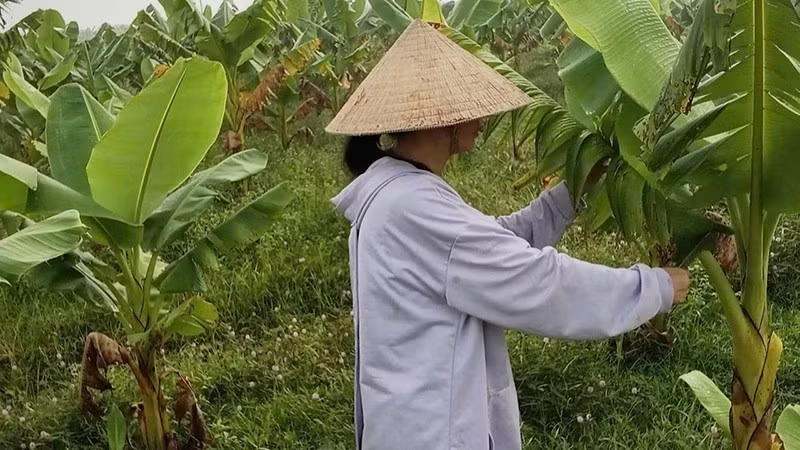
Building on this experience and her love of nature, Diem leased land in An Nhon Tay Commune to grow chillies using methods designed to minimise chemical use and strictly control chemical residues. Her goal was to produce clean chillies that meet export standards for demanding markets such as Europe and Japan. However, during the 2025 rainy season, prolonged heavy rainfall caused severe flooding, destroying all 16 hectares of her chilli crop, with only four hectares yielding a harvest. The heavy losses left Diem unable to sleep for many nights.
Fortunately, while looking to buy a small number of seeded banana seedlings to grow on her farm for their fruit, banana blossoms, and leaves, she met someone who was cultivating a seeded banana plantation in their home province of Dong Thap. With this person’s help, Diem began gradually switching to seeded banana cultivation in mid-2025, using environmentally friendly, nature-based farming methods. The seeded banana growing area was gradually expanded according to her financial capacity.
Her seeded banana plantation now covers approximately 10 hectares. In addition, Diem has committed to purchasing banana blossoms and fruit from plantations in several provinces, bringing the total area of seeded banana cultivation for which she helps secure market outlets to around 50 hectares. At her farm in An Nhon Tay Commune, she also provides stable jobs for around 10 workers, including two people with disabilities. They earn 8 million VND per month and receive social and health insurance coverage.
Alongside selling banana blossoms, Diem has developed seeded banana powder as a food product. It has been tested by the relevant authorities and found to meet the standards required for sale on the market. She is also nurturing and has begun developing several new products, including fabric made from banana plant stems and silk made from the inner cores of the banana stems. In her view, making use of different parts of the banana plant will diversify revenue streams, spread the risk of difficulties in finding buyers, and increase the value of the banana crop.
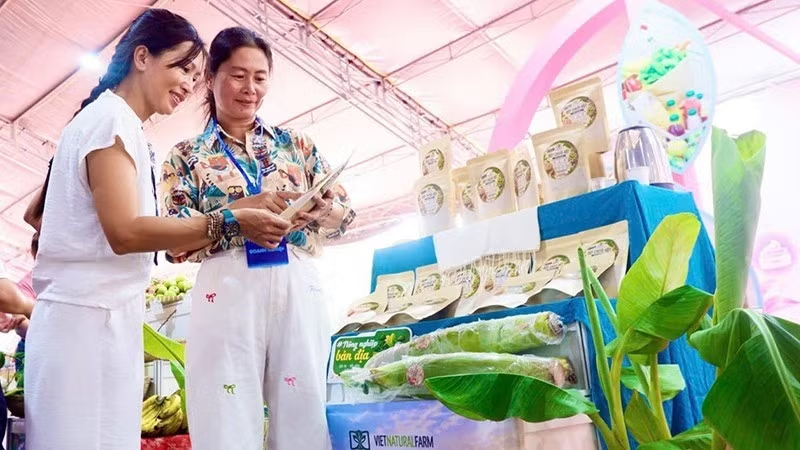
Diem said seeded bananas are a native plant species that adapts well to a wide range of soil types and weather conditions, requires relatively little maintenance, can be intercropped with other plants, improves soil fertility, and offers numerous opportunities for commercial use. Seeded banana blossoms, in particular, are popular with restaurants and agricultural product retailers, while supply remains modest compared with actual demand.
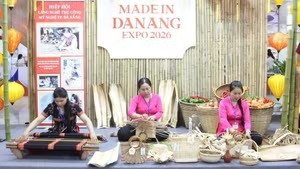
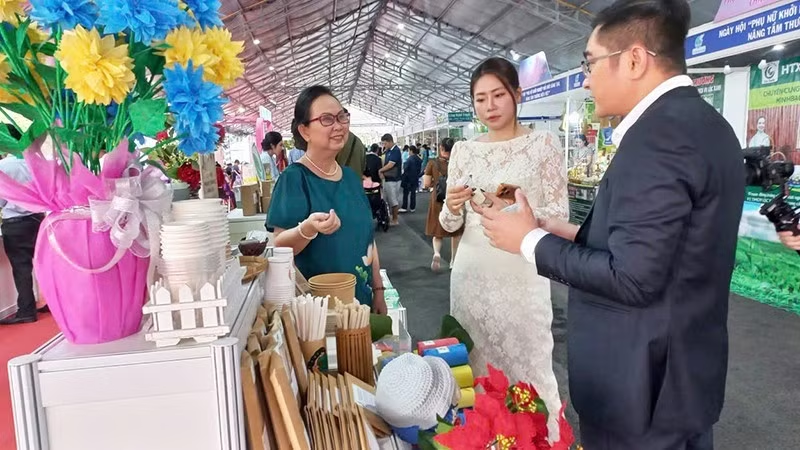
“The Women's Union has accompanied and supported me in introducing and promoting products made from seeded banana plants at exhibitions, trade fairs, and other events. Thanks to this support, the products created by my colleagues and me have become increasingly well known among the market and consumers,” Diem added.
Nguyen Thi Ngoc Linh, Vice President of the Ho Chi Minh City Women's Union, said the union was implementing the project titled “Supporting Women’s Entrepreneurship for the 2026–2035 period.” The project aims to build an ecosystem that supports women in developing sustainable economic activities and unlocking their potential; mobilise resources to support women entrepreneurs and strengthen their management capabilities, access to finance, and participation in value chains; and enhance women's role in economic development. Digital transformation and the green transition have been identified as key priorities in its implementation.
Women's associations at all levels will strive to help women turn their entrepreneurship ideas into reality and develop sustainable production and business activities, while creating opportunities to promote products and services developed by women entrepreneurs and connect them with markets.