Automation boosts productivity
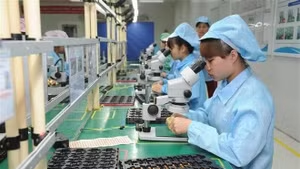
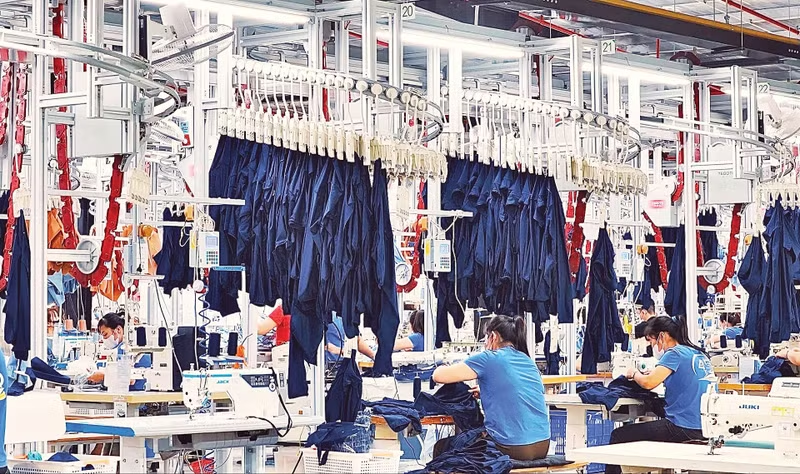
TNG Investment and Trading Joint Stock Company is the largest garment exporter in Thai Nguyen Province, with 12 factories and more than 19,000 workers. Despite the ongoing complex conflict in the Middle East, fluctuating fuel prices, and falling product prices, TNG's revenue in the first eight months of 2026 still reached 7,236 billion VND, up 22% year on year. This growth was driven partly by the company's stepped-up efforts to digitalise and automate production processes, reducing labour requirements, boosting productivity, improving product quality, and optimising raw material use. These measures have helped lower production costs and strengthen its competitiveness in export markets.
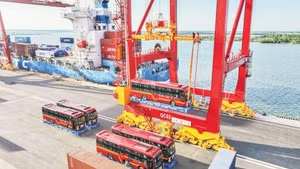
Many production stages that previously relied on manual labour have now been automated. The transportation of semi-finished and finished goods within factories has been taken over by electric automated guided vehicles (AGVs). In the cutting stage, fabric is spread and all the components needed for garment assembly are cut automatically, with each machine requiring only one operator. On sewing lines, intelligent overhead conveyor systems deliver semi-finished items to individual workstations, regulate workflow according to demand, and transfer completed products to designated collection points.
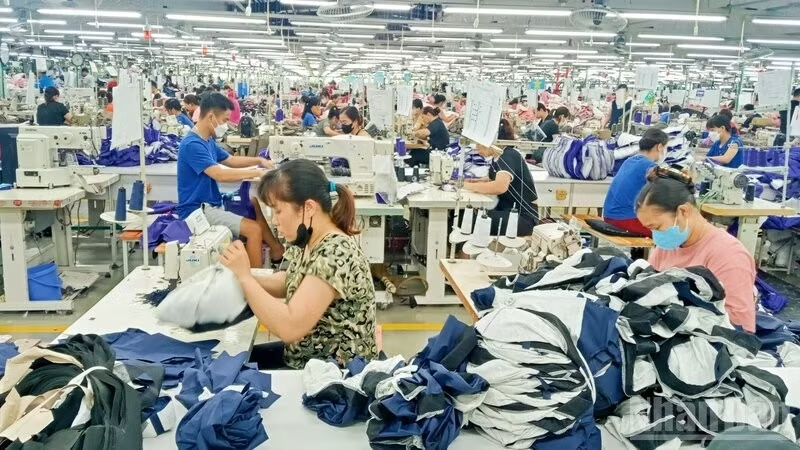
The results are clearly quantifiable. A sewing line employing 50 workers now generates between 1,400 USD and 2,000 USD in value per day, nearly three times the figure before automation was applied. The average value produced by each worker is approximately 29 USD per day, an increase of more than 10 USD from the previous level. Product costs have fallen by 30–40% compared with five years ago, while workers' average incomes have risen by 8–12%/year. TNG Deputy General Director Le Xuan Vi said the company allocates at least 200 billion VND annually to researching, applying, and acquiring new technologies and equipment. For TNG, investing in technology is not simply a matter of replacing manual labour, but of achieving higher productivity, greater product consistency, fewer defects, and more efficient use of raw materials.
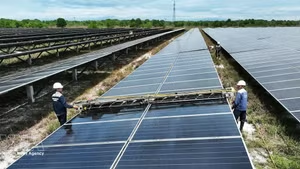
In the building materials industry, technological innovation has helped expand production capacity and develop new product lines. Vitto-VP Company Limited in Phu Tho Province employs more than 500 staff operating high-end ceramic tile production lines imported from Italy and Spain, with a combined capacity of more than 20 million square metres/year. The company invested in an Italian Continua+ continuous compaction line in early 2026, enabling it to develop products measuring up to 1,800 × 3,600mm while improving their flatness, hardness, and stability. At Vitto-VP, technological investment goes beyond increasing output. The company is optimising fuel consumption, researching a switch to biomass energy, gradually adopting electric forklifts, and planning to integrate solar power into its production operations.
Vitto-VP's experience demonstrates that manufacturing productivity cannot be separated from the need to save energy and reduce emissions. This is particularly evident among businesses that have developed over several decades and must continuously innovate to maintain their market position. Lam Thao Superphosphate and Chemicals Joint Stock Company is one example. Originating from Lam Thao Superphosphate Plant, established 65 years ago, the company has weathered numerous difficult periods while sustaining and expanding its operations through technological innovation and improvements in labour productivity. The company between 2021 and 2024 successively overhauled and upgraded the distributed automatic control system on its acid production line, the SCADA/PLC system for regulating NPK fertiliser blending, and its automatic weighing and packaging systems. As a result, average labour productivity increased by approximately 10–15% compared with the level before the new technologies were applied.
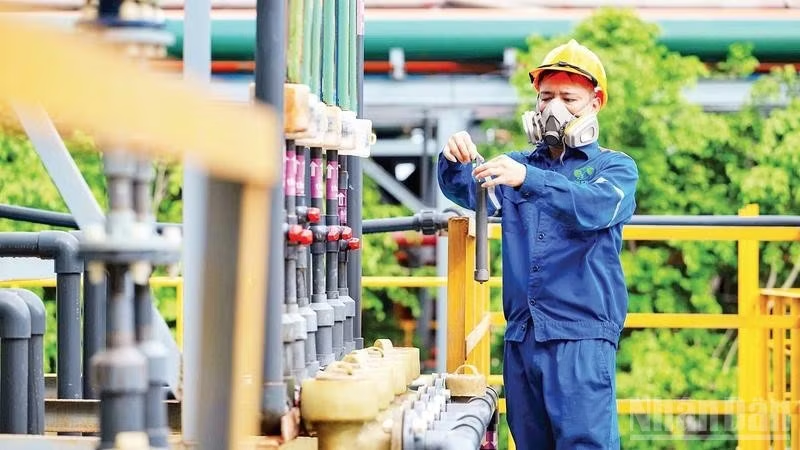
Alongside automation, the company has digitalised its management, supply chain, and sales territory allocation. It has introduced two-layer QR code smart labels for product traceability, implemented the ISO 50001:2018 energy management system, adopted energy-efficient equipment, and optimised drive systems. These measures have reduced electricity consumption per unit of product by approximately 3–5%. The benefits of automation become even clearer when compared with manual production methods. A facility that blends fertiliser by hand requires four workers for a full day to mix 10 tonnes, whereas at the company, one machine operator can process 20–25 tonnes an hour while exercising better control over nutrient losses.
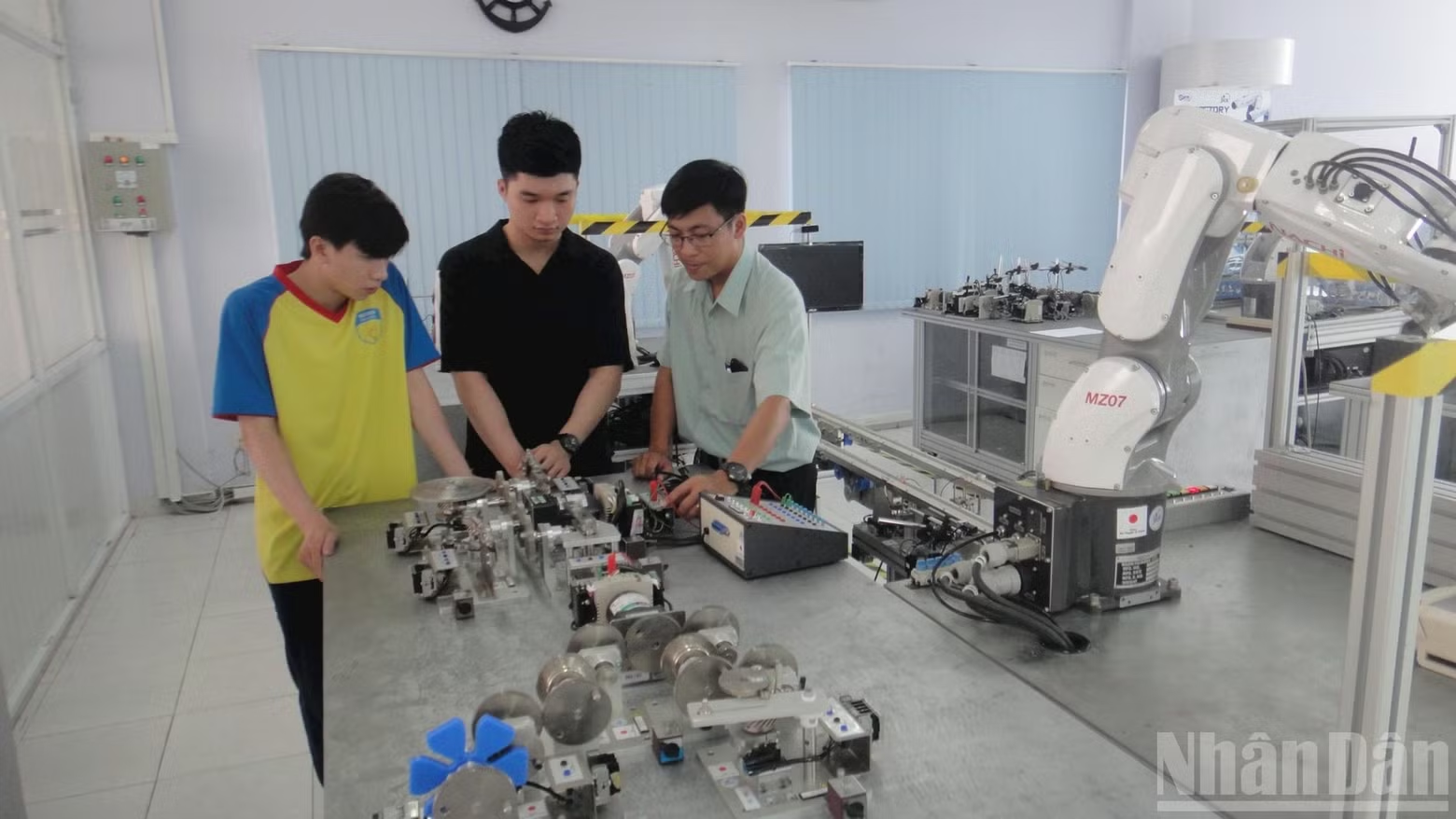
Technological innovation strengthens competitiveness
At foreign-invested enterprises, technology is not only changing production methods but also creating new demands for workforce quality. After more than 30 years of operations in Viet Nam, Nestlé Viet Nam is stepping up automation in its manufacturing activities. At the Nestlé Tri An Factory, a production line for packaging instant coffee in glass jars began running on August 21, with a capacity of more than 350,000 jars a day. The line functions as an integrated system, from raw material intake to finished products, incorporating sensors, cameras, and real-time data management to improve operational efficiency and support data-driven decision-making.
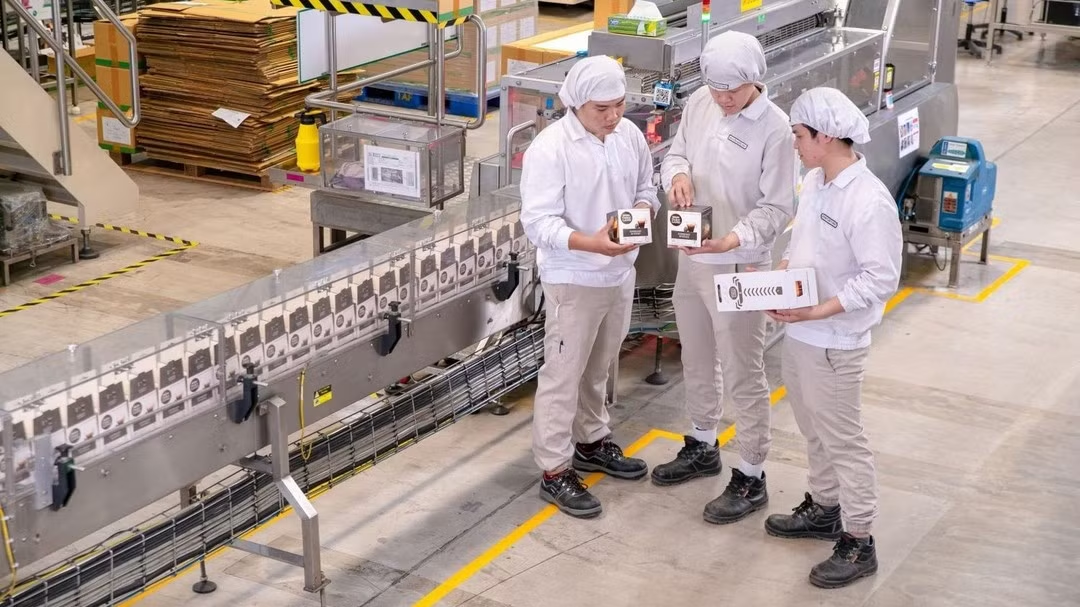
Before the line became operational, Vietnamese engineers and employees received training in the UK, Spain, and Australia. They also worked directly with international experts during installation, trial operation, and process standardisation. According to Nestlé Viet Nam Managing Director Binu Jacob, the initiative combines technology application, knowledge transfer, human resource development, and innovation.
For technology to deliver its full benefits, businesses must also improve workforce quality, reorganise production, and modernise their management methods. At Viet My Dong Nai Manufacturing and Trading Joint Stock Company, robots have been introduced across multiple stages of production at its plant making indoor and outdoor furniture for export, to raise productivity and quality while reducing the need for unskilled labour. This has enabled the company not only to boost production efficiency but also to increase incomes and retain skilled workers and highly qualified engineers.
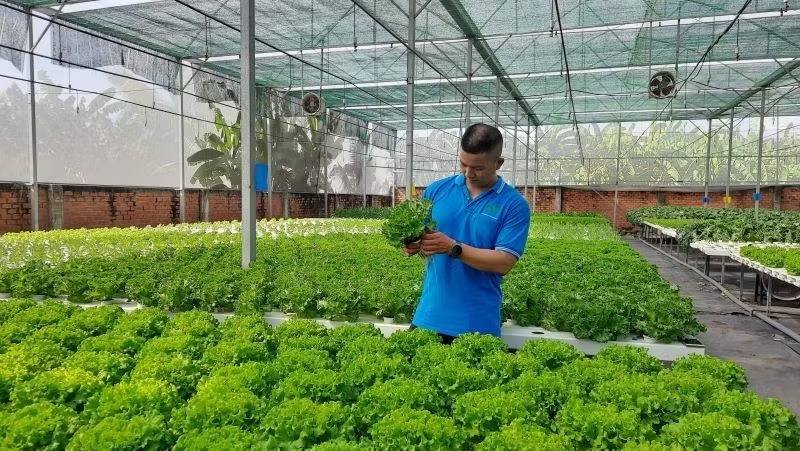
Technology is also bringing significant changes to the collective economic sector. Tuan Ngoc Agricultural Cooperative in Long Truong Ward, Ho Chi Minh City, uses Internet of Things (IoT) sensors in hydroponic vegetable cultivation to continuously monitor humidity, temperature, light, and nutrient concentrations, automatically adjusting growing conditions accordingly. The traditional model before 2022 required three workers for every 1,000 square metres of cultivated area.
The cooperative began automating ventilation, misting, shading, and hydroponic operations in 2022. Productivity rose from 60kg to 70–80kg per day per 1,000 square metres. IoT monitoring systems were deployed across the cooperative in 2024, further increasing output to 90–100kg per day per 1,000 square metres while reducing labour requirements by 50%. Average income for workers at the cooperative rose from 5.5 million VND/month to approximately 8 million VND/person/month, while managerial positions command 12–14 million VND/month. Better control of conditions inside the greenhouses has helped maintain stable vegetable output even during the rainy and stormy season.
Technology not only shifts workers away from manual and physically demanding tasks but also creates opportunities for them to take on roles requiring higher-level skills. At Thien Loc Footwear Joint Stock Company, computerised sewing and cutting machines have been incorporated into the manufacturing of sports shoes for export, with Puma-branded footwear accounting for approximately 80% of production capacity. According to Vice Chairman of the Trade Union of Thien Loc Footwear Joint Stock Company Le Quang Hung, the adoption of technology helps optimise processes, improve productivity and quality, and reduce labour costs. A worker sewing shoes manually can produce only 36 pairs in 10 hours, whereas a computerised sewing machine can produce 504 pairs — 14 times as many.
As competitive pressures continue to intensify, productivity is becoming one of the decisive factors in business performance and a key gauge of how efficiently resources are used. Investing in technology means investing in productivity. However, for productivity to become a genuine driver of growth, businesses must also invest in people, reform management, and master the technologies they adopt. Only then can they generate greater value at every stage of production while laying the foundations for stronger competitiveness and deeper participation in higher value-added activities.