The Politburo has issued Conclusion No. 99-KL/TW, dated September 28, 2026, on the exploitation, governance, and protection of low-altitude airspace to advance national growth in the new era. Low-altitude airspace is identified as a national resource, a new space for the country’s development, and a special sovereign domain, intrinsically linked to safeguarding airspace sovereignty, data sovereignty, and cybersecurity.
By 2030, Viet Nam aims to have three national-level flight testing zones in operation, representing different types of terrain, alongside at least one national research and testing centre for unmanned aerial vehicles (UAVs). Localisation rates for key UAV models used in production are targeted to exceed 30–40% by 2030 and 85% by 2045.
By 2045, the low-altitude economy is projected to become a major economic and technical sector and one of the country’s new growth drivers, with strong regional competitiveness and contributing around 1.5% to national GDP.
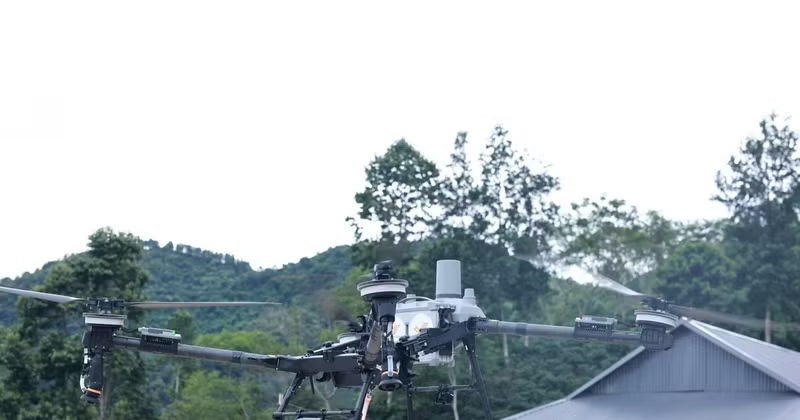
These targets call for the coordinated development of research, manufacturing, infrastructure, and services, alongside the gradual formation of domestic supply chains. UAVs are one means of exploiting low-altitude airspace. Combined with artificial intelligence, sensors, data, telecommunications, positioning technologies, and automation, they can be deployed across a wide range of economic sectors.
Priority areas include logistics, agriculture, resource management, environmental protection, infrastructure monitoring, disaster prevention and response, search and rescue, emergency medical services, and smart cities. The benefits can be measured in lower transport costs, higher productivity, shorter service delivery times, and improved public services.
To establish the market, the State will provide strategic direction and guidance through state procurement, pilot programmes, and applications in the public sector, while developing the legal framework, standards, technical regulations, and essential infrastructure. Businesses will play a central role in researching, developing, manufacturing, and commercialising products and services, with the participation of research institutes and universities.
Development will go hand in hand with the need for unified, modern governance based on data, digital platforms, and risk levels. Management activities will be organised by geographical zone, altitude band, and type of operation, covering the entire process from registration, identification, and licensing to operational coordination, monitoring, inspection, and enforcement.
The conclusion also calls for controlled testing mechanisms, or regulatory sandboxes, for new technologies, products, services, and business models. Each programme must clearly define its scope, duration, evaluation criteria, monitoring arrangements, and the conditions for termination or expansion, while safeguarding sovereignty, national defence, security, and safety.
The Ministry of Science and Technology is also working with Dien Bien Province, the Ministry of National Defence, and several businesses to implement a controlled testing scheme for the development of the low-altitude economy. Under the plan, around 6,000 test flights will be conducted in Dien Bien, with the results serving as a reference for refining national policies in this field.
The testing programme in Dien Bien focuses on applications in agriculture, logistics, healthcare, and digital surveying and mapping. Conducting trials in a mountainous area with challenging, fragmented terrain will help assess how the technology can address specific needs, while generating data to evaluate its effectiveness, risks, and potential for wider deployment.
For local authorities, the exploitation, governance, and protection of low-altitude airspace should be incorporated into socio-economic development plans and spatial master plans. Decisions on technology, service models, and investment resources must be based on actual needs, with clear identification of users, operational arrangements, and expected benefits.
This approach is intended to prevent scattered, trend-driven investment and ensure that technology is deployed to address practical challenges in production and everyday life. The development of the low-altitude economy should ultimately be measured by the technological capabilities established, the expansion of the market, and the value generated for people and businesses.