However, businesses need to enhance management capacity, cut logistics costs, and strengthen links along supply chains.
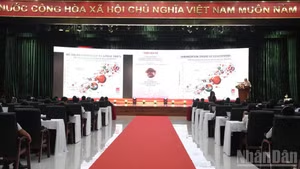
Le Hoang Tai, Deputy Director of the Viet Nam Trade Promotion Agency under the Ministry of Industry and Trade, said traditional distribution systems and e-commerce platforms are increasingly converging.
The growth of cross-border e-commerce and social media is transforming consumer shopping behaviour, he noted, requiring businesses to innovate and adapt to stay competitive.
Relying on a single sales channel is no longer viable, Tai said. Businesses need to link physical stores with online shops, expand customer touchpoints and boost operational efficiency to secure steady demand for their products.
Yet many businesses, particularly small and medium-sized enterprises, still struggle to build integrated technology systems, manage customer data, organise logistics and devise effective sales strategies.
Alongside businesses’ own efforts to innovate, state agencies, industry associations, and digital platforms must collaborate to provide market information, build technological capacity, and connect buyers and sellers through both in-person and online activities.
Bui Quang Tuan, Vice President of the Viet Nam Economic Association, said diversifying sales channels is vital for managing risk, as it helps businesses avoid over-reliance on any single market or platform.
He added that when one channel is disrupted, others can help sustain production.
Nguyen Ngoc Tam, Deputy Chief of Office of the Agency for Domestic Market Management and Development under the Ministry of Industry and Trade, said that a presence across multiple distribution channels does not necessarily guarantee lasting sales.
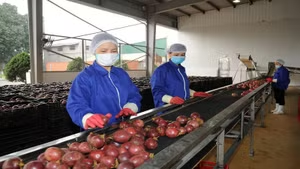
Tam noted that even a high-quality agricultural product with attractive packaging and a traceability code, promoted at trade fairs, in supermarkets or on e-commerce platforms, may struggle to hold its place in the market if supplies are unstable, inventory data is out of date, delivery costs are high and repeat orders are few.
Tam added that the distribution system should be viewed as an integrated network linking traditional markets, supermarkets, convenience stores, agents, e-commerce platforms and delivery services.
Discussions at the workshop underscored that developing multi-channel distribution is not merely about opening more sales outlets or expanding an online presence.
The key is to build effective links among suppliers, distributors, logistics providers and customers, with actual orders, repeat purchases, delivery costs and profitability as the benchmarks of success.