Consumer trends shifting
The global food system continues to operate in a complex environment affected by geopolitical instability, rising raw material prices, increasing transportation costs, inflationary pressures, and changing consumer expectations.
These factors are driving consumers to become more cautious and value-oriented, with trends focusing on essential products, reasonable prices, and functional benefits.
For the F&B sector, consumer demand is rapidly shifting towards products that provide both functional benefits and convenience in daily consumption. Nutrition is no longer viewed solely from the perspective of basic needs, it is increasingly becoming a tool supporting overall health, including physical and mental wellbeing as well as long-term development.
Notably, emerging health trends are also significantly influencing consumer behaviour. Around 40% of consumers concerned about weight management said they had changed their eating habits, thereby driving demand for nutritious, low-calorie products that help create a feeling of fullness.
At the same time, pricing and accessibility remain important factors in purchasing decisions. Consumers prioritise products with clear value, simple formulations, and suitability for modern lifestyles, including convenient, easy-to-use products with flexible portion sizes. Transparency and credibility are also becoming increasingly essential, with higher requirements regarding labelling, traceability, and scientifically substantiated claims.
Meanwhile, the food ingredients industry is playing a central role in the transformation of the entire sector, driven by growing demand for functional, sustainable, and personalised nutritional solutions.
Functional ingredients are expanding their applications beyond traditional supplement products and are increasingly being integrated into everyday food and beverage products.
Personalised nutrition is also emerging as an important growth driver. The development of digital technology and artificial intelligence is enabling the creation of nutritional solutions tailored to individuals based on lifestyle, health goals, and different life stages. As data-driven product development models become more widespread, demand for customised formulations and targeted solutions will continue to accelerate.
At the same time, sustainability and transparency have become basic market standards. The origins of ingredients and ethics in supply chains and environmental impacts are being monitored more closely, thereby prompting enterprises to prioritise responsible production solutions.
In this context, innovation in the ingredients sector is no longer limited to niche segments but is becoming a key factor determining the competitiveness of mass-market food and beverage products.
Viet Nam - A promising market
Against this backdrop, Viet Nam is emerging as one of Southeast Asia’s most dynamic food and beverage markets, driven by stable economic growth and the rapid expansion of the middle class.
National GDP growth is leading to changes in consumer expectations towards higher-quality, safer, and value-added products.
Urbanisation and changing lifestyles are driving demand for convenient products. At the same time, health and nutrition trends are receiving increasing attention, particularly among young consumers and in urban areas.
Deep integration into global trade networks through multiple free trade agreements is helping Viet Nam gain better access to international ingredients, technologies, and expertise.
In addition, competitive manufacturing capacity and an increasingly complete industrial foundation are making Viet Nam an attractive destination for ingredient and solution suppliers in the region. The combination of growing domestic demand and international integration is opening numerous opportunities for innovation, cooperation, and market expansion across the industry’s value chain.
Speaking at the opening ceremony of Fi Viet Nam 2026 on May 13, Ben Wong, General Manager of Informa Markets Viet Nam, emphasised that Viet Nam’s agricultural exports in 2025 reached 71 billion USD, placing the country among the world’s top 15 agricultural exporters.
Among them, the Mekong Delta region plays an especially crucial role: supplying 90% of exported rice output, maintaining food security and global standing; contributing 65%-70% of seafood export turnover, especially pangasius and shrimp; and providing more than 60% of the export value of key fruits.
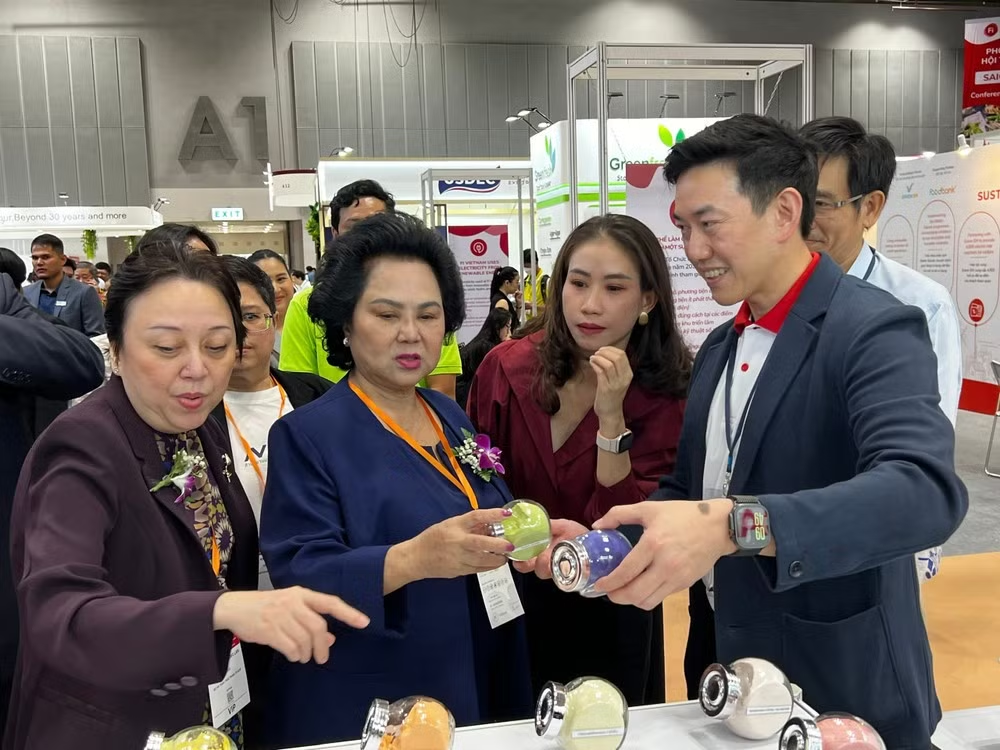
Ben Wong noted that at this international-scale event, experts and delegates would continue discussing the issue of how to bring these abundant raw material resources into the global value chain for Viet Nam through deep processing and advanced technology.
From a management perspective, Pham Khanh Phong Lan, Director of the Ho Chi Minh City Department of Food Safety, said the event was not only a forum to introduce the most advanced products and technologies, but also a place for Vietnamese enterprises to learn, exchange experiences, and expand international cooperation networks. This would open many new opportunities, helping domestic enterprises enhance competitiveness and expand further into international markets.
“We are always committed to accompanying enterprises in ensuring food safety and quality, while continuing to improve management work, thus creating favourable conditions for the industry’s development and protecting public health,” she said.
Fi Viet Nam 2026 opens
The Ho Chi Minh City Food and Foodstuff Association (FFA), the Viet Nam Beer-Alcohol-Beverage Association, and the Viet Nam Association of Food Science and Technology jointly held the opening ceremony of the International Exhibition on Food Ingredients, Flavourings and Processing Additives for Food and Beverage 2026 (Food ingredients-Fi Viet Nam) in Viet Nam on May 13.
The event brings together 300 brands and 9,000 specialised visitors from more than 40 countries. The exhibition runs until May 16, 2026.
In addition to on-site exhibition activities, Fi Viet Nam 2026 is also organising more than 60 in-depth sessions with a focus on key industry topics, combining scientific research with market analysis and practical applications in the food and beverage ingredients sector.