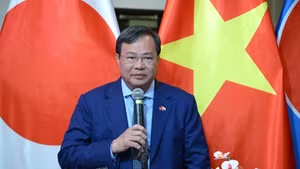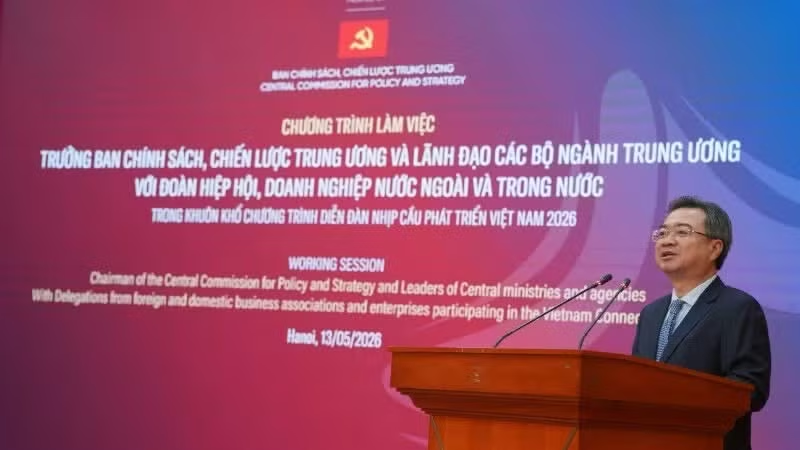
Nguyen Thanh Nghi stressed that in order to realise the socio-economic development goals set out in the Resolution of the 14th National Party Congress, Viet Nam, in the spirit of self-reliance and resilience, must mobilise, unlock, and maximise all available resources for development. Domestic resources play the decisive role, while external resources are important in strengthening internal capacity. The synergy between the domestic economic sector and the foreign direct investment (FDI) sector is therefore of great significance.
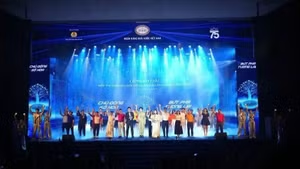
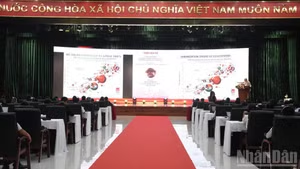
Highly appreciating the agenda of the Viet Nam Connect Forum 2026, he noted that the forum was not only a platform for policy exchanges among businesses, but also an opportunity for central agencies to directly listen to opinions from the business community, associations and experts on major issues relating to Viet Nam’s new growth model.
Particular attention was given to opportunities and prospects for successfully attracting new-generation FDI in sectors prioritised by Viet Nam. Recommendations and proposals for practical and effective solutions were recorded in order to attract and spread the value of foreign investment flows into Vietnamese enterprises, while fostering deeper linkages between FDI enterprises and domestic firms.
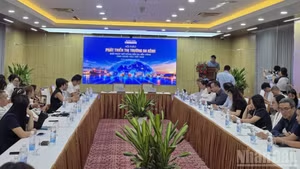
During the discussions, leaders from nearly 10 delegations, associations and enterprises shared opinions aimed at improving the effectiveness of mobilising social resources, domestic business resources, and both direct and indirect foreign investment capital.
While highly valuing Viet Nam’s efforts in developing and implementing mechanisms and policies, delegates proposed that leaders of central commissions, ministries and agencies provide further clarification on several key issues currently attracting the attention of foreign businesses.
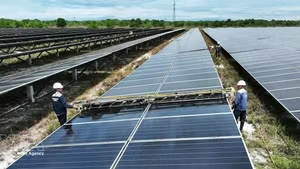
These included orientations for administrative procedure reform, Viet Nam’s tax refund policies, land tax incentives, project land allocation periods, and the upgrading of new-generation FDI. Several delegates also called on representatives of central commissions, ministries and agencies to provide additional information on localisation roadmaps for foreign investors; promoting the “three-party linkage” model involving the State, educational institutions and enterprises; narrowing the gap between research and the market; incentives for businesses investing in new technologies and innovation; and the timely development of energy infrastructure to meet production needs, with a greater share of clean and renewable energy.
Nguyen Thanh Nghi emphasised that these were practical and dedicated contributions which would serve as an important basis for Viet Nam to continue improving the investment and business environment, attract FDI more effectively, and strengthen Vietnamese enterprises so that they can fulfil their role and mission in the new development phase.
After 40 years of renewal, the FDI sector has made significant contributions to economic growth, exports, State budget revenues, economic restructuring and transformation, job creation, and enhancing Viet Nam’s international standing.
Alongside the achievements in resource cooperation, Nghi noted that the participation of Vietnamese enterprises in global supply chains remains limited.
Therefore, the requirement of the new development phase is to establish a closely linked and substantive ecosystem between domestic enterprises and foreign-invested enterprises in order to achieve the objective whereby internal strength remains decisive and external resources play an important supporting role.