Double-digit economic growth – a central focus of the new term
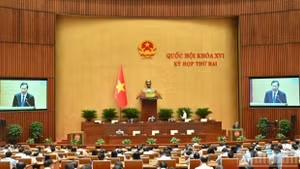
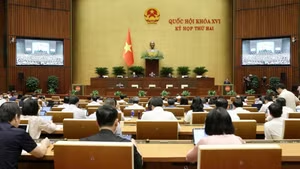
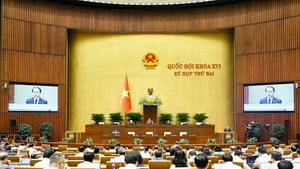
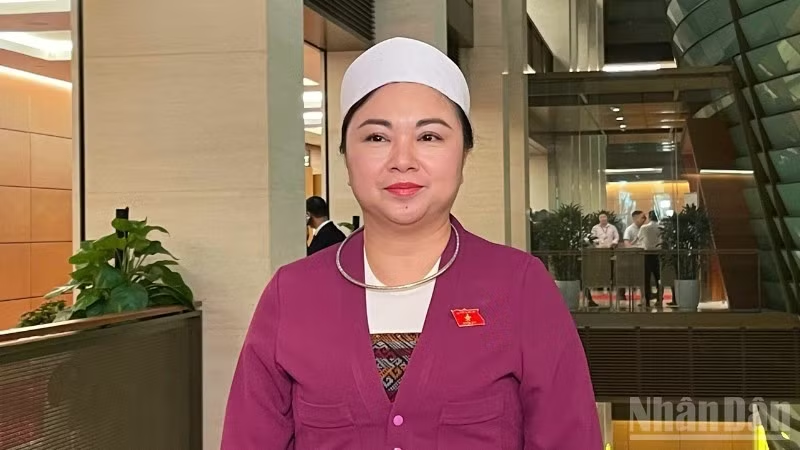
Speaking on the sidelines of the opening session, Deputy Dang Bich Ngoc, Deputy Head of the Phu Tho Provincial NA Delegation, stated that the first session of the 16th National Assembly ushers in a new term with great confidence and expectations, particularly reflecting the trust and aspirations of voters and the people towards NA deputies.
In the recent national election, the 16th NA selected 500 outstanding deputies representing the will and aspirations of voters nationwide to serve in the elected body. This team is expected to make significant contributions to institutional development and improvement, thereby promoting national development in the new period.
As the country pursues a range of strategic objectives and tasks, especially those set out in the Resolution of the 14th National Party Congress, there is a continued need to improve institutions, create momentum for economic growth, and move towards achieving double-digit growth in the coming period.
At its first session, the 16th NA will undertake numerous key tasks. Foremost among them is personnel work, including the election and approval of leadership positions of the Party and the State in accordance with regulations. This is a particularly important task, requiring deputies to demonstrate a high sense of responsibility and sound judgement in selecting qualified and capable individuals to take on leadership roles in the new period. NA delegations will actively participate in voting to elect key leaders of the Party and the State.
In addition, the NA will continue its legislative work by reviewing and adopting important draft laws and resolutions. It will also issue a resolution on the supervision programme for 2026 and for the entire term.
According to Deputy Dang Bich Ngoc, although the session will last only 11 working days, the workload is substantial, requiring a high level of concentration and responsibility from each deputy.
In particular, in his opening remarks, Party General Secretary To Lam stressed three key tasks for the NA during this term: law-making, institutional reform, and supervision. These are fundamental and decisive tasks that will determine the quality of the NA’s operations.
“With my sense of responsibility and dedication, along with practical experience from my locality and as I enter my second term as an NA deputy, I will continue to listen to and comprehensively synthesise the opinions and recommendations of voters and the public. Law-making requires each deputy, as a representative of the voters, to have a strong voice in contributing to the improvement of the legal and institutional framework in the current context,” said Deputy Dang Bich Ngoc.
She also noted that the 15th NA had identified many issues, with institutional constraints being one of the major “bottlenecks” to socio-economic development. Therefore, the 16th NA has set an important goal of focusing on institutional reform, removing barriers, obstacles, and shortcomings arising from practice, particularly those emerging at the grassroots level while promoting decentralisation and delegation of authority in tandem with effective inspection and supervision.
She expressed her belief that with the unity and responsibility of the NA, together with close cooperation with the Government and relevant agencies, the institutional system will be gradually improved, creating strong momentum for development and contributing to the successful implementation of the goals set by the Party and the State.
If institutional perfection is carried out effectively, it will serve as a crucial condition for achieving the socio-economic development goals and tasks set by the Party and the State. Among these, the goal of double-digit economic growth is one of the central priorities of the 14th National Party Congress. As the body responsible for building institutions, the NA will work closely with the Government during implementation to ensure that targets and tasks outlined in the Party Congress’s Resolution are fulfilled.
The deputy added that she will continue to strengthen survey and oversight activities, promptly identify shortcomings and obstacles in practice, and listen to feedback from voters, people, and relevant agencies during the implementation. Then, NA deputies and delegations will continue to consolidate feedback and make timely recommendations and proposals for appropriate amendments and supplements to policies and laws.
“In line with the spirit of the General Secretary’s opening address, NA deputies will enhance law-making, supervision, and decision-making on important national issues, enabling the 16th NA to successfully fulfil its mandate and make a significant contribution to the cause of national construction and development in the new period,” Ngoc affirmed.
NA deputies must continuously improve their competence and skills to meet voters’ expectations
Following the opening session, the NA elected the NA top leader and other leadership positions. According to Hoang Thi Thanh Thuy, Deputy Head of the Tay Ninh Provincial NA Delegation, this is a matter of particular importance for the new term.
The consolidation of the organisational apparatus, especially key leadership positions within the NA, plays a decisive role in determining the quality of operations of the highest state authority. These leadership roles not only directly oversee the activities of the NA but also provide direction and guidance for reform, improving the effectiveness of legislation, supervision, and decision-making on major national issues.
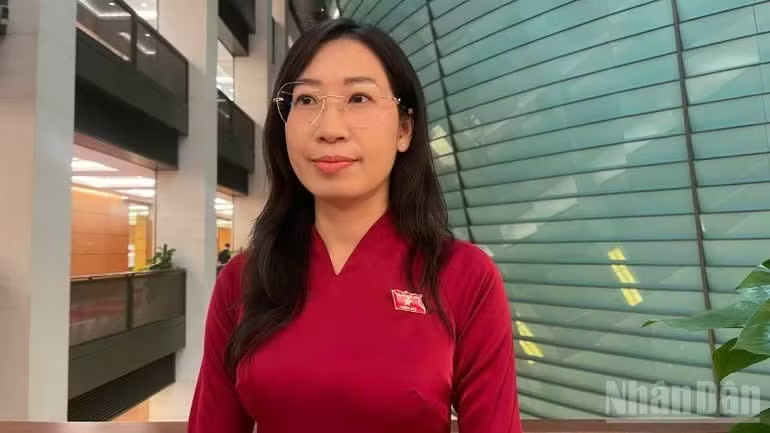
In the context of a new term marked by numerous requirements and challenges, which demand strong innovation in both thinking and modes of operation, the selection of a leadership team with sufficient capability, political mettle, and sense of responsibility is a key factor.
In his address this morning, General Secretary To Lam emphasised that the NA and its deputies must meet increasingly high demands in the new development stage. Therefore, personnel work at this session is of critical importance, playing a decisive role in the quality of the NA’s operations and the state apparatus throughout the term.
Compared with previous terms, Deputy Thuy noted that the preparations for personnel work this time have been conducted in a thorough and methodical manner. The processes of nomination, discussion, and selection have seen several innovations in a more streamlined direction, while still ensuring quality, democracy, and compliance with regulations. NA delegations have sufficient time for in-depth discussions, while implementation has been simplified to enhance efficiency in line with current reform requirements.
The shortening of the session’s duration and its early convening in early April also reflect a sense of urgency and responsibility, aiming to promptly meet practical demands for socio-economic development and institutional improvement.
Notably, this first session is not only focused on personnel work but also considers and decides on a number of other important issues. From the outset of the term, the NA has discussed matters related to socio-economic development, medium-term public investment, and national finance that were previously often addressed in later sessions. This demonstrates the NA’s strong shift towards a more proactive and flexible approach, aligning organisational restructuring with national development requirements.
Regarding the General Secretary’s remarks on the need to improve and restructure the legal system, the Deputy Head of the Tay Ninh Provincial National Assembly Delegation described this as a highly important orientation, while also placing considerable pressure on NA deputies. In the context of deep international integration, the legal system must not only be suited to domestic realities but also aligned with international practices.
Amid ongoing renewal trends, higher demands are being placed on the competence, dynamism, and sense of responsibility of NA deputies. Therefore, each deputy must continuously enhance their political mettle and professional capacity, particularly in terms of critical thinking and an innovative mindset, and make greater efforts to meet the expectations of voters.
New term opens opportunities to advance institutional reform and achieve double-digit economic growth
As a first-time candidate elected to the 16th NA, Chu Manh Hung, an NA deputy from Tay Ninh Province, shared that he felt deeply moved to attend the opening session of the first sitting. He particularly noted the attention and support of the Party and State leadership towards the NA in the new period.
After listening to the directive speech by the General Secretary at the opening session, Deputy Chu Manh Hung said that many major orientations have been set for the NA’s activities. Among them are four key tasks, foremost being the requirement to improve institutions, recognising that institutions serve both as a foundation and a driving force for national development in a new era, towards significant milestones such as the centenary of the Party’s founding and the centenary of the nation’s establishment.
In particular, the target of achieving double-digit economic growth in the coming period places very high demands on the legal system. Therefore, institutional reform plays an increasingly important role in laying the groundwork for national development in the new phase.
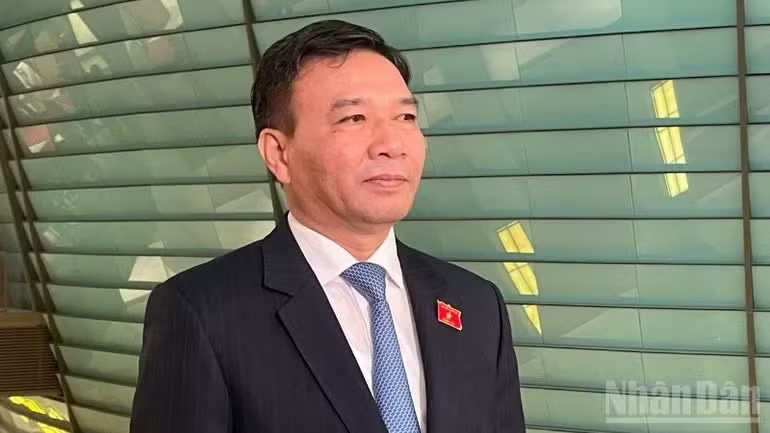
In the process of institutional improvement, Deputy Chu Manh Hung emphasised the need to pay greater attention to promoting decentralisation and delegation of authority, especially in the context of implementing the two-tier local government model from May 1, 2025. This model is intended to enable localities to be more proactive, self-reliant, and accountable. Accordingly, enhanced decentralisation from the central level will allow local authorities to act more flexibly and effectively in addressing local issues, thereby contributing to overall development.
Expressing his expectations for the first session of the 16th NA, Deputy Chu Manh Hung noted that this is the opening session for the entire term and carries great significance. It will decide on many major issues, from high-level personnel matters to socio-economic development orientations, as well as ensuring national defence and security for the 2026–2031 term.
Beyond the scope of a single term, the decisions made at this session will also have long-term strategic significance, contributing to the country’s major development goals as it moves towards the centenary milestones of the Party and the nation.
“Personally, as well as many other deputies, we have strong emotions and high expectations. With the attention from the Party and State leadership, along with the responsibility and dedication of NA deputies, we are confident that the directions set out by the Party and State for national development, as well as the tasks assigned by the General Secretary to the NA, will ensure that the outcomes of the first session lay a solid foundation for subsequent sessions to successfully fulfil their duties. In particular, the development orientations for the country will be firmly established through the NA’s sessions,” Hung affirmed.