Economic benefits from a traditional crop
The chive-growing profession in Nhuan Phu Tan Commune began nearly four decades ago. According to local residents, chives were first brought from Tra Vinh Province (former), later taking root in the land along the Co Chien River and gradually developing into an occupation that provides a stable income for many households. Over time, chive cultivation has not only been maintained but has also expanded into a well-known specialised vegetable-growing area in the locality.
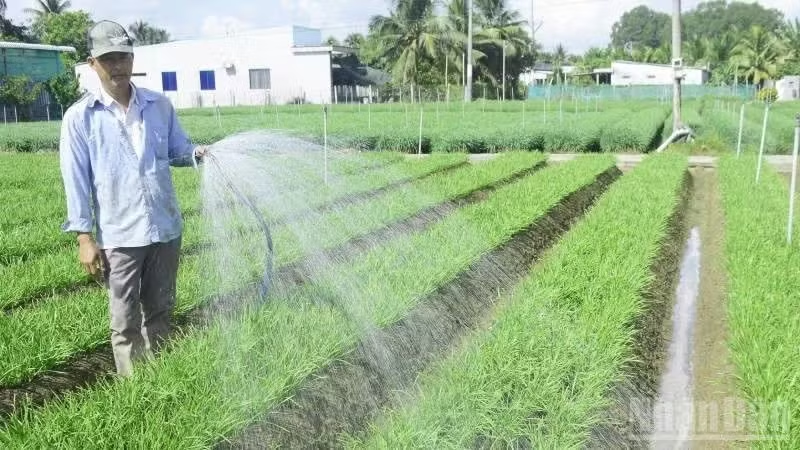
In Nhuan Phu Tan Commune, villages such as Giong Nau, Giong Dac, Giong Lon, Giong Xep, Giong Giua, and Giong Chua have been engaged in chive cultivation for decades. From initially small and scattered plots of land, the area has now developed into a concentrated production zone, providing a stable supply of chives to markets both within and outside the province.
Long-time growers say that chives are well adapted to climatic conditions, can be cultivated year-round and provide continuous harvests over a long period. Although market prices are not always high, the crop's short harvesting cycle and steady income stream make it a preferred main crop in local agricultural production.
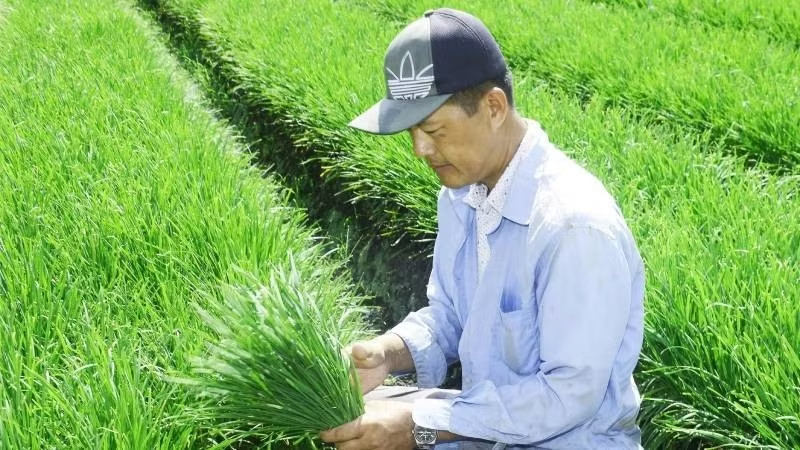
The family of Nguyen Van Son in Giong Dac Village, is one of the typical households that has been cultivating chives for nearly 30 years. On an area of about 2,000 square metres, the family harvests around 32 tonnes of chives each year. After deducting production costs, annual profits amount to hundreds of millions of VND.
“If properly cared for with correct techniques, a single planting can be harvested continuously for eight crops over a period of more than 12 months, generating much higher economic returns than several other traditional crops grown in the locality,” Son said:
According to experience of local residents, chives grow best in sandy soil with a stable supply of fresh water and need careful care to prevent pests and diseases. Every stage, from selecting seedlings and preparing the soil to fertilisation and pest prevention and control, requires both technical knowledge and practical experience. Therefore, achieving high yields depends not only on hard work but also on a thorough understanding of production techniques.
The fact shows that chives are not a crop that can be grown successfully without proper planning and care. To achieve good economic results, growers must invest significant effort in caring for, monitoring soil moisture, managing pests and diseases, and harvesting at the right time. The diligence and experience accumulated over many years have helped chive growers in Nhuan Phu Tan Commune to maintain stable yields and product quality.
Notably, the economic benefits generated by chive cultivation have helped many families in Nhuan Phu Tan Commune stabilise their lives, support their children's education, build houses, expand production and gradually improve their living standards. For many households, chives are regarded as a “poverty-reduction crop”, as the income from chives enables them to cover daily expenses, reinvest in production and save for the future.
Creating jobs and increasing incomes for people
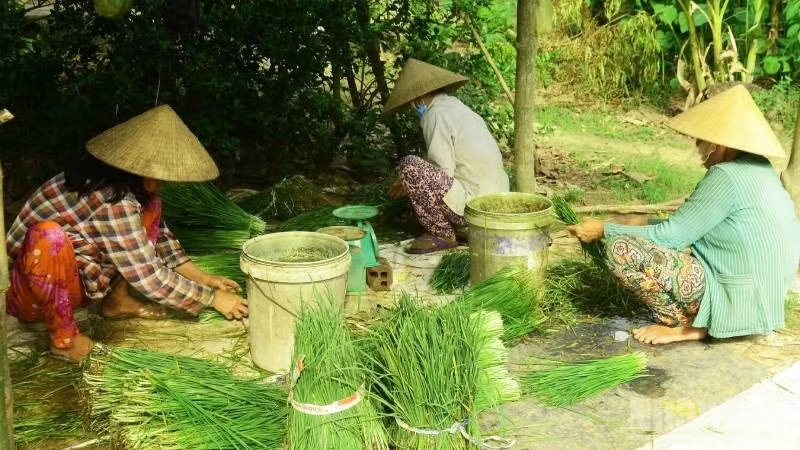
In addition to generating income for farming households, chive cultivation also creates jobs for many local workers, particularly rural women and older labourers.
Tran Thi Kieu, 56, a resident in Giong Dac Village, said that after each harvest, growers often hire workers to clean the chives, remove old leaves and bundle the produce before it is collected by traders for distribution to markets.
“The income is not large, but it helps me cover household expenses, especially as an older labourer,” Kieu said.
Tasks such as weeding, harvesting, sorting, processing and bundling vegetables may be simple, but they provide regular income for many underemployed workers in the locality. As a result, chive cultivation not only supports household economic development but also contributes to job creation and higher incomes in rural areas.
At present, six villages in Nhuan Phu Tan Commune have maintained the chive-growing profession for more than 35 years, with a total cultivation area of about 33 hectares and supply more than three tonnes of chives to the market each day. The product not only meets local demand but is also transported by traders to Ho Chi Minh City and many neighbouring localities.
A relatively stable market is an important factor that gives farmers confidence to be committed to the profession. The establishment of a specialised cultivation area has also made it easier for traders to purchase products, reducing transport costs and improving production efficiency.
Nguyen Van Vu, Chairman of the People's Committee of Nhuan Phu Tan Commune, said that recognising the crop’s development potential, the locality is working towards building a brand for Nhuan Phu Tan chives and gradually introducing the product into the “One Commune One Product” (OCOP) programme. This is expected to enhance the product’s value and competitiveness in the market.
The chive-growing profession has helped raise the locality’s average annual per capita income to nearly 57 million VND while also contributing to a reduction in the multidimensional poverty rate. This demonstrates the effectiveness of promoting specialised crops that are well suited to local soil conditions, climate and farming practices.
According to the Vinh Long Provincial Department of Agriculture and Environment, the province currently has more than 100 hectares of chive cultivation, concentrated in localities such as Nhuan Phu Tan, Phuoc Hau, Hiep Phu Tan, and Cau Ke. As agricultural production increasingly shifts towards value increasing and sustainable development, chives continue to affirm their role as one of the crops well suited to local production conditions.